How to safely reuse solvents with distillation systems?
Reusing solvents safely is not just a cost-saving idea. In workshops, coating lines, printing plants, electronics cleaning rooms, and chemical processing facilities, it is a controlled recovery process that separates useful solvent from resin, ink, paint sludge, oil, moisture, and other contaminants. A well-selected distillation system can turn spent solvent into a reusable cleaning or process liquid while reducing hazardous waste volume and improving daily operating discipline.
Why distillation is the safest path to solvent reuse
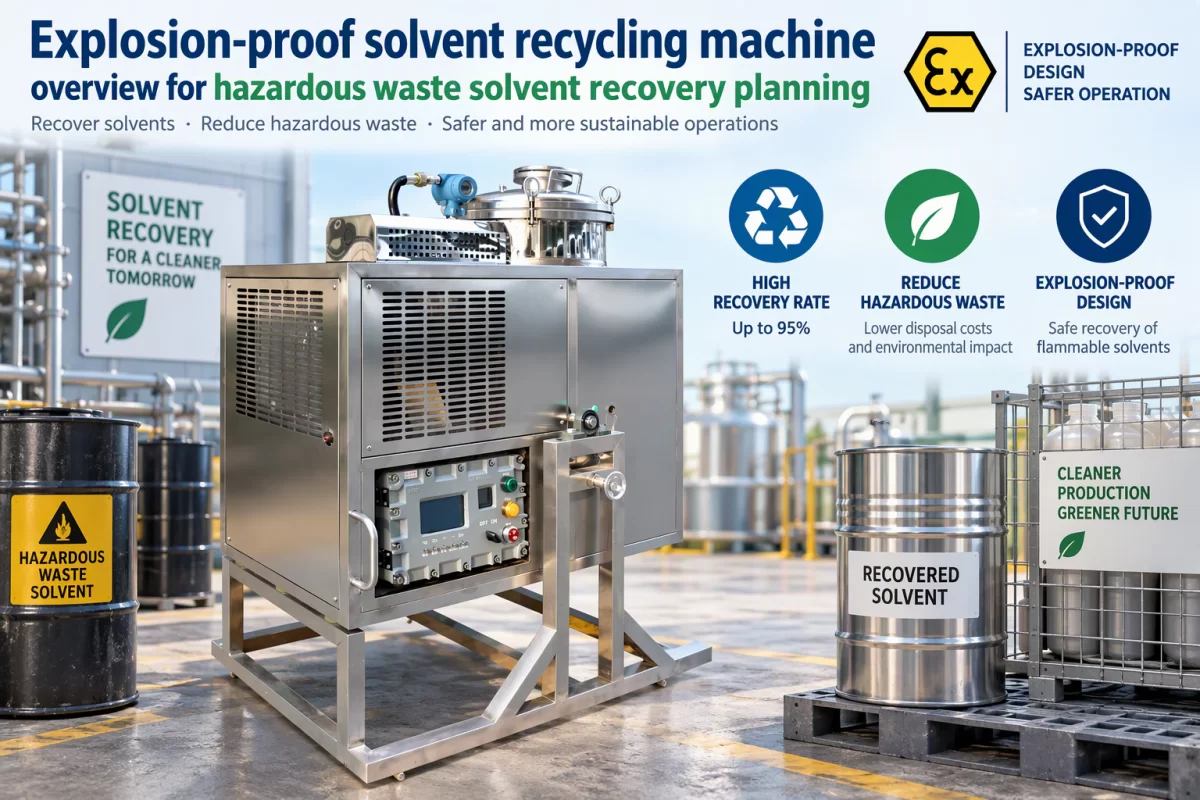
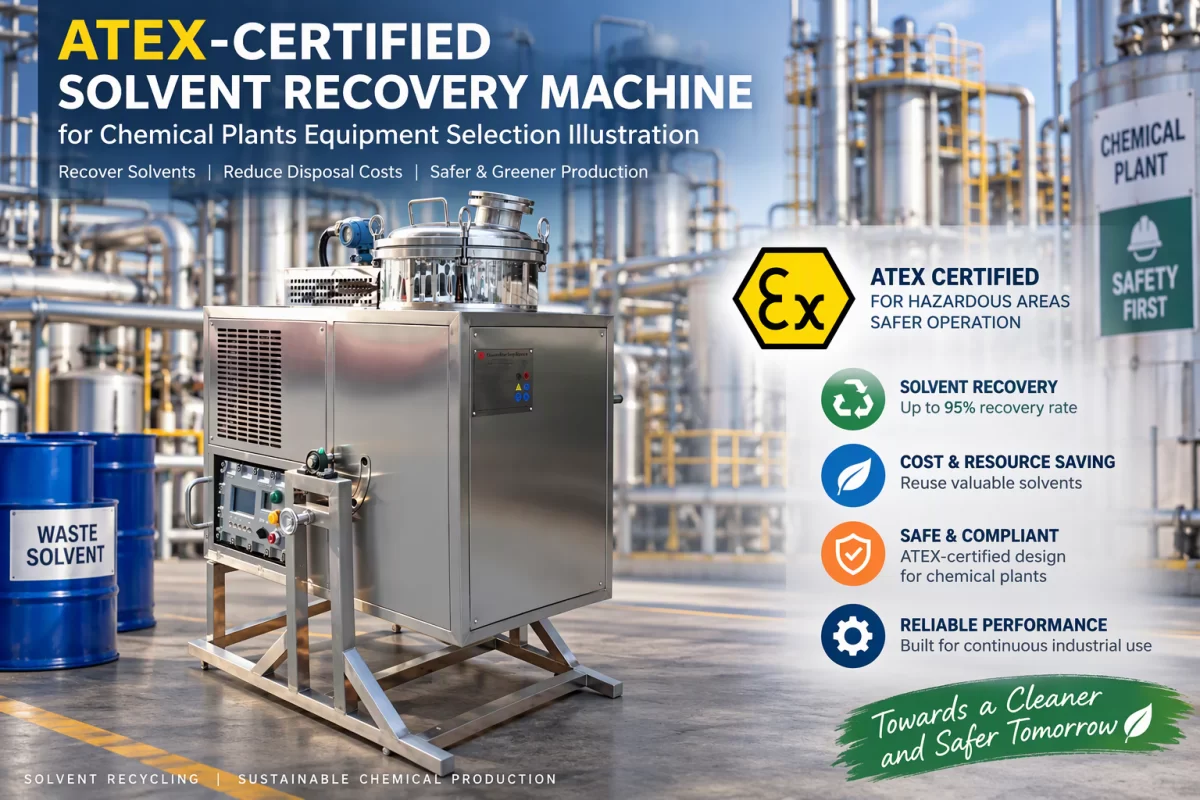
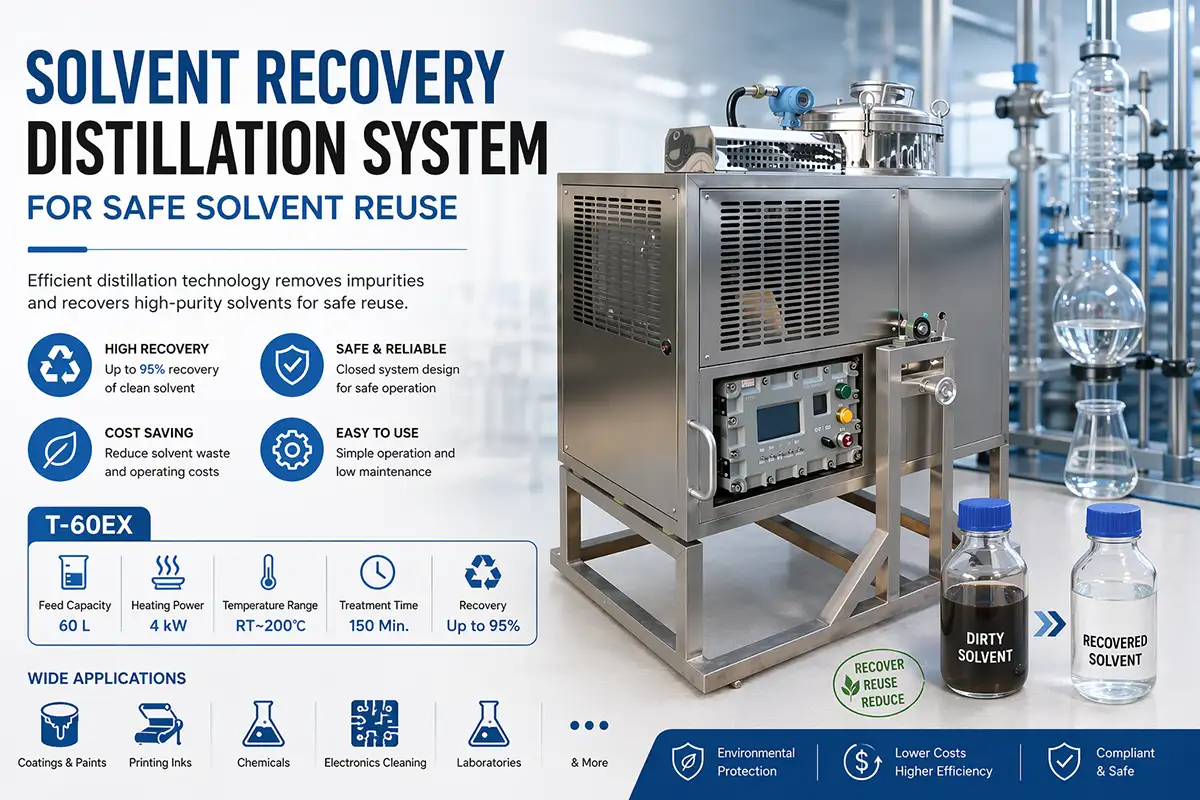
Distillation works because most common organic solvents evaporate at a lower temperature than the heavy contamination left behind after production. The solvent recovery unit heats the dirty liquid in a sealed tank, turns the solvent into vapor, condenses the vapor back into liquid, and collects the clean fraction in a receiving container. Sludge, pigment, resin, adhesive, and other non-volatile material remain in the boiler for controlled removal.
For a plant that regularly uses IPA, ethanol, acetone, ethyl acetate, xylene, toluene, paint thinner, or similar organic solvents, this process can reduce purchasing frequency and lower waste disposal pressure. A properly operated solvent recovery machine also makes solvent handling more predictable because the operator follows a fixed cycle: classify the waste, load within capacity, set temperature, condense, inspect, and store the recovered solvent.
Step-by-step process for safe reuse
A distillation system is simple in principle, but safe reuse depends on a clean workflow. The following steps help build a reliable solvent recycling routine without turning the recovery area into a trial-and-error station.
Identify the solvent and contamination
Check the safety data sheet, boiling range, flash point, water content, and contamination type. A single-solvent waste stream is usually easier to recover than a mixed stream. If the waste contains unknown chemicals, reactive residues, acids, oxidizers, or unstable materials, it should be reviewed by a qualified safety person before distillation.
Filter large solids before loading
Large paint chips, curing resin lumps, labels, cloth fibers, metal particles, and settled sludge can reduce heat transfer and make cleaning harder. Basic pre-filtration improves the consistency of the recovery cycle and protects the boiler surface.
Load within rated capacity
Overfilling is one of the easiest mistakes to avoid. Leave enough vapor space in the tank so boiling liquid does not foam into the condenser. For production planning, choose a system capacity that matches the daily or weekly waste volume rather than forcing oversized batches into a smaller unit.
Control temperature and collection
The equipment parameters supplied for the T series show a temperature range from room temperature to 200°C. That range covers many common organic solvents, but the best set point should follow the solvent's boiling behavior and contamination level. The recovered liquid should be collected in compatible, grounded, closed containers.
Verify quality before returning solvent to work
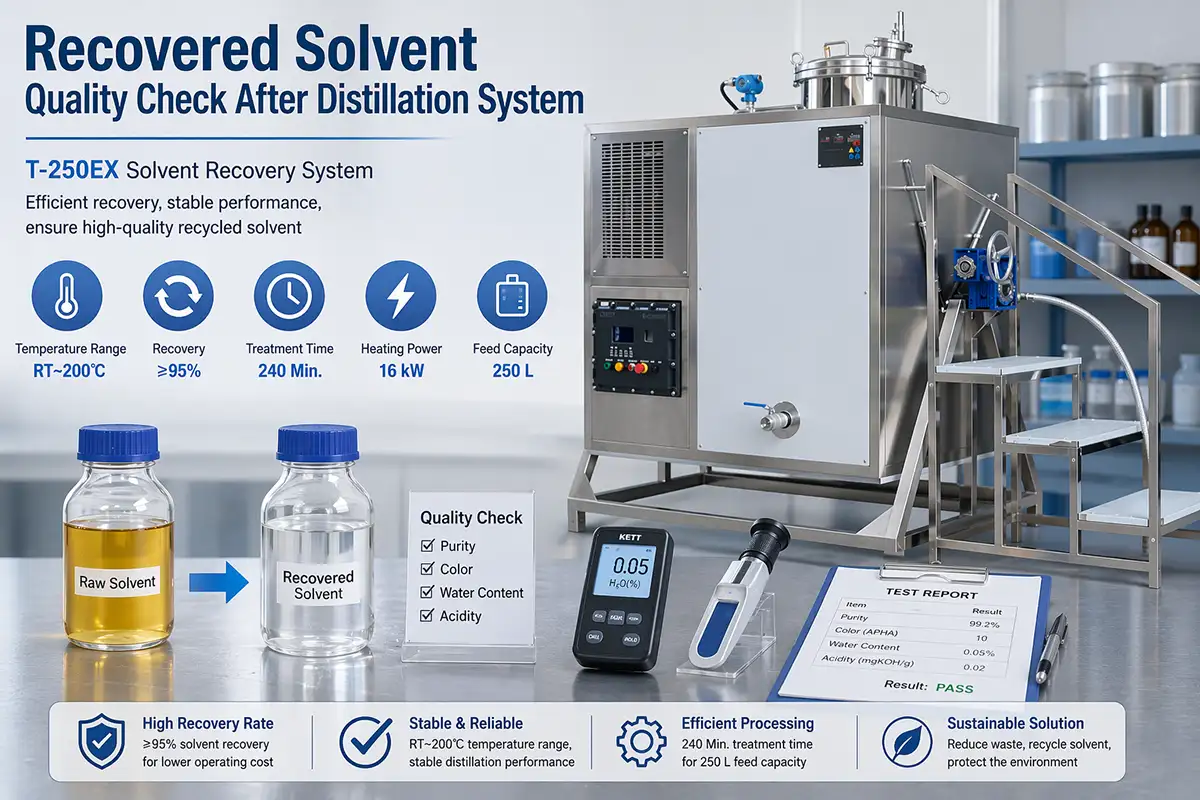
Recovered solvent should be checked for clarity, odor, residue, water content, and cleaning performance. In precision applications, a small test batch is better than returning an unverified recovered solvent to the main process. If the recovered liquid is used for pre-cleaning rather than final cleaning, mark that use clearly.
Can every used solvent be reused after distillation?
No. Distillation is powerful, but it is not a magic reset button. Solvents mixed with reactive chemicals, peroxides, strong acids, oxidizers, heavy water loads, or unknown residues may require lab evaluation or another disposal route. For normal industrial streams such as dirty thinner, IPA cleaning solvent, ethanol extraction solvent, acetone wash solvent, and many coating-related solvents, distillation is often practical when the waste stream is controlled and repeatable.
In practice, the best recovery results come from separating waste streams at the source. Do not mix paint thinner waste with water-based cleaning waste, acidic residues, or unrelated process chemicals just because they are all "liquid waste." A clean separation policy improves recovery rate, solvent purity, operator safety, and equipment life.
Equipment parameters for safe capacity planning
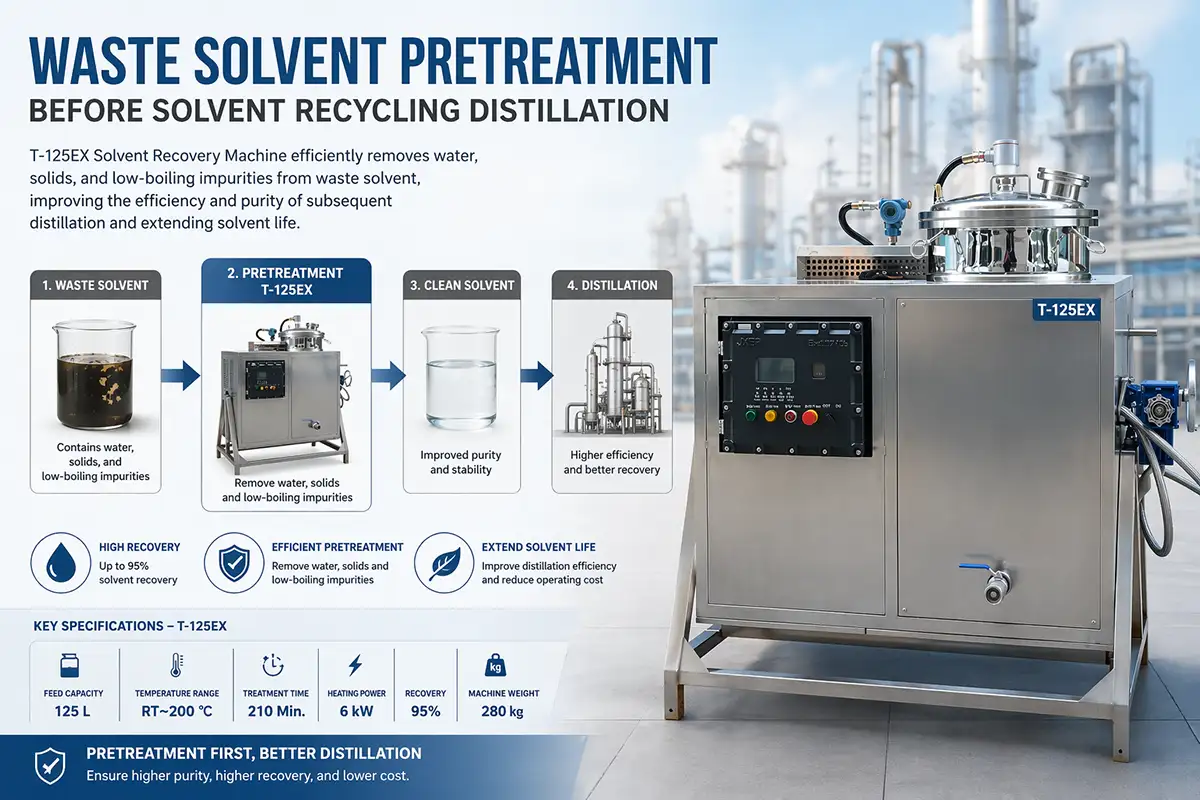
Safe reuse also depends on choosing a unit that fits the factory's waste volume. A small shop may only need a compact batch unit, while a larger coating or printing line may need higher feed capacity. The models below are based on the supplied equipment parameters and can be used as a quick planning reference.
| Model | Feed Capacity | Power Supply | Heating Power | Temperature Range | Treatment Time | Recovery | Machine Size |
|---|---|---|---|---|---|---|---|
| T-20Ex | 20 L | 380 ACV | 2 kW | RT to 200°C | 120 min. | 95% | 860 x 760 x 1190 mm |
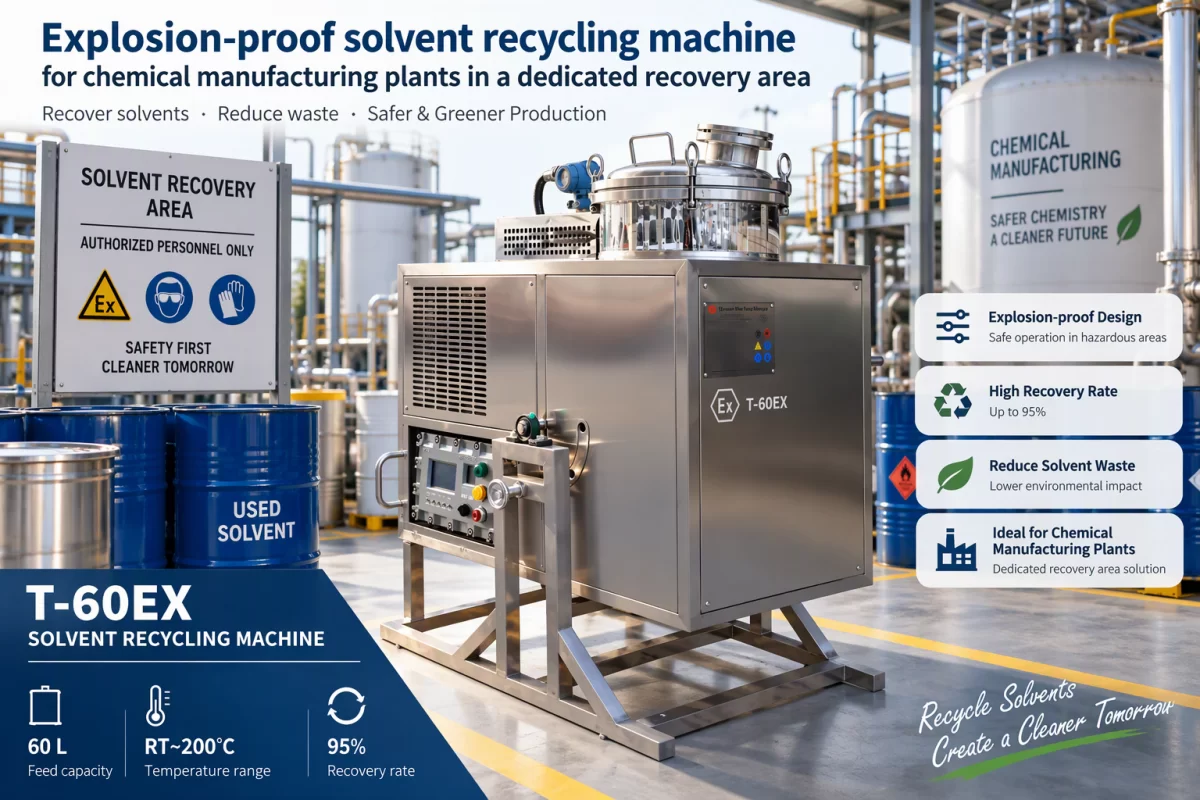
| T-60Ex | 60 L | 380 ACV | 4 kW | RT to 200°C | 150 min. | 95% | 1160 x 870 x 1260 mm |
| T-80Ex | 80 L | 380 ACV | 5 kW | RT to 200°C | 180 min. | 95% | 1180 x 850 x 1290 mm |
| T-125Ex | 125 L | 380 ACV | 6 kW | RT to 200°C | 210 min. | 95% | 1250 x 920 x 1450 mm |
| T-250Ex | 250 L | 380 ACV | 16 kW | RT to 200°C | 240 min. | 95% | 2600 x 1200 x 1950 mm |
| T-400Ex | 400 L | 380 ACV | 32 kW | RT to 200°C | 270 min. | 95% | 1990 x 1850 x 2090 mm |
These specifications show why sizing matters. If a facility generates only 20 to 40 liters of dirty solvent per day, a small unit can keep the waste stream under control. If the facility generates hundreds of liters, a larger distillation tank reduces waiting time and prevents waste drums from accumulating.
How much does a solvent distillation system cost?
Price depends on capacity, explosion-proof configuration, condenser design, scraper or residue handling structure, automation level, and the target solvent. Based on the supplied company price list, many solvent recovery machine products are listed in a range of $2,645 to $9,690. When a product has multiple prices, a middle but still economical reference value is used here: about $6,168 for common industrial solvent recovery machine configurations.
For larger equipment, one T-450Ex solvent recovery unit is listed at $10,691. A continuous IPA recovery machine reference is listed at $4,271. These are company reference prices for this article. They should be treated as planning values because final pricing may change with capacity, voltage, materials, safety options, and shipping requirements.
| Product Type | Suitable Use | Company Reference Price | Selection Note |
|---|---|---|---|
| Industrial solvent recovery machine | Printing, coating, cleaning, general solvent reuse | About $6,168 | Middle economical value from the listed company price range |
| T-450Ex solvent recovery unit | Larger waste organic solvent recovery | $10,691 | Better for larger batch planning |
| IPA continuous recovery machine | Electronics cleaning and IPA recovery | $4,271 | Useful when IPA reuse quality is a priority |
Usually not. The better choice is the unit that safely handles the actual solvent, daily waste volume, required recovery purity, and residue type. A slightly larger or better configured unit can reduce labor, downtime, cleaning difficulty, and disposal cost over time.
Key safety controls before recovered solvent goes back into use
Recovered solvent should be managed like a production material, not like an informal shop-floor shortcut. A safe program needs written operating instructions, labeled containers, trained operators, and basic quality checks. The goal is to make every batch traceable enough that a problem can be found before it reaches coating quality, cleaning quality, or worker safety.
Use compatible containers. Recovered solvents should be stored in containers rated for the chemical and kept closed when not in use.
Maintain grounding and ventilation. Flammable solvents require attention to static control, vapor control, and local electrical requirements.
Record each batch. Note source solvent, date, machine model, temperature setting, approximate recovery amount, and observed quality.
Clean residue regularly. Heavy sludge left too long can reduce heat transfer, increase odor, and make the next cycle less efficient.
Keep recovered solvent use defined. Some recovered solvents are suitable for process reuse, while others are better for first-stage cleaning or rinsing.
For a deeper explanation of the distillation principle, compare this article with the guide to a solvent recovery distillation unit. Facilities that recover alcohols can also review the ethanol recovery system guide for alcohol-specific recovery planning.
What recovery rate should be expected?
The supplied T series parameters show a 95% recovery figure, which is a strong benchmark for suitable solvent streams. Actual recovery depends on how much non-volatile residue, water, resin, pigment, or oil is present. A cleaner and more consistent waste stream usually delivers a better practical recovery rate.
Recovery rate should not be evaluated alone. A plant also needs to consider recovered solvent quality, cleaning performance, operator time, residue disposal weight, energy use, and the reduction in new solvent purchasing. The best solvent reuse program balances all of those factors.
Where solvent reuse delivers the fastest value
Distillation systems are especially helpful when solvent use is repetitive and waste composition is predictable. Paint shops can recover thinner from gun washing and coating cleanup. Printing plants can recover wash solvent contaminated by ink and resin. Electronics manufacturers can recover IPA used for cleaning. Extraction and chemical facilities can recover ethanol or other process solvents when the boiling profile is suitable.
The most successful users usually build a simple loop: purchase solvent, use it in production, collect the spent solvent separately, distill it, test it, then reuse it in an approved step. Once that loop is stable, the facility reduces new solvent purchases and lowers hazardous waste disposal volume without changing the core production process.
Final checklist for safe solvent reuse
Before starting a solvent recycling program, confirm five points. First, the solvent stream is identified and compatible with distillation. Second, the equipment capacity matches real waste volume. Third, operators understand loading, temperature setting, collection, shutdown, and residue removal. Fourth, recovered solvent has an approved reuse purpose. Fifth, the facility keeps records so each batch can be reviewed.
Check the solvent label, waste source, fill level, condenser path, receiving container, grounding, ventilation, set temperature, and residue container. After the batch, check recovered solvent clarity and record the result before reuse.
When these points are controlled, distillation becomes a practical way to reuse solvents safely. It helps factories turn a recurring waste problem into a managed resource, while keeping operator safety and solvent quality at the center of the process.
Safe reuse begins with the right recovery system
A solvent distillation system should be selected according to solvent type, contamination, recovery target, and batch volume. With suitable equipment, disciplined sorting, and routine quality checks, recovered solvent can become a dependable part of daily production instead of a risky afterthought.