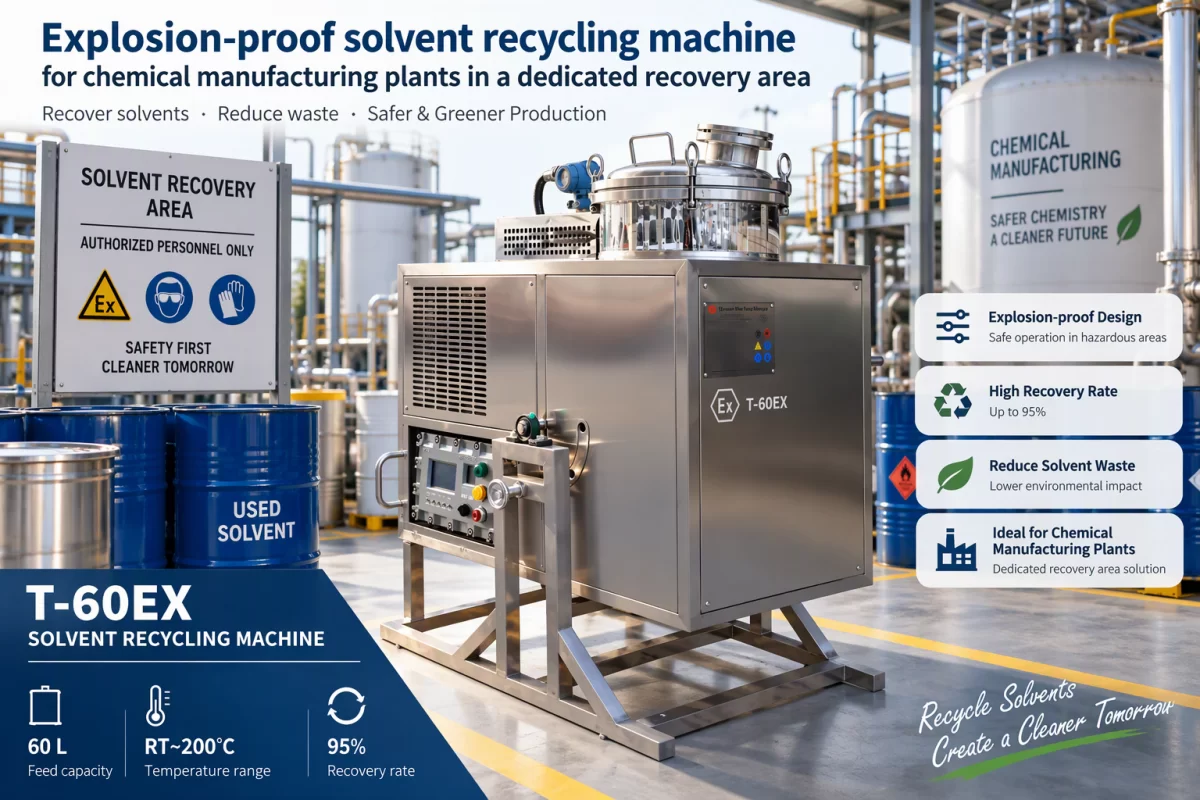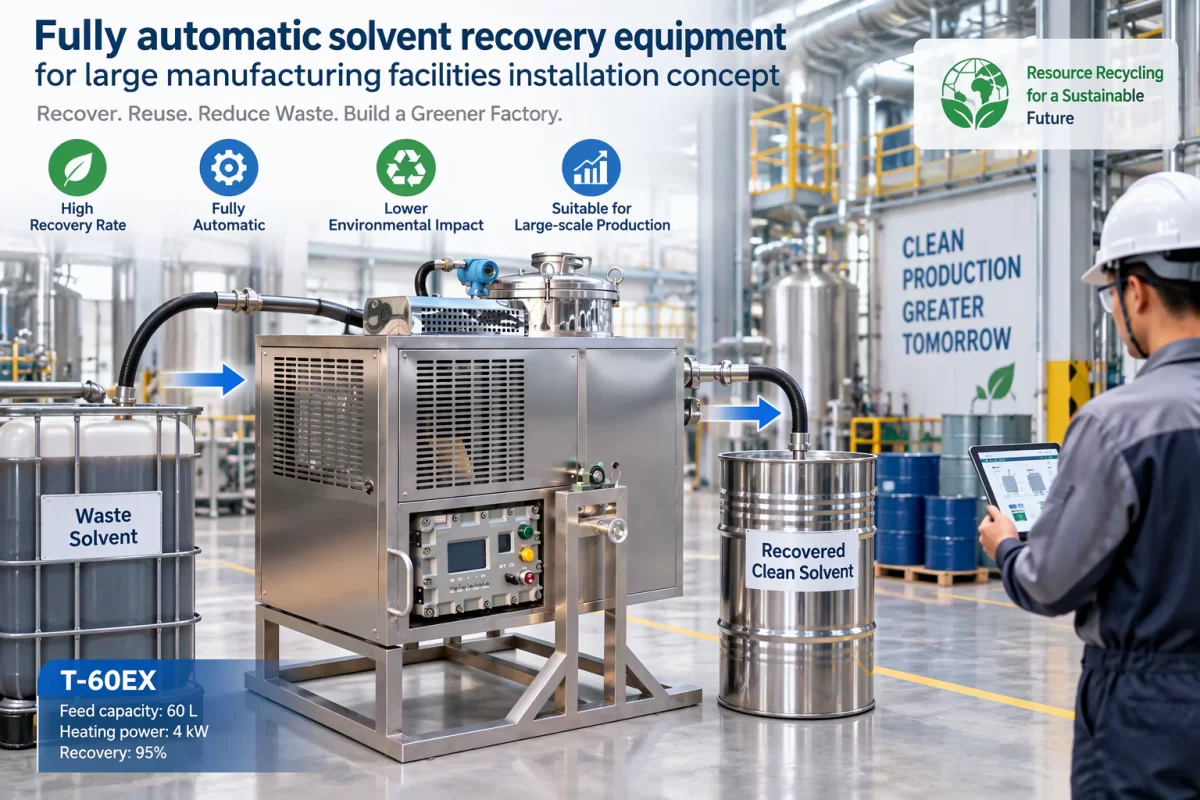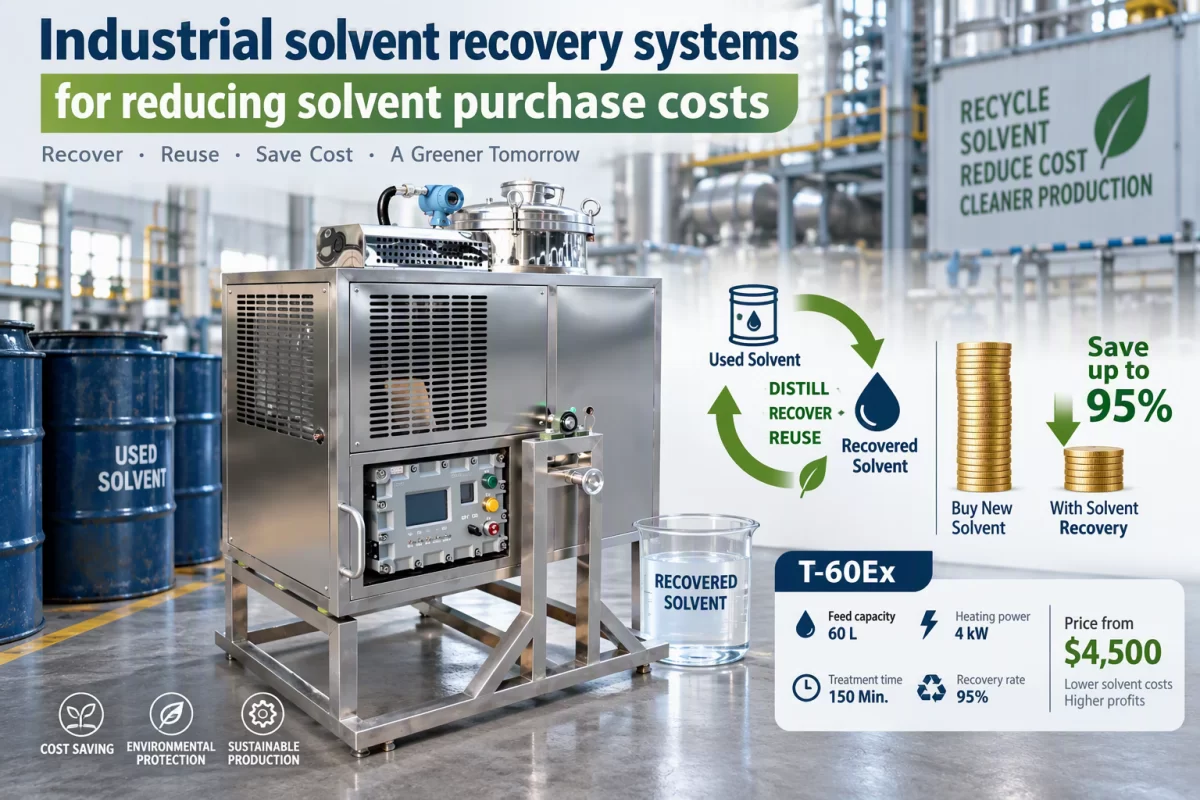
Which solvent distillation unit offers continuous feed and discharge?
Continuous feed and discharge solvent recovery is one of the most practical ways to increase plant efficiency, reduce labor interruptions, and keep reusable solvent flowing back into production. For operations handling IPA, ethanol, acetone, xylene, thinner, and mixed organic solvents, the right solvent distillation unit can significantly lower waste treatment costs while improving solvent reuse consistency.
The short answer is that a solvent distillation unit with engineered automatic control, stable heating, matched condensation, and a continuous transfer design is the best choice when continuous feed and discharge is required. In practical factory terms, this means selecting an industrial solvent recovery machine built for ongoing production instead of simple batch-only recycling. Continuous operation matters most in printing, coating, electronics cleaning, extraction, paint, ink, and parts-washing lines where solvent waste is generated every day rather than once in a while.
What does continuous feed and discharge really mean?
In a traditional batch system, waste solvent is loaded into the tank, heated, distilled, condensed, and then discharged after the cycle is complete. That process works well for many users, but it has a natural stop-and-start rhythm. A continuous solvent distillation unit reduces those interruptions by allowing waste solvent to enter the system in a more consistent manner while recovered solvent and residue are handled with less downtime.
This is especially valuable where the solvent stream is predictable and the production line cannot afford frequent manual unloading. A continuous solvent recycler can support smoother scheduling, reduce operator handling time, and deliver more stable output from shift to shift.
Why is continuous feed and discharge important for solvent recovery?
Answer from the author: it matters because downtime is often more expensive than energy. When waste solvent keeps accumulating, a continuous-capable system helps avoid bottlenecks, lowers drum storage pressure, and turns used solvent into reusable material more efficiently.
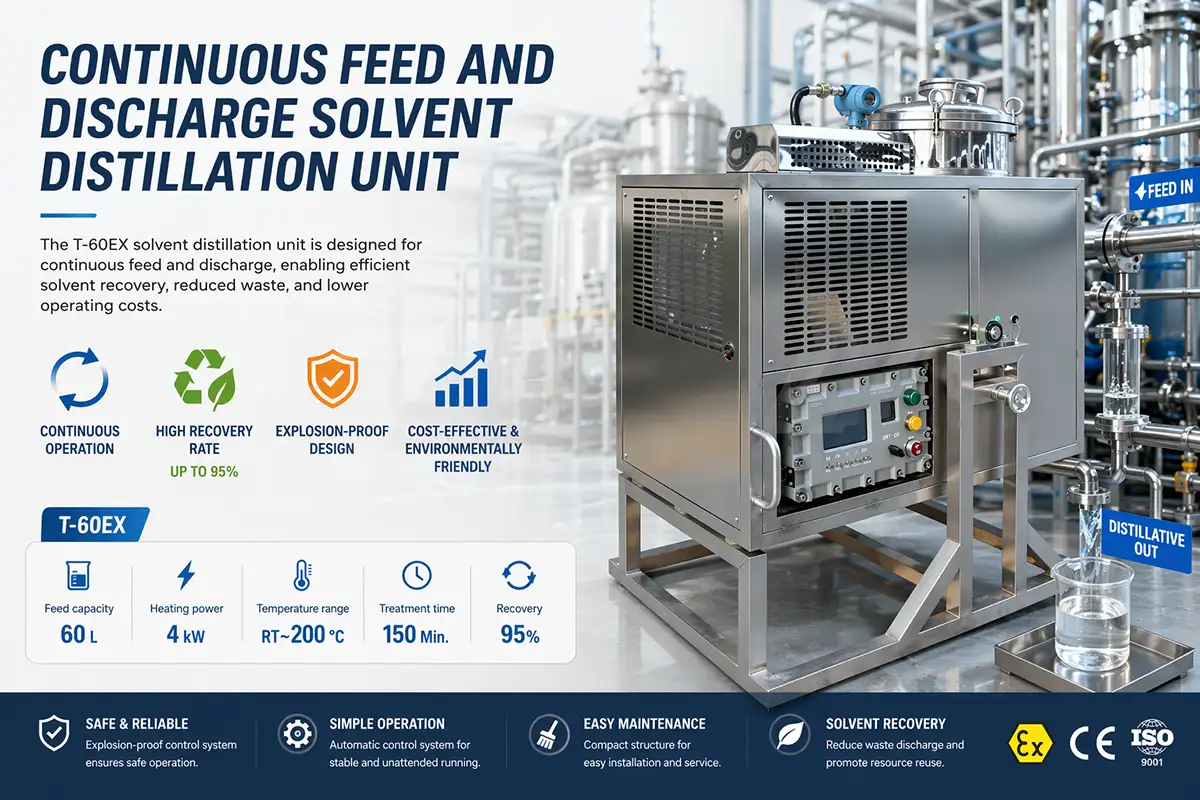
Key features to look for in a continuous solvent distillation unit
Not every solvent distillation system labeled “automatic” truly performs as a continuous feed and discharge unit. The equipment should be evaluated by process design, not just by marketing language. The most useful features normally include:
Reliable feed control to match evaporation capacity.
Steady heating power for consistent distillation temperature.
Effective condensation to keep solvent loss low.
Residue management that does not force unnecessary shutdowns.
Explosion-proof construction for flammable solvents where required.
Simple maintenance access for daily industrial use.
For example, when recovering IPA or ethanol from cleaning or extraction processes, stable temperature control and condenser sizing strongly influence recovery quality. Users researching ethanol recovery system options often focus on recovery percentage alone, but throughput stability and residue behavior are just as important for real production efficiency.
Practical model range for industrial solvent recovery
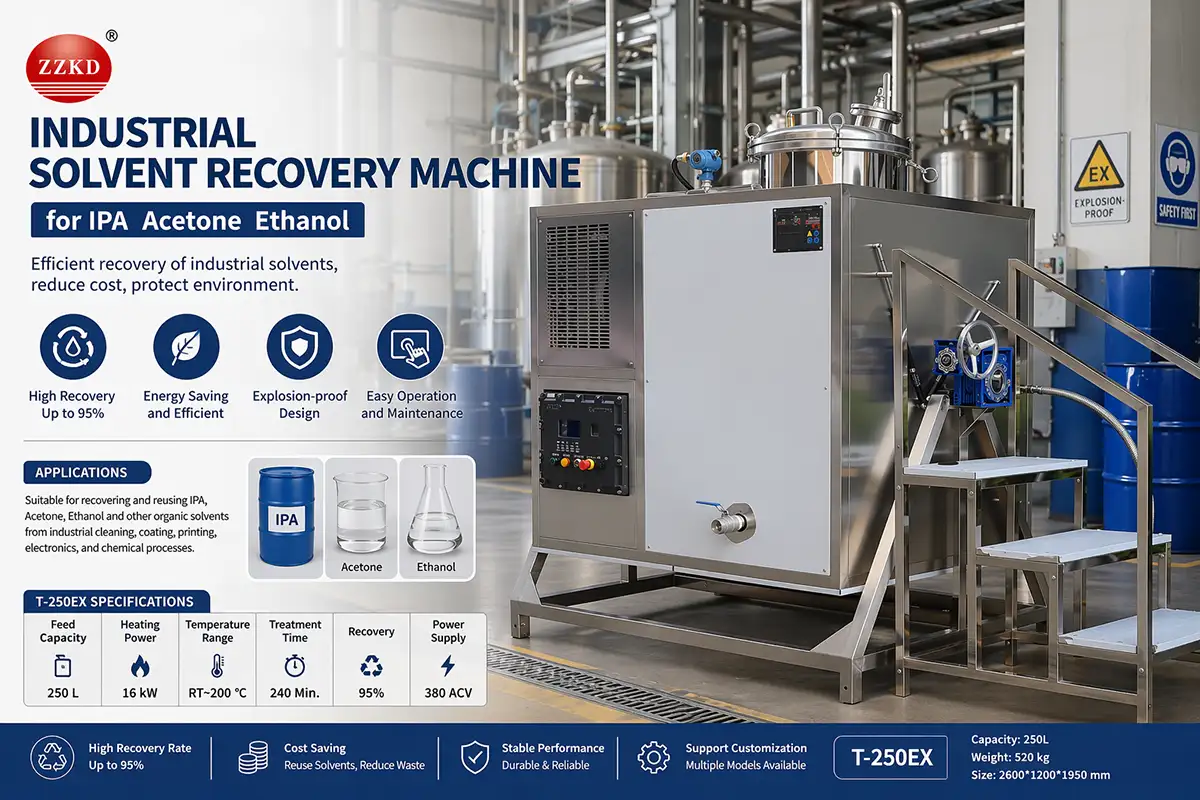
For many factories, the best route into continuous-capable solvent recovery starts with selecting the correct vessel size and heating capacity. The following explosion-proof model range offers a useful reference for operations that need dependable recovery performance and strong compatibility with organic solvent recycling tasks.
| Model | Feed Capacity (L) | Power Supply (ACV) | Heating Power (kW) | Temperature Range (℃) | Treatment Time (Min.) | Recovery (%) | Weight (kg) | Machine Size (mm) |
|---|---|---|---|---|---|---|---|---|
| T-20Ex | 20 | 380 | 2 | RT~200 | 120 | 95 | 153 | 860×760×1190 |
| T-60Ex | 60 | 380 | 4 | RT~200 | 150 | 95 | 170 | 1160×870×1260 |
| T-80Ex | 80 | 380 | 5 | RT~200 | 180 | 95 | 200 | 1180×850×1290 |
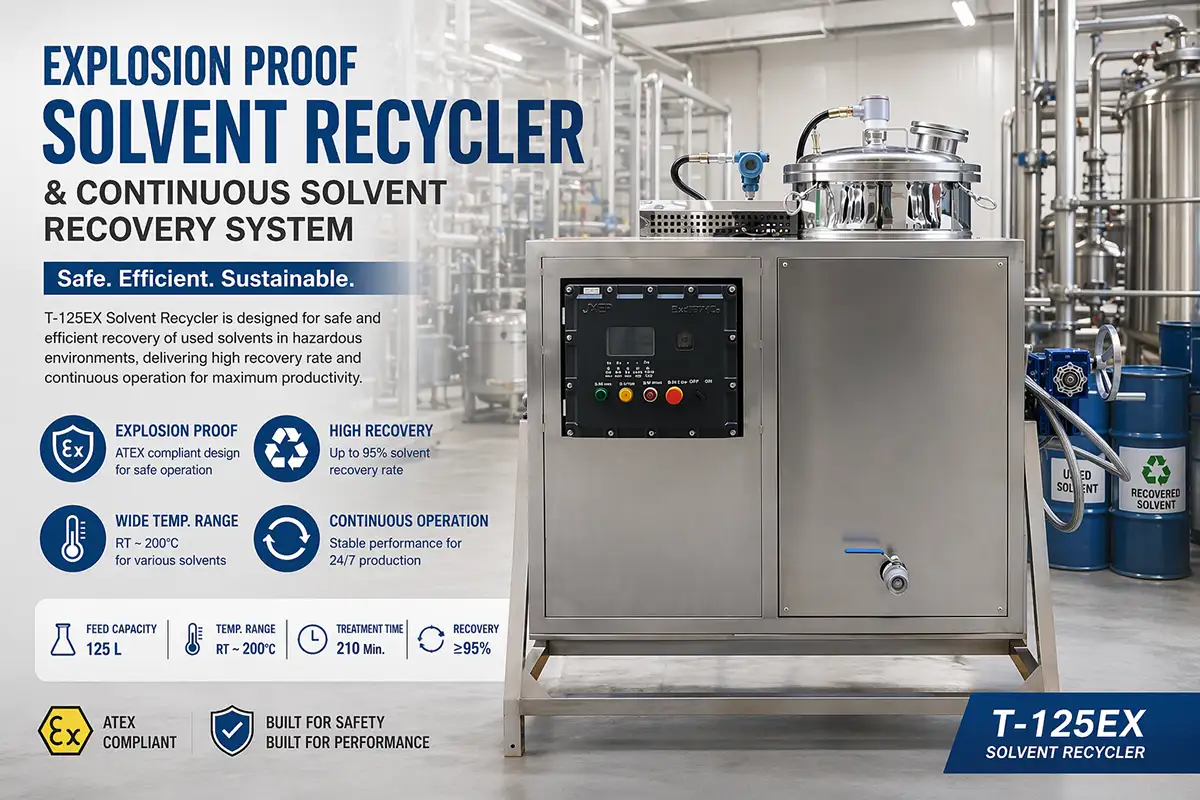
| T-125Ex | 125 | 380 | 6 | RT~200 | 210 | 95 | 280 | 1250×920×1450 |
| T-250Ex | 250 | 380 | 16 | RT~200 | 240 | 95 | 520 | 2600×1200×1950 |
| T-400Ex | 400 | 380 | 32 | RT~200 | 270 | 95 | 1200 | 1990×1850×2090 |
Applications where continuous solvent recovery creates the biggest value
Continuous-capable solvent recovery is not just a specification detail; it is a cost-control tool. In the following industries, a continuous solvent distillation unit often delivers the clearest return:
Ethanol extraction and botanical processing: recurring solvent load makes continuous recovery attractive for reducing fresh solvent purchases.
IPA and acetone cleaning lines: electronics, hardware, and precision parts manufacturers benefit from stable recycling of cleaning solvent.
Paint and ink operations: thinner, xylene, and mixed wash solvent can often be reclaimed effectively.
Printing and coating plants: large daily solvent consumption makes waste minimization financially important.
For acetone-related use cases, readers may also find value in this internal reference on acetone recycling, which explains why solvent purity targets, contamination type, and application demands directly affect equipment selection.
How to decide whether a batch or continuous-style unit is the better fit
Many companies assume larger capacity automatically means continuous operation, but that is not always accurate. The more useful evaluation method is to ask how the solvent waste is generated. If solvent waste arrives in irregular small volumes, a batch machine may be enough. If solvent waste is generated every shift in a predictable stream, then a continuous feed and discharge design becomes more attractive.
Can a batch solvent recycler still be the right choice?
Answer from the author: yes. A batch system remains a strong option for labs, smaller workshops, or users processing multiple solvent types in separate runs. Continuous-style operation shows its biggest advantage where one or two solvent streams dominate daily production and the waste volume is steady.
Another overlooked point is residue character. Heavy sludge, resin, ink solids, oil, or polymer contamination may require scraper support, liner bags, or a cleaning-friendly tank structure. The best solvent recycler is never chosen by liters alone; the residue profile must be part of the decision.
Price guidance and value perspective
Entry-level laboratory and light-duty distillation products can be much lower in cost, while industrial automatic and explosion-proof systems are positioned for more demanding service. Based on the available company pricing data, a representative price for industrial solvent recovery equipment in the multi-price range is US$4,271, which aligns with equipment featuring continuous solvent recovery capability for industrial IPA applications. Another larger waste solvent recovery unit reference is listed at US$10,691.
These are company prices. In many market comparisons, comparable external equipment is often priced higher, especially when stronger automation, hazardous-area design, or customized process support is required. That is why the purchase decision should focus on total recovered solvent value, disposal savings, and labor reduction instead of initial price alone.
Is the lowest-priced solvent distillation unit always the most economical?
Answer from the author: not necessarily. If a lower-cost machine lacks stable feed control, condensation efficiency, or suitable explosion-proof configuration, solvent loss and downtime can quickly outweigh the purchase savings. In many cases, the truly economical option is the one that matches the solvent, workload, and safety standard from the start.
Safety and compliance considerations for continuous solvent distillation
When evaluating a continuous feed and discharge solvent recovery unit, safety should be treated as a primary selection factor. Solvents such as ethanol, IPA, acetone, toluene, xylene, and mixed thinners are often flammable, so the machine design must align with the site’s electrical and operating requirements.
Explosion-proof components where flammable vapors are present.
Reliable temperature control and over-temperature protection.
Grounding and static management.
Effective condenser and cooling support.
Clear operating documentation and maintenance guidance.
Configuration matched to the actual solvent and production environment.
Continuous operation increases the importance of process stability. A good design is not just about throughput; it must also maintain control during long operating periods. That is why serious buyers usually ask about solvent type, daily liters, heating method, residue discharge, and site classification before finalizing a model.
Final answer: which unit should be chosen?
If the goal is continuous feed and discharge, the ideal solvent distillation unit is an industrial automatic solvent recovery machine designed for steady waste input, stable condensation, efficient residue handling, and explosion-proof safety where needed. For smaller intermittent volumes, compact units like T-20Ex to T-80Ex may be sufficient. For heavier plant demand and stronger continuity, models such as T-125Ex, T-250Ex, or T-400Ex are usually more practical because they better support higher throughput and reduced manual interruption.
In other words, the best answer is not one generic model name. It is the model whose feed capacity, heating power, recovery rate, solvent compatibility, and safety configuration fit the actual process. For companies that want to cut solvent waste, reduce disposal fees, and keep more reusable solvent inside production, choosing the right continuous-capable solvent distillation unit can become a direct profit improvement rather than just a utility purchase.