Used Solvent Recovery Systems: A Practical Guide to Cutting Costs and Improving Sustainability
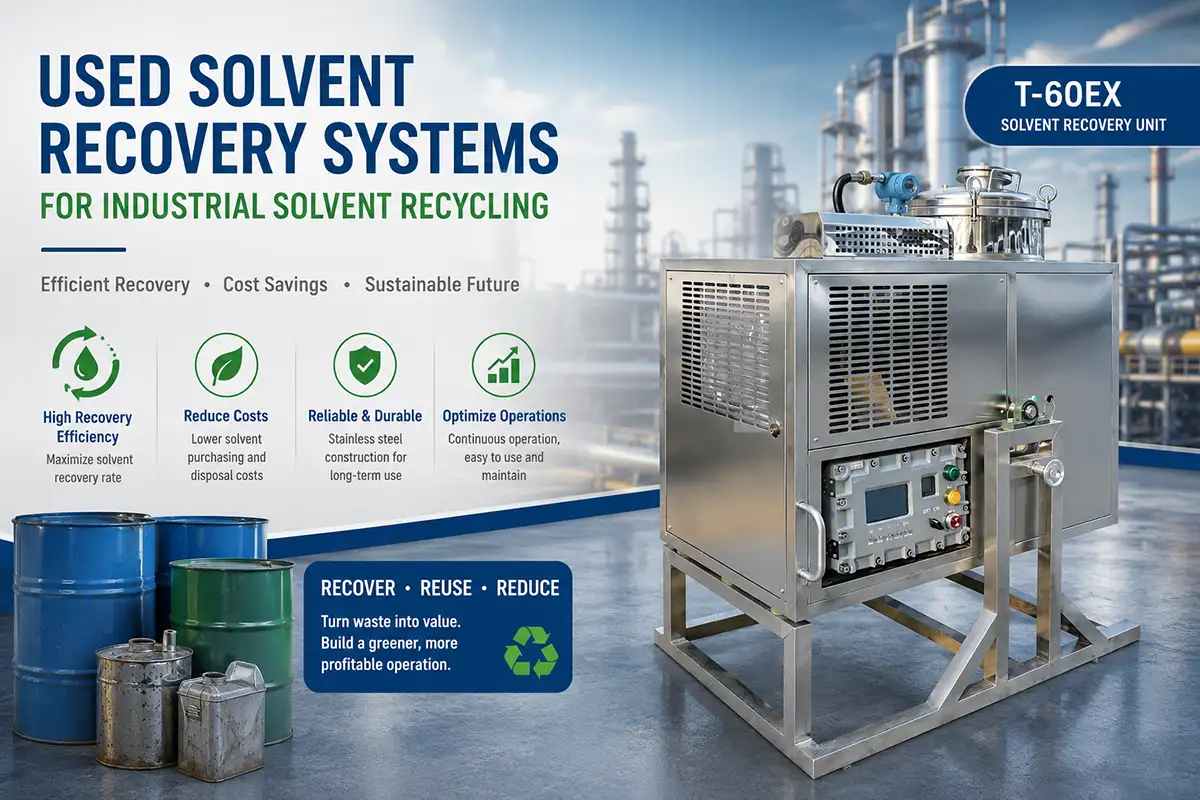
Used solvent recovery systems are no longer viewed as secondary equipment. In many production environments, they have become a strategic tool for reducing solvent consumption, lowering disposal pressure, improving environmental performance, and supporting safer daily operations.
Why Used Solvent Recovery Systems Matter
Across printing, coatings, electronics cleaning, pharmaceuticals, laboratories, chemical processing, and extraction applications, solvent loss directly affects operating cost. Fresh solvent purchases continue month after month, while contaminated solvent often creates an additional waste handling burden. That is why more buyers are actively searching for used solvent recovery systems and high-efficiency recovery equipment that can return reusable solvent back into production.
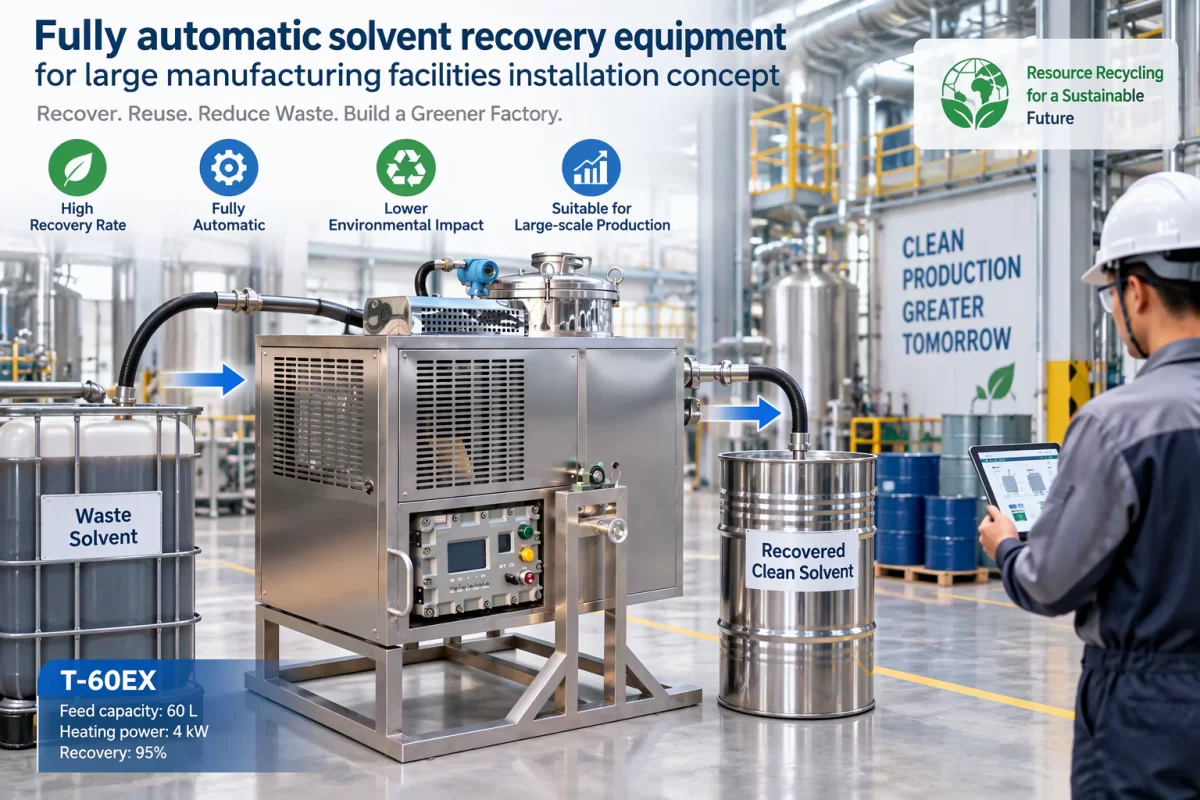
From an equipment selection perspective, the value of a recovery system is never based on one factor alone. Real purchasing decisions depend on solvent type, expected throughput, recovery ratio, temperature range, hazardous-area requirements, and the long-term economics of reuse. In practical terms, a correctly sized unit can help recover up to 95% of usable solvent, which can significantly improve process efficiency while reducing waste volume.
For businesses comparing new installations or upgrading from manual handling, a modern solvent recycler machine can offer a more stable, more compliant, and more economical route to solvent reuse.
What Buyers Usually Look For
In the market, many people begin with the phrase “used solvent recovery systems,” but the real question is usually deeper: what kind of system is suitable for the actual process? A small lab stream, a paint thinner recycling line, and a high-volume industrial acetone or IPA recovery operation all need different equipment logic.
Solvent compatibility: ethanol, IPA, acetone, xylene, toluene, ethyl acetate, and other organic solvents may require different seals, materials, and temperature control strategies.
Capacity: a system handling 20 liters per batch is very different from one designed for 250 or 400 liters.
Heating power and treatment time: these determine cycle speed and daily throughput.
Recovery efficiency: stable recovery around 95% is often the benchmark for practical reuse economics.
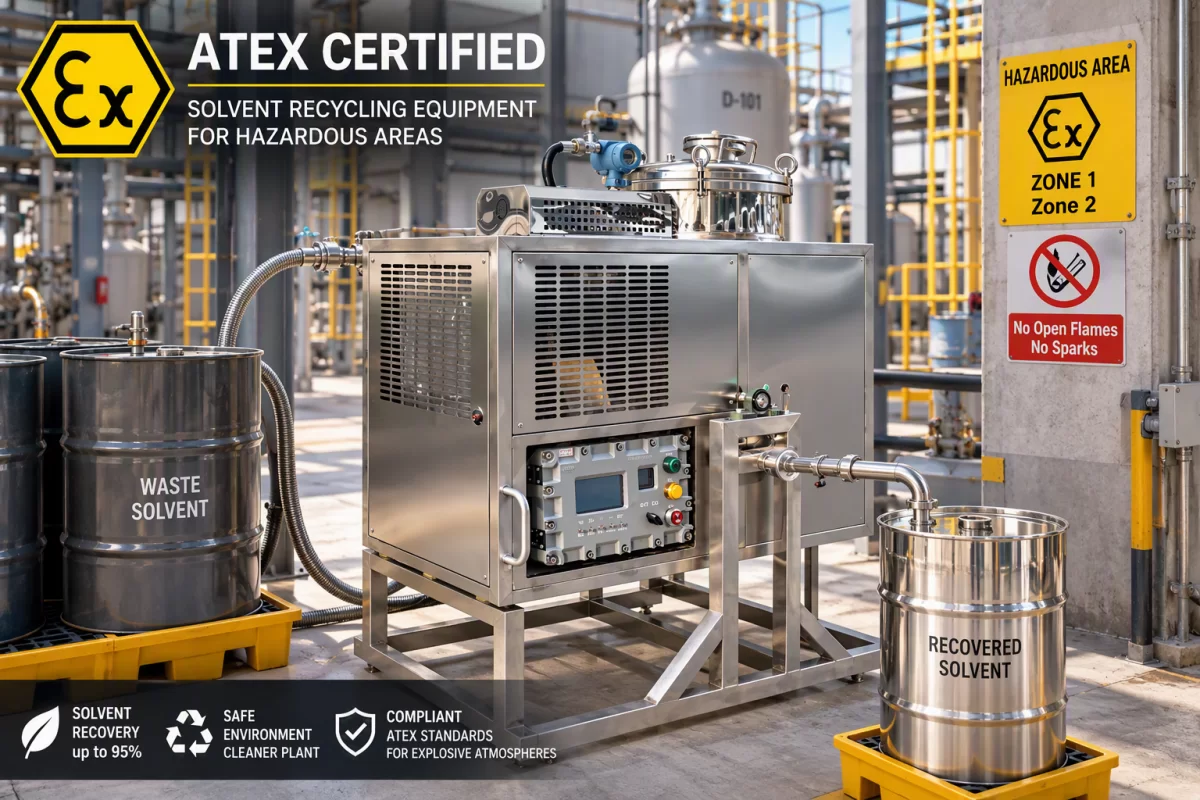
Safety configuration: explosion-proof design, grounding, closed operation, and compliance visibility are essential for flammable solvents.
Maintenance and support: serviceability strongly affects real-life value after purchase.
Can used solvent recovery systems still deliver reliable performance?
Answer: Yes, but only when the system design is matched to the solvent stream and daily workload. In many cases, buyers are not really looking for “old equipment”; they are looking for a proven recovery solution with dependable construction, stable recovery efficiency, and predictable operating cost. The better approach is to evaluate function first and purchase channel second.
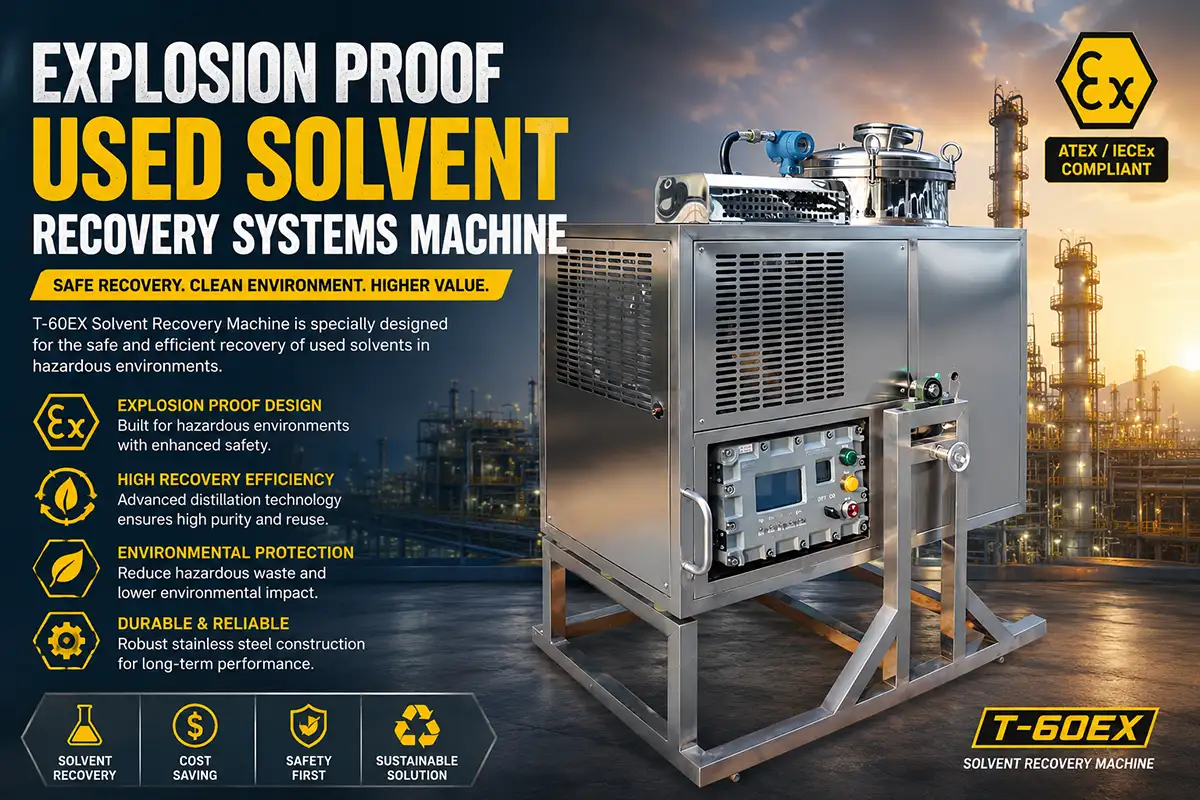
Typical Capacity Range for Industrial Recovery
For many industrial users, capacity determines whether the system truly fits production. Based on common explosion-proof configurations, available batch models can cover a broad range from compact operations to heavier industrial duty. The following table summarizes representative machine parameters for practical reference.
| Model | Feed Capacity (L) | Power Supply (ACV) | Heating Power (kW) | Temperature Range (℃) | Treatment Time (Min.) | Recovery (%) | Weight (kg) | Machine Size (mm) |
|---|---|---|---|---|---|---|---|---|
| T-20Ex | 20 | 380 | 2 | RT~200 | 120 | 95 | 153 | 860×760×1190 |
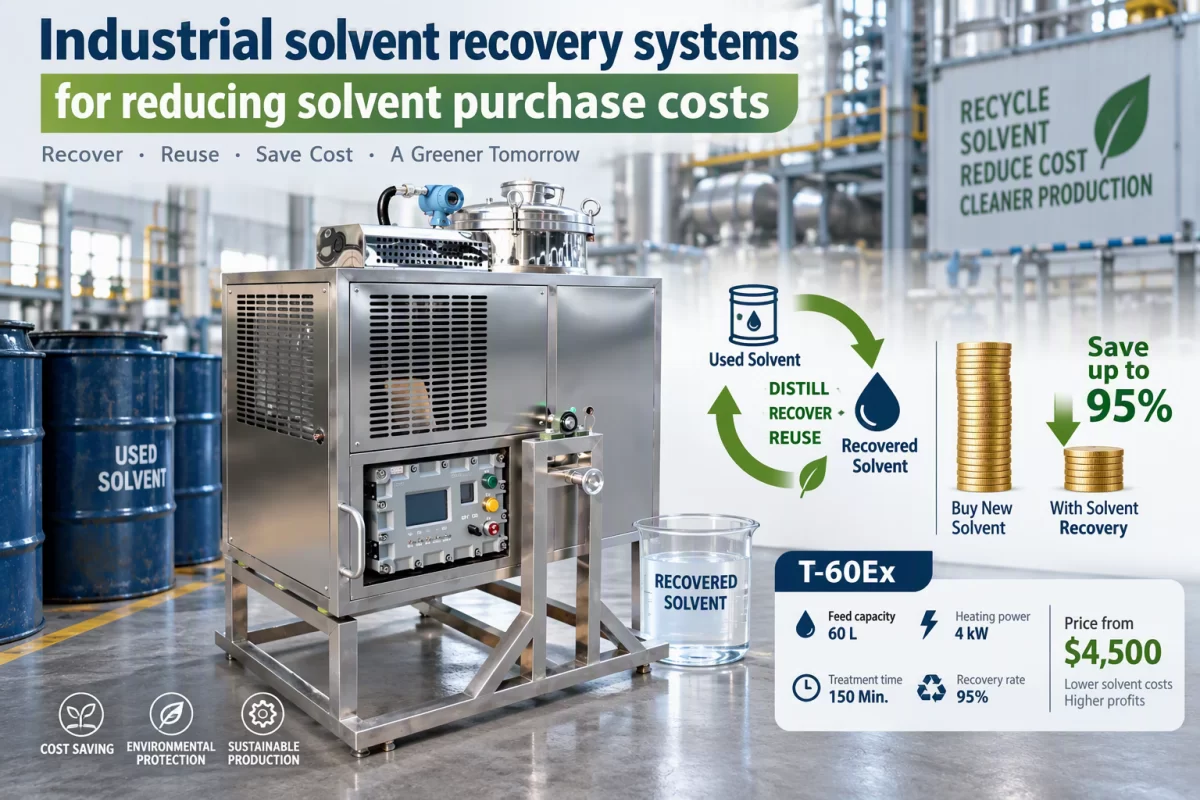
| T-60Ex | 60 | 380 | 4 | RT~200 | 150 | 95 | 170 | 1160×870×1260 |
| T-80Ex | 80 | 380 | 5 | RT~200 | 180 | 95 | 200 | 1180×850×1290 |
| T-125Ex | 125 | 380 | 6 | RT~200 | 210 | 95 | 280 | 1250×920×1450 |
| T-250Ex | 250 | 380 | 16 | RT~200 | 240 | 95 | 520 | 2600×1200×1950 |
| T-400Ex | 400 | 380 | 32 | RT~200 | 270 | 95 | 1200 | 1990×1850×2090 |
The right capacity should be selected according to solvent type, solids loading, operating hours, and target liters per day.
Where the Best Return on Investment Usually Comes From
Cost savings with used solvent recovery systems are not created only by the initial machine price. The bigger savings usually come from four areas: lower fresh solvent purchasing, lower hazardous waste handling, shorter production interruptions, and more stable solvent availability on site.
For example, widely used industrial solvent recovery units in our range are commonly priced from $2,645 to $9,690. When multiple prices are available, the more economical middle option is approximately $6,167, which is often a useful planning figure for buyers comparing return on investment. For larger heavy-duty recovery applications, a higher-capacity model such as the HY450Ex reference level is available at $10,691.
Compared with many alternatives in the market, our pricing remains more competitive while still focusing on practical industrial recovery requirements. This is especially important for factories that need to scale solvent reuse without overextending capital budgets.
Buyers evaluating cost drivers can also review this related resource on solvent recovery system price to understand how specification, throughput, and safety features influence investment.
Is the cheapest recovery unit always the most economical choice?
Answer: Not necessarily. A lower purchase price can become expensive if the machine is undersized, lacks recovery stability, or creates longer treatment cycles. In solvent recycling, lifecycle value matters more than entry cost alone. The most practical choice is the system that balances safe operation, suitable capacity, and dependable solvent reuse.
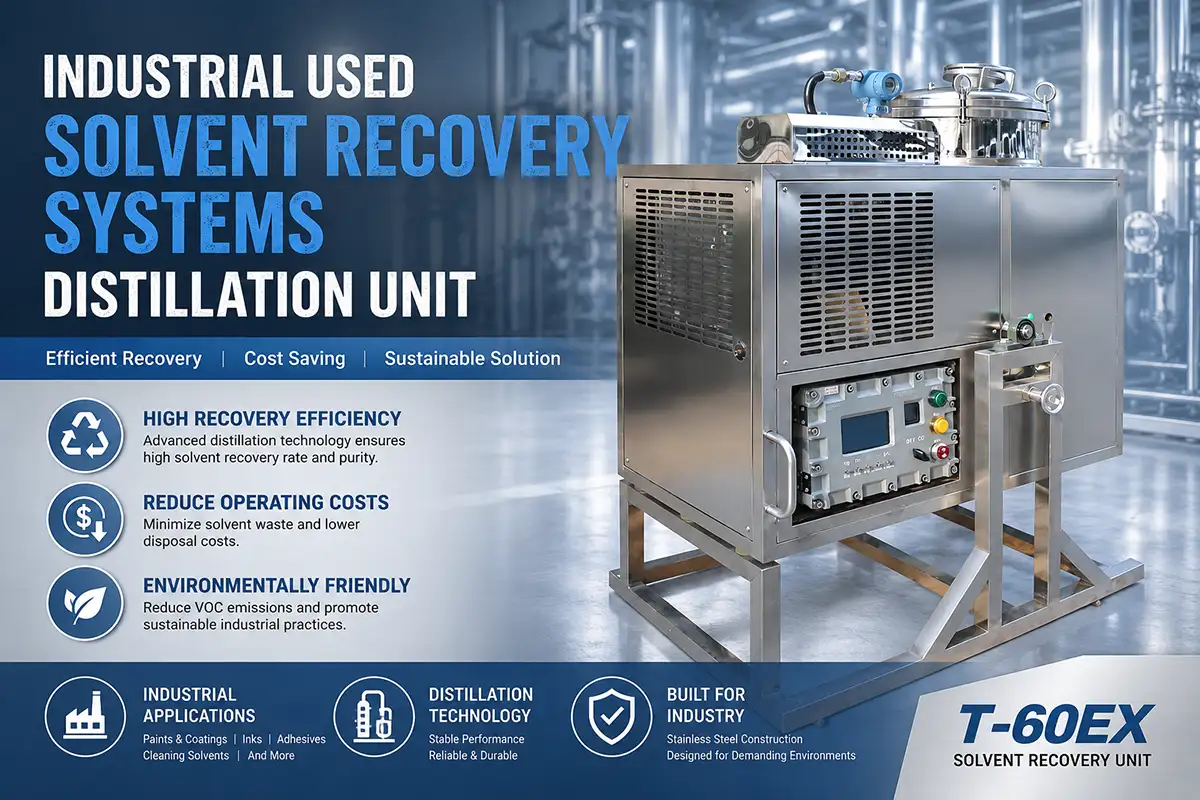
How to Match the System to the Application
Not all solvent streams behave the same way. Dirty paint thinner, waste acetone, contaminated ethyl acetate, and used IPA from electronics cleaning each have different boiling behavior, contamination profiles, and safety concerns. Because of that, application-specific selection is a major part of successful deployment.
For acetone and fast evaporating solvents: focus on closed operation, condenser efficiency, and stable heat control. A related overview is available in this guide to acetone recycling.
For IPA and cleaning solvents: prioritize purity needs, contamination load, and whether the recovered solvent will be reused in cleaning or downgraded for secondary use.
For paint, ink, and thinner applications: sludge handling and residue removal become critical practical factors.
For flammable environments: explosion-proof design and clear compliance documentation should move to the top of the checklist.
In many projects, the strongest results come from choosing a system based on a narrow use-case rather than buying a generic machine. This is also why structured content, clear solvent mapping, and specification transparency matter so much in industrial SEO and product discovery today.
Why Safety and Compliance Visibility Influence Buying Decisions
Industrial buyers do not select recovery equipment on marketing language alone. They usually look for visible proof of engineering logic: suitable electrical supply, realistic heating power, process temperature range, and documented features for hazardous operation. A machine that processes solvent safely under repeatable conditions will always be easier to justify internally.
That is one reason explosion-proof solvent recyclers continue to receive strong attention. In practical field use, features such as sealed operation, controlled distillation, proper grounding, condensed vapor recovery, and robust mechanical construction help reduce avoidable risk. For distributors and end users alike, clear compliance information improves trust, while vague product positioning often reduces confidence.
What is often missing when buyers compare used solvent recovery systems online?
Answer: The missing piece is usually application clarity. Capacity alone is not enough. Buyers need to know which solvents are supported, what recovery percentage is realistic, how long each cycle takes, and whether the system is suitable for the intended operating environment. When that information is clear, the equipment becomes much easier to evaluate.
A Smarter Approach to Solvent Reuse
The market for used solvent recovery systems is growing because solvent reuse is no longer just an environmental idea. It is a practical operating decision. Facilities want lower solvent purchasing frequency, less waste accumulation, more predictable production support, and more visible sustainability performance. A well-selected recovery unit contributes to all four.
Whether the project starts with a compact 20 L batch model or expands toward 400 L industrial capacity, the core decision remains the same: match the machine to the solvent, the daily volume, and the required safety level. When those elements line up, recovery becomes a repeatable profit-saving process rather than an uncertain experiment.
Explore Practical Recovery Solutions
If the goal is to reduce waste solvent cost and improve solvent reuse efficiency, the most effective next step is to compare specifications, application fit, and process requirements side by side. The right recovery system should support real production conditions, not just look attractive on paper.
Recommended starting points:
Check solvent type and contamination level
Estimate liters processed per batch or per day
Confirm hazardous-area and power requirements
Compare cycle time against production rhythm
Review expected recovery percentage and residue handling