Laboratory Solvent Recovery Equipment: Smart Selection, Safer Operation, and Better Cost Control
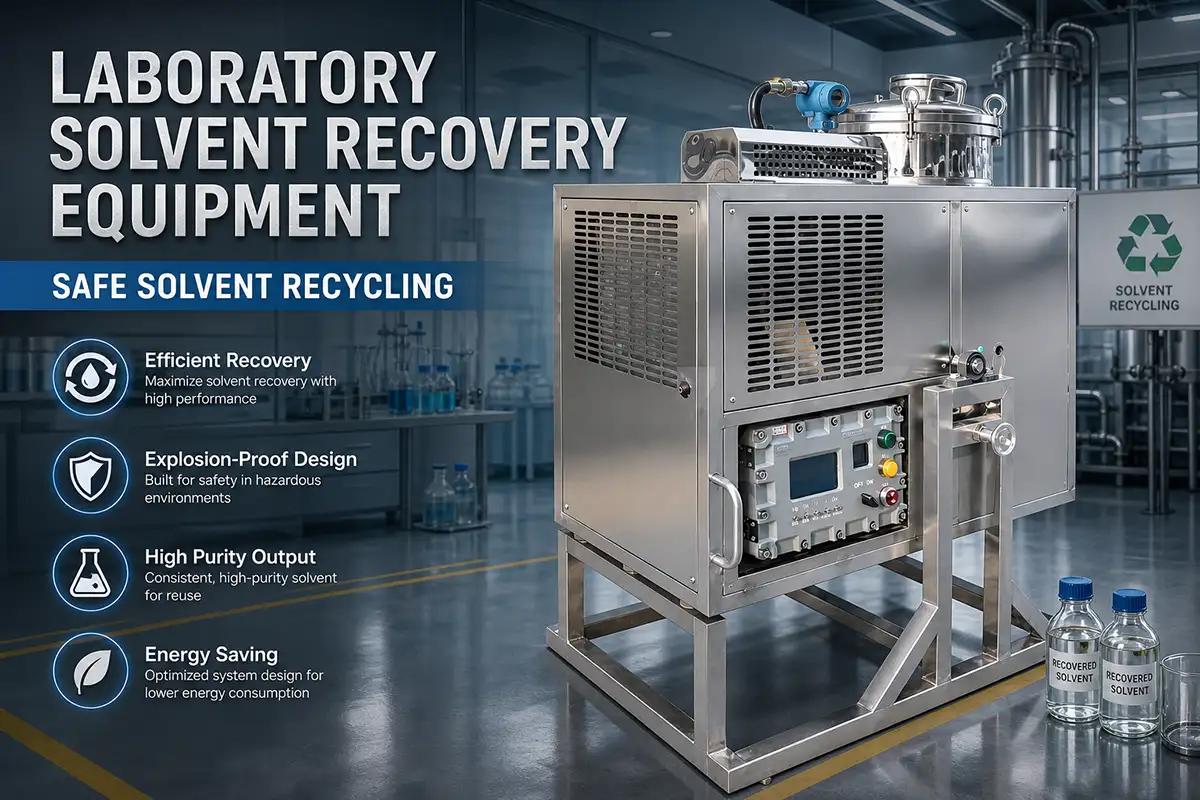
Modern laboratories are under pressure to reduce solvent waste, improve safety, and keep operating costs under control. That is why laboratory solvent recovery equipment has become increasingly important in research labs, testing facilities, pharmaceutical development, chemical processing, electronics cleaning, and small-batch production environments. A well-matched recovery system does more than reclaim solvent. It helps create a cleaner process, a more repeatable workflow, and a more sustainable operating model.
Why laboratory solvent recovery equipment matters
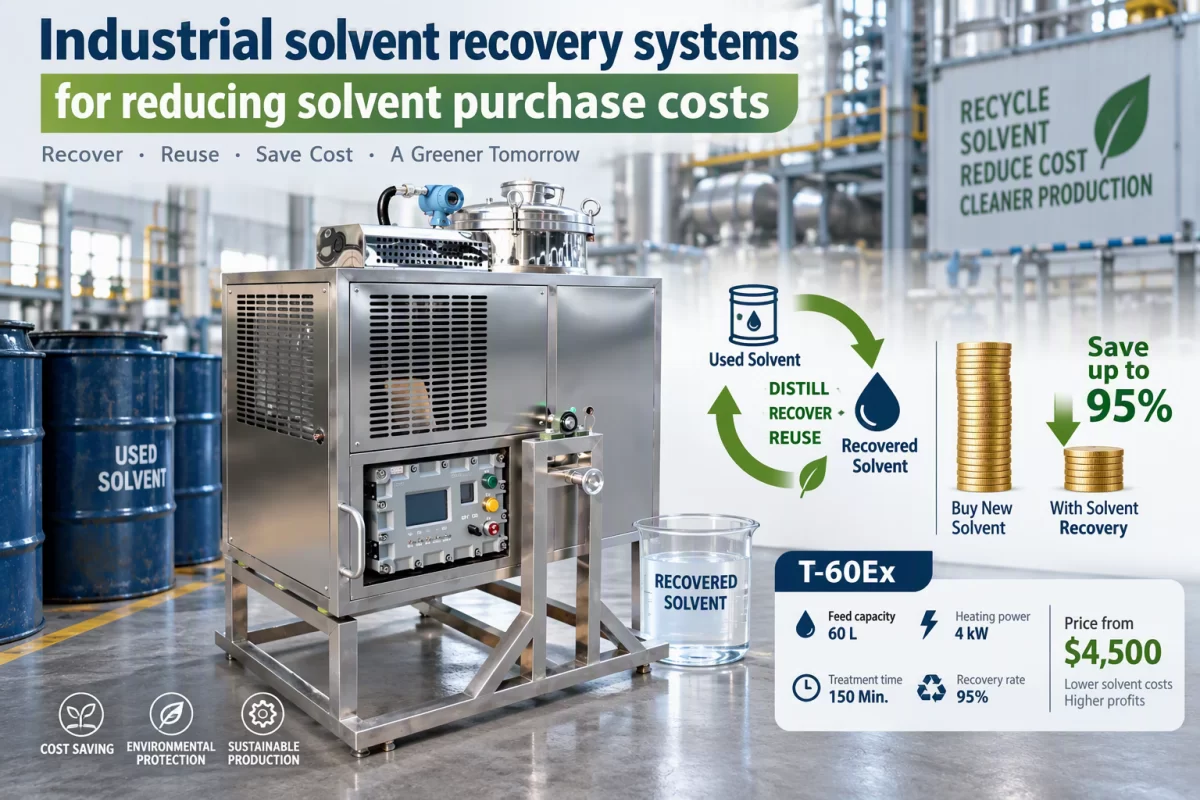
In many laboratories, solvents such as ethanol, acetone, IPA, toluene, xylene, and mixed organic solvents are used every day for extraction, cleaning, formulation, rinsing, and analytical work. When these solvents are discarded after a single cycle, the lab pays repeatedly through higher purchasing cost, higher disposal cost, and increased environmental burden. By contrast, a dedicated solvent recovery system allows usable solvent to be distilled, condensed, and collected for reuse wherever process quality permits.
From the author’s perspective, the biggest value is not only the recovery percentage. It is the combination of cost savings, waste reduction, process discipline, and operator convenience. For laboratories that handle flammable solvents routinely, equipment design also matters greatly. Heating control, sealed structure, material compatibility, grounding, and explosion-proof configuration can influence long-term performance and safety far more than a simple price comparison.
Is the lowest-priced system always the best choice for a laboratory?
Not necessarily. The author considers fit, safety design, recovery stability, and maintenance convenience more important than the lowest entry price. A cheaper unit may cost more later if it cannot match the solvent type, throughput, or compliance requirement.
Lower solvent purchasing cost
Recovered solvent can be reused in suitable laboratory steps, reducing the frequency of new solvent purchases.
Reduced hazardous waste volume
Less waste solvent leaving the facility means lower disposal cost and a more manageable waste stream.
More sustainable lab operation
Recovery supports ESG goals and strengthens the laboratory’s environmental performance story.
How a laboratory solvent recovery system works
Most laboratory solvent recovery equipment operates on a controlled distillation principle. Waste solvent is placed in the recovery chamber and heated to a suitable temperature range. Volatile solvent vapor rises, passes into a cooling section, and condenses back into liquid form for collection. Non-volatile contaminants, residues, pigments, oils, or solids remain in the boiling chamber for later cleaning and disposal. In properly selected applications, recovery rates can reach around 95%, which is highly meaningful for labs with recurring solvent use.
For readers wanting a broader technical overview, the related article on how a solvent recovery system works explains the process logic in more depth. In practical lab use, however, the most important factors are solvent type, boiling behavior, contamination level, batch size, and whether the recovered solvent is intended for cleaning reuse, pre-processing reuse, or higher-purity reuse.
Key factors when choosing laboratory solvent recovery equipment
The best equipment is rarely defined by brand name alone. In the author’s view, laboratories should choose according to use case. A university chemistry lab, an electronics cleaning line, and a pharmaceutical R&D facility may all use solvents, but their requirements are very different. Below are the most practical selection criteria.
Solvent compatibility: ethanol, IPA, acetone, xylene, toluene, ethyl acetate, and mixed solvents can behave differently during recovery.
Throughput: a small daily volume may suit a 20L unit, while continuous or heavy lab usage may justify a larger explosion-proof model.
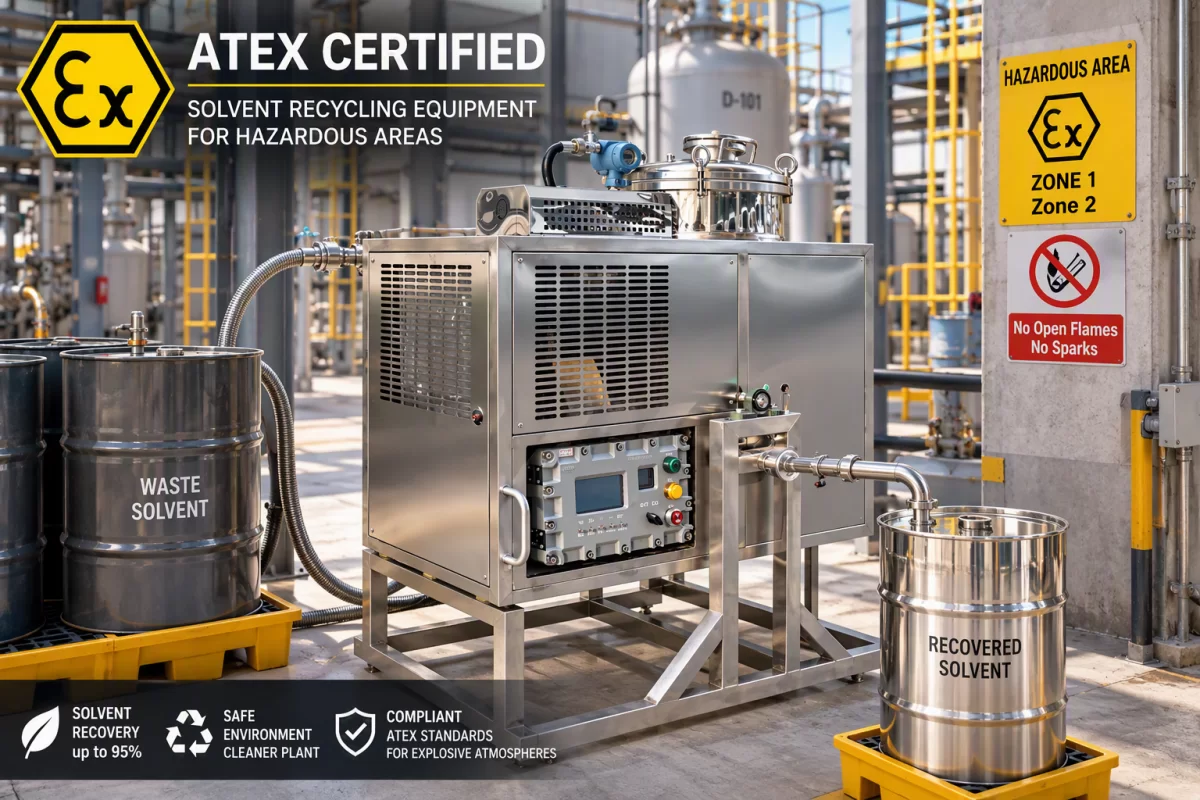
Safety configuration: for flammable solvent environments, explosion-proof design and grounded construction are critical.
Heating efficiency: faster treatment time can support better daily workflow planning.
Recovery target: not every application requires the same purity level, so the process goal should be defined early.
Serviceability: replacement parts, cleaning access, and maintenance simplicity affect total lifecycle value.
What is often overlooked when selecting a solvent recycler for laboratory use?
The author would highlight residue characteristics. Many buyers focus on feed capacity first, but sticky, dirty, or resinous residue can strongly affect cleaning frequency, downtime, and practical operating efficiency.
Typical model data for compact to mid-size laboratory needs
When a laboratory begins evaluating options, a practical specification table helps connect real process needs with machine capacity. The following models illustrate how feed capacity, heating power, treatment time, recovery rate, weight, and machine footprint scale together.
| Model | Feed Capacity (L) | Power Supply (ACV) | Heating Power (kW) | Temperature Range (℃) | Treatment Time (Min.) | Recovery (%) | Weight (kg) | Machine Size (mm) |
|---|---|---|---|---|---|---|---|---|
| T-20Ex | 20 | 380 | 2 | RT~200 | 120 | 95 | 153 | 860 × 760 × 1190 |
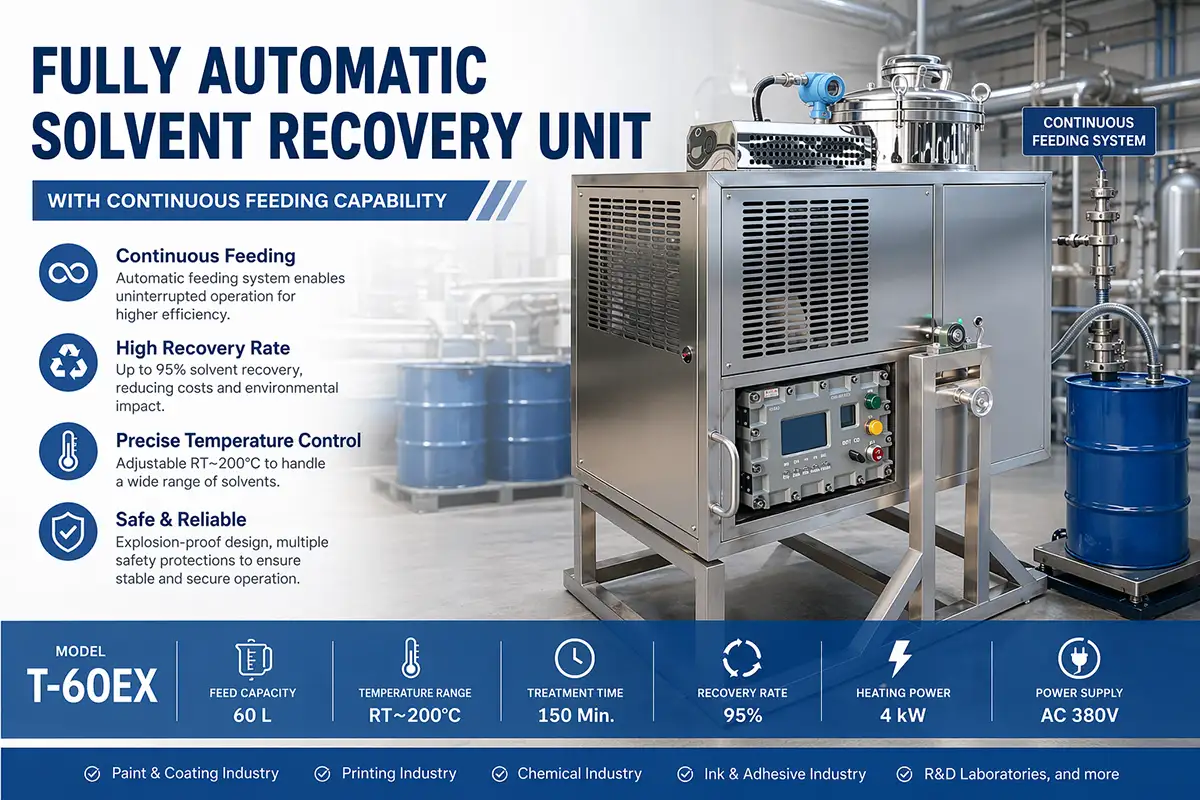
| T-60Ex | 60 | 380 | 4 | RT~200 | 150 | 95 | 170 | 1160 × 870 × 1260 |
| T-80Ex | 80 | 380 | 5 | RT~200 | 180 | 95 | 200 | 1180 × 850 × 1290 |
| T-125Ex | 125 | 380 | 6 | RT~200 | 210 | 95 | 280 | 1250 × 920 × 1450 |
| T-250Ex | 250 | 380 | 16 | RT~200 | 240 | 95 | 520 | 2600 × 1200 × 1950 |
| T-400Ex | 400 | 380 | 32 | RT~200 | 270 | 95 | 1200 | 1990 × 1850 × 2090 |
For laboratory users, the T-20Ex and T-60Ex range can be attractive where batch sizes remain moderate and floor space is limited. As process demand grows, larger units make sense when solvent use becomes routine and disposal costs begin to rise sharply.
Application fit: not every lab needs the same system
One reason many buyers struggle is that the phrase laboratory solvent recovery equipment can refer to several different use cases. Some labs recover ethanol from extraction steps. Others reclaim acetone or IPA after precision cleaning. Some need a compact batch unit, while others need a more robust explosion-proof solution because the solvent is flammable and used continuously.
For acetone-related workflows, the topic of acetone solvent recycling is especially relevant because acetone is common in cleaning, coating, and lab preparation. For general equipment comparisons, readers can also explore our solvent recovery machine page to see how different system configurations support different process scales.
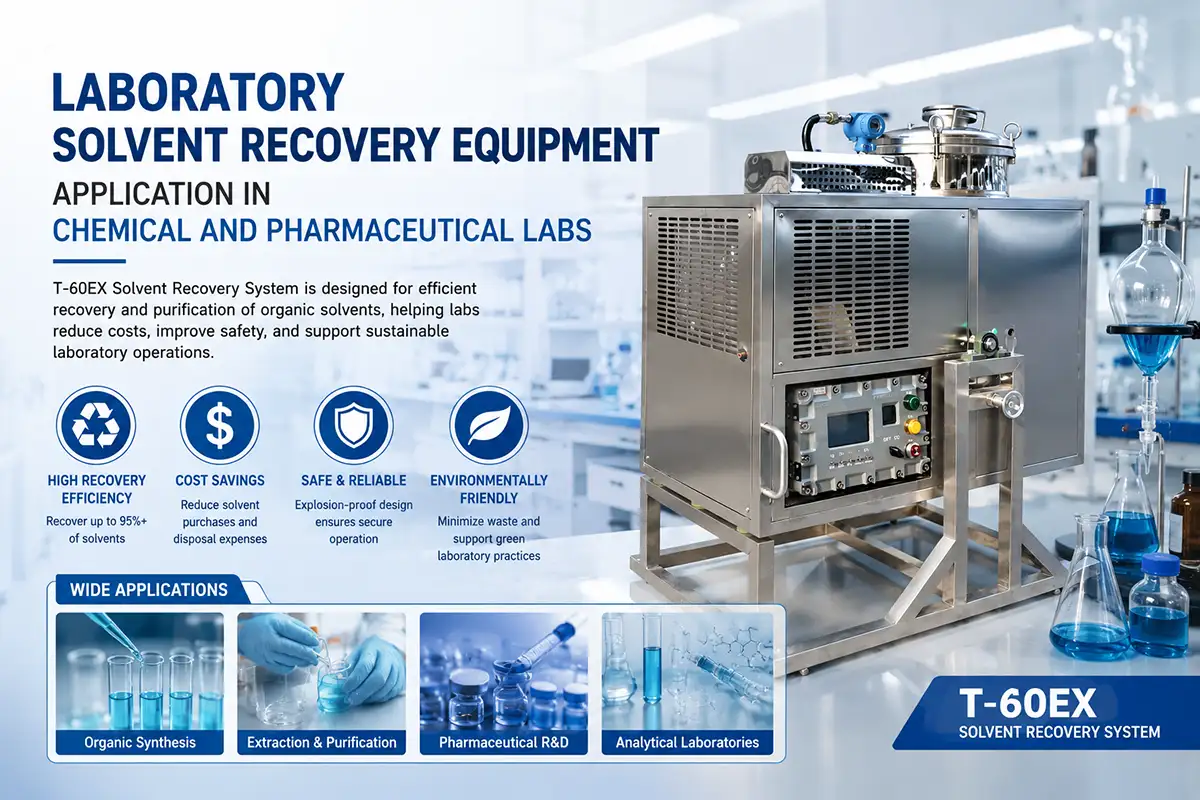
In the author’s opinion, the clearest buying path starts with four questions: What solvent is being recovered? How many liters are processed per day? What contamination remains after the process? What safety classification is required at the installation site? Once these are answered, equipment selection becomes much more precise.
Pricing reference for related laboratory and recovery equipment
Budget planning is always part of equipment selection. For related laboratory and solvent-handling products from our company, the following published prices provide useful reference points. When a listed product has a price range, the more affordable middle option has been used for practical comparison.
Laboratory Solvent Vacuum Suction Filter Filtration Device
A useful support device for solvent preparation and pre-treatment in laboratory workflows.
Lab Reflux-reaction Solvent Distillation Units Equipment
Suitable for laboratory distillation and process development where controlled solvent handling is needed.
Explosion-Proof Solvent Recycler / Automatic Solvent Recovery Series
For products listed at $2,645–$9,690, a practical lower-middle reference price is used for planning.
Why can a larger recovery system still be a better value even with a higher purchase cost?
The author’s answer is simple: if solvent use is frequent, a larger or better-matched system may reduce labor, speed up recovery cycles, and cut waste disposal costs faster, improving overall return on investment.
Safety, compliance, and operating discipline
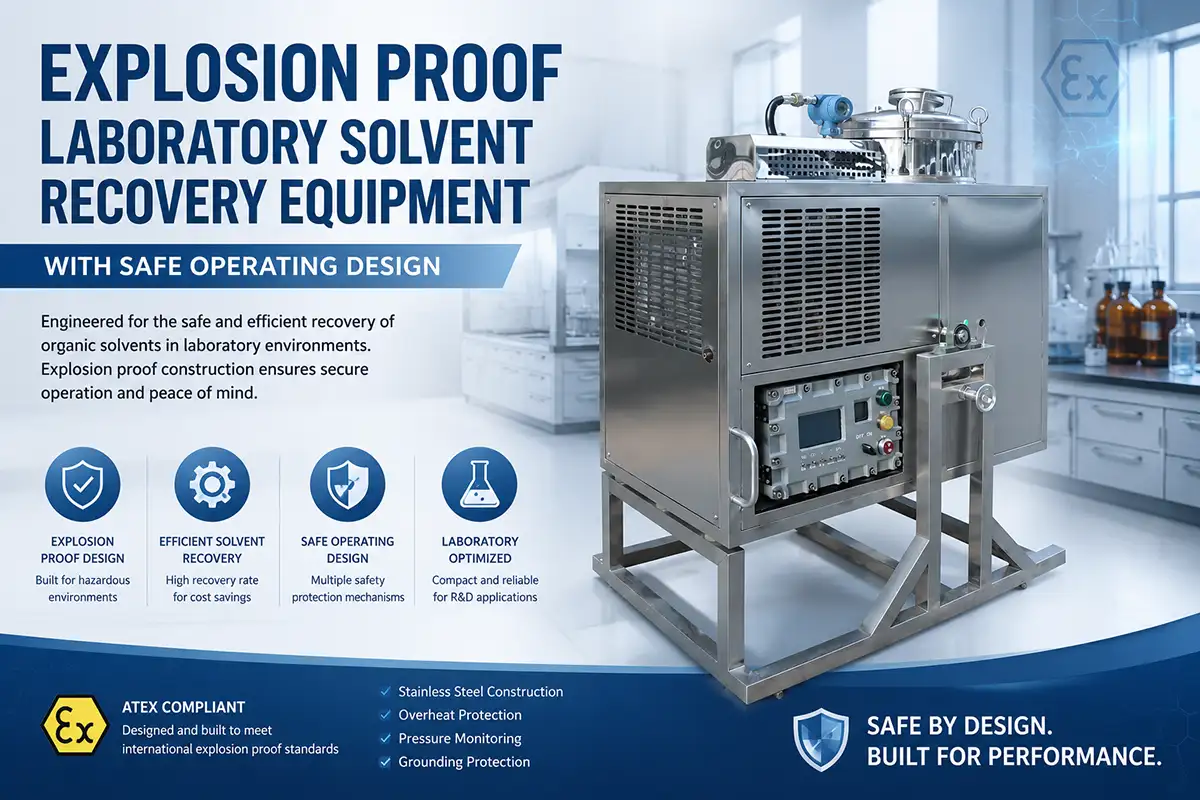
Any article about laboratory solvent recovery equipment should emphasize safety. Solvent recovery is not only a thermal process; it is a safety-sensitive process. Laboratories must confirm solvent flammability, ventilation, electrical requirements, residue handling, and installation conditions before operation. Explosion-proof models are especially important where flammable organic solvents are recovered regularly. Stable temperature control, sealed structure, and correct operating procedures all contribute to safer recovery.
Good equipment selection should also support easier cleaning, lower residue exposure, and better routine maintenance. In real-world operation, reliability is built not only by the machine itself but by the whole process around it: solvent segregation, loading discipline, preventive cleaning, and clear operator training.
Final thoughts
Laboratories looking to improve solvent reuse should avoid a one-size-fits-all mindset. The most effective laboratory solvent recovery equipment is the one that matches solvent type, daily throughput, contamination profile, safety requirements, and long-term operating goals. With recovery rates around 95%, the right system can reduce waste, improve process efficiency, and create measurable savings over time.
For teams comparing options, a practical next step is to review specific solvent applications, expected liters per batch, and required safety configuration, then compare that against real equipment data and company pricing. That is the author’s preferred path to a reliable and economical solvent recovery decision.