Equipment guide · Solvent recovery
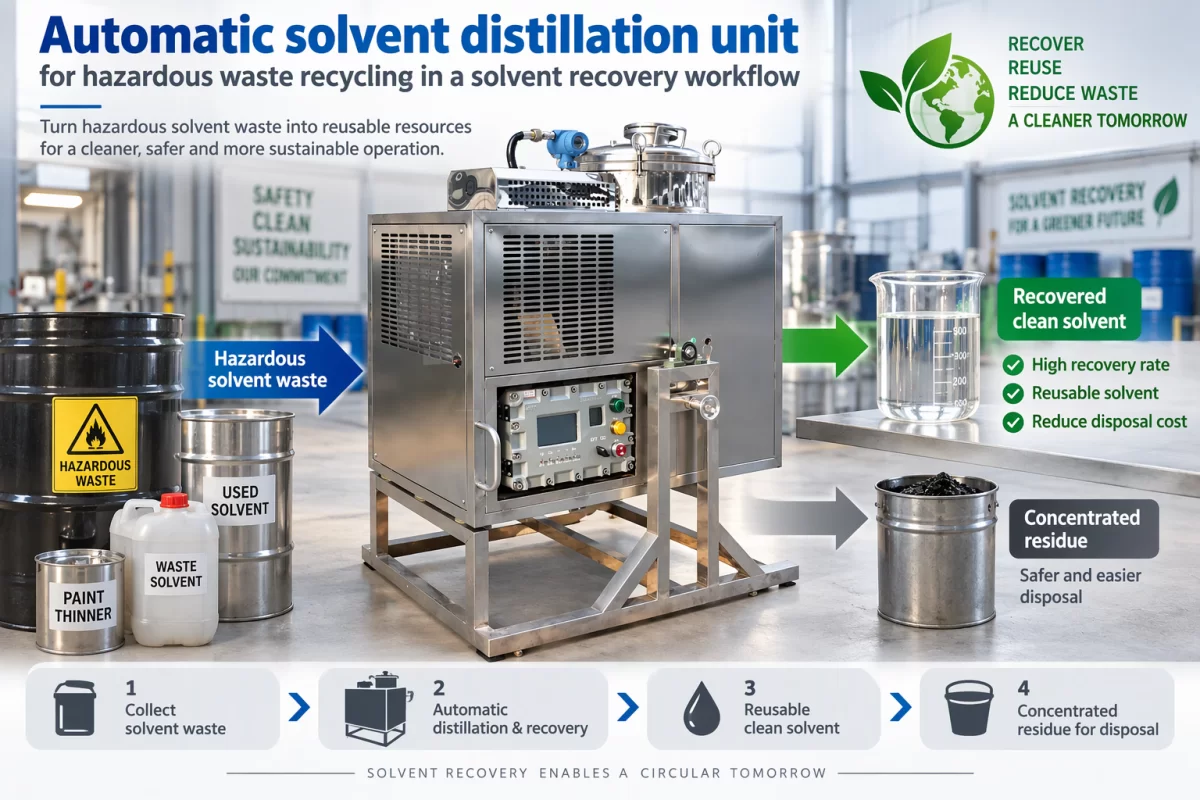
Automatic solvent distillation unit for hazardous waste recycling
An automatic solvent distillation unit for hazardous waste recycling can help turn a suitable spent organic solvent stream into a resource for reuse. The Solvent Recovery Machine is intended for solvent reclamation, with model selection driven by feed composition, batch volume, electrical supply, and the requirements of the receiving process.
What a Solvent Recovery Machine is used for
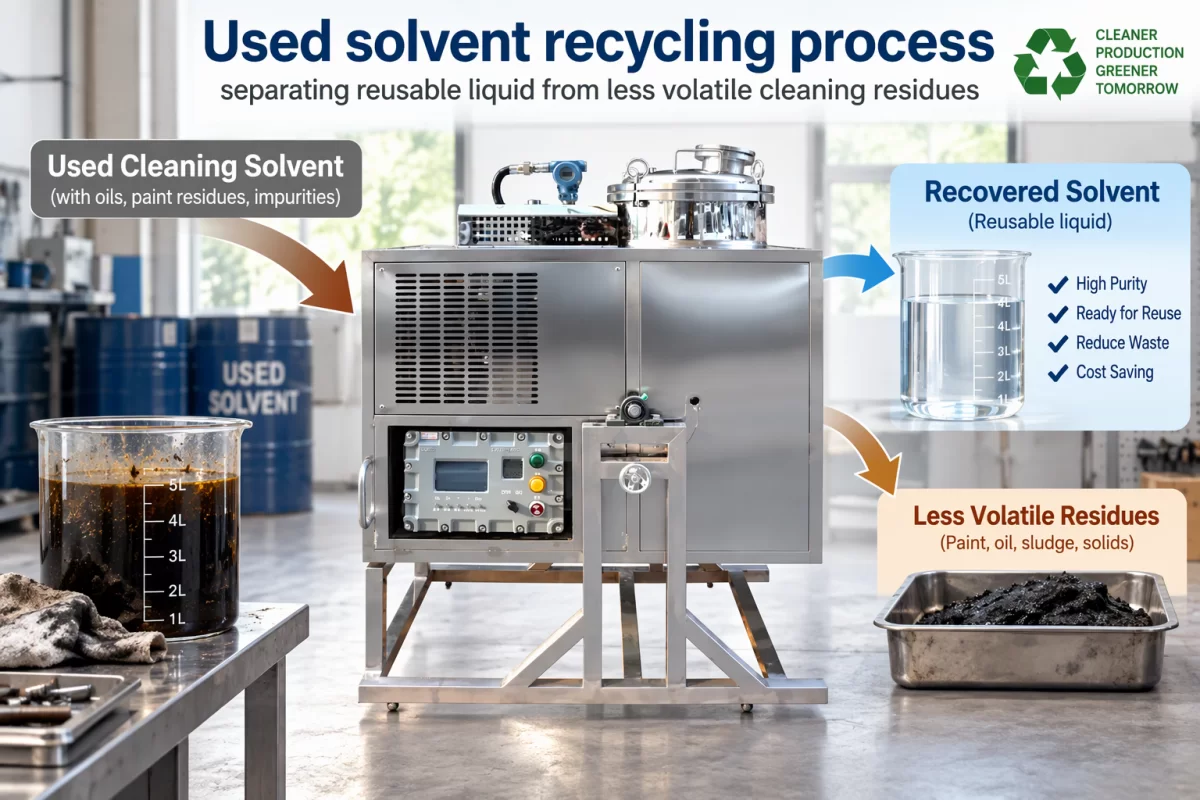
Spent cleaning and process solvents may contain dissolved oils, inks, resins, or other contaminants. Instead of treating the entire liquid stream solely as waste, solvent recovery separates a recoverable volatile fraction from less volatile material. The recovered liquid can then be evaluated for an appropriate reuse application.
This is a targeted treatment approach, not a universal solution for every hazardous liquid. Solvent identity, water content, contaminant chemistry, and thermal stability determine whether distillation is suitable. A successful installation also needs a plan for collecting recovered solvent, removing concentrated residue, and maintaining safe operating procedures.
Can solvent distillation eliminate all hazardous waste?
As Alice, I recommend viewing distillation as solvent reclamation rather than complete waste elimination. Contaminants can remain in the residue, which may still require hazardous waste handling. Recovered solvent also needs suitable quality checks before it returns to production or cleaning service.
How automatic solvent distillation works
The basic principle is separation through differences in volatility. A suitable waste solvent feed is heated so that recoverable components vaporize. The vapor is then cooled and condensed into liquid for collection, while less volatile contaminants remain in the distillation vessel.
Mixed solvents deserve particular attention. Distillation does not necessarily return every component in its original proportion, and water or other volatile substances may enter the recovered fraction. Recovery percentage and solvent purity are therefore different measures: the amount collected alone does not establish whether the distillate meets a cleaning, formulation, or laboratory specification.
For a broader explanation of evaporation, condensation, and collection, read the guide to how the solvent recovery process works.
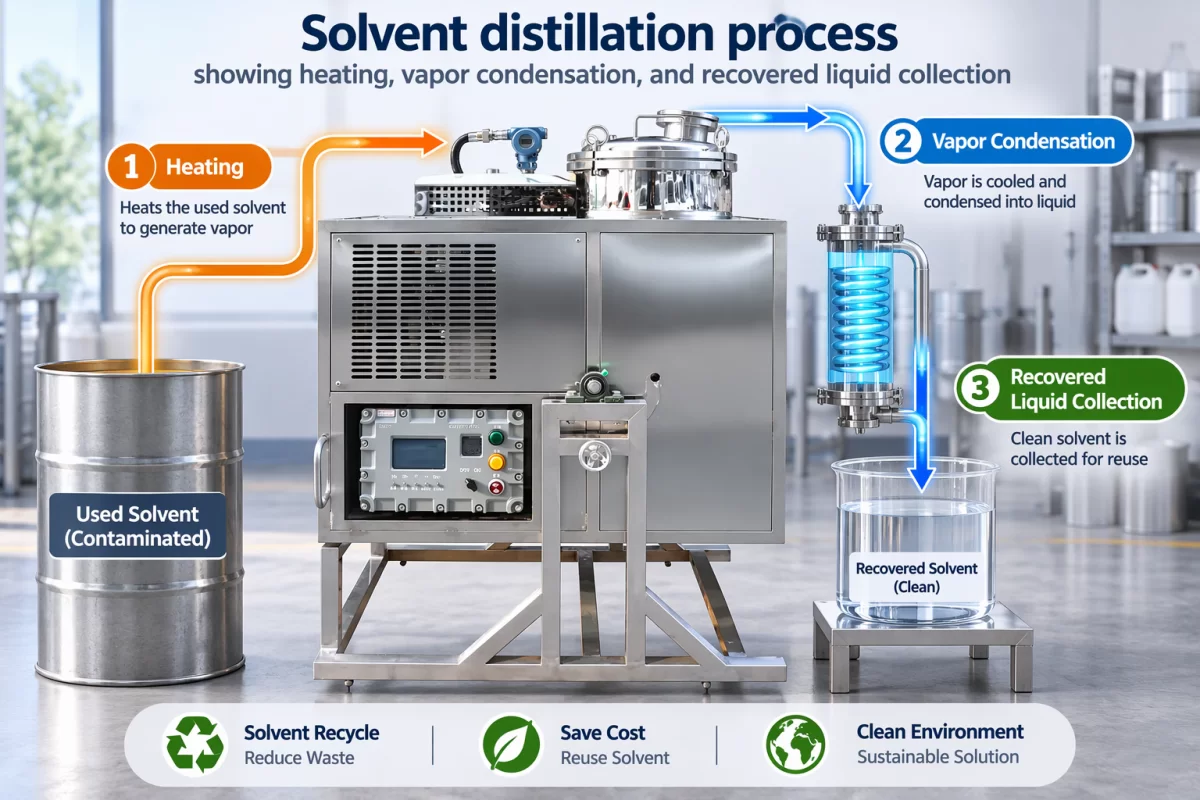
When specifying an automatic unit, define which operating tasks need automation. Heating control, cycle termination, feed transfer, and discharge arrangements should form part of the configuration discussion. The operating procedure should also identify the tasks that remain the responsibility of trained personnel.
Solvent Recovery Machine model specifications
The T-series models below provide different feed capacities and installation requirements. Compare each model as a complete specification rather than combining the capacity of one machine with the power or dimensions of another.
| Model | Feed capacity (L) | Power supply (V AC) | Heating power (kW) | Temperature range (°C) | Treatment time (min) | Recovery (%) | Machine weight (kg) | Machine size (mm) |
|---|---|---|---|---|---|---|---|---|
| T-20Ex | 20 | 380 | 2 | RT–200 | 120 | 95 | 153 | 860 × 760 × 1190 |
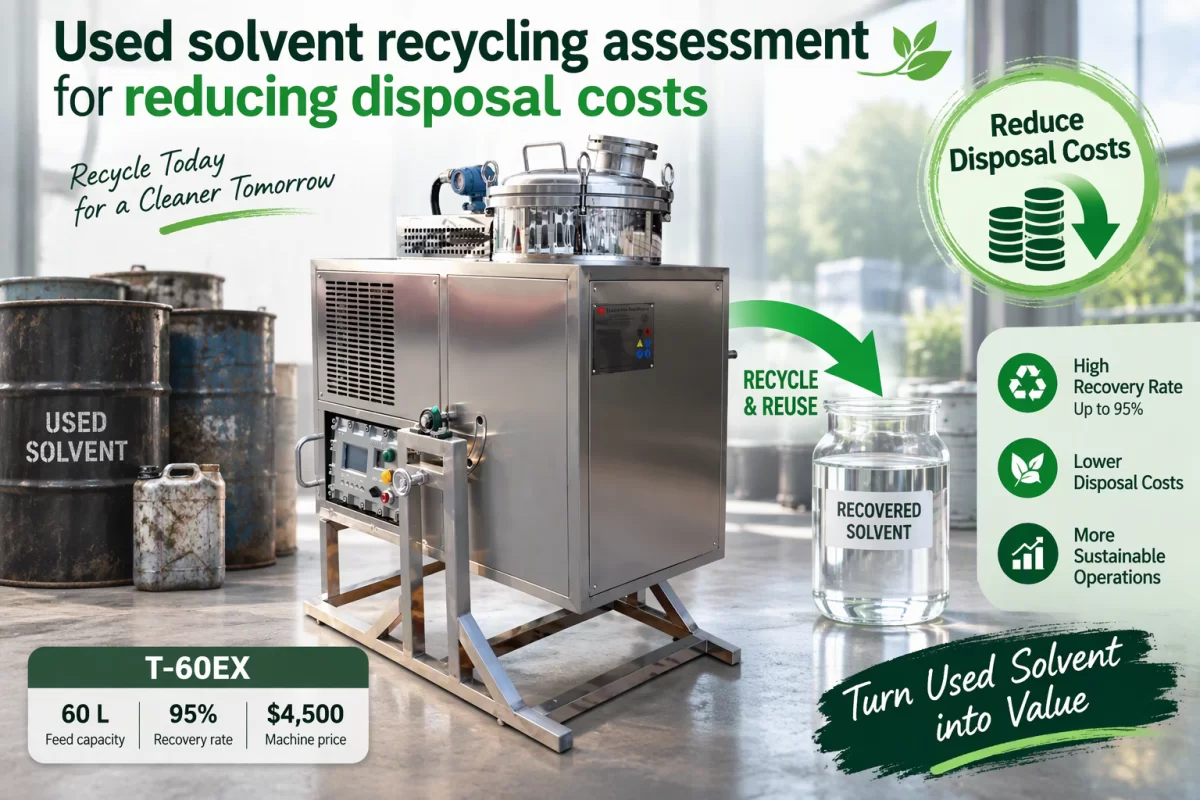
| T-60Ex | 60 | 380 | 4 | RT–200 | 150 | 95 | 170 | 1160 × 870 × 1260 |
| T-80Ex | 80 | 380 | 5 | RT–200 | 180 | 95 | 200 | 1180 × 850 × 1290 |
| T-125Ex | 125 | 380 | 6 | RT–200 | 210 | 95 | 280 | 1250 × 920 × 1450 |
| T-250Ex | 250 | 380 | 16 | RT–200 | 240 | 95 | 520 | 2600 × 1200 × 1950 |
| T-400Ex | 400 | 380 | 32 | RT–200 | 270 | 95 | 1200 | 1990 × 1850 × 2090 |
RT means room temperature. Treatment time and recovery are listed specification values, not guarantees for every waste composition. The recovery figure does not describe distillate purity, and the temperature range is not a recommended operating setting for every solvent.
Feed capacity should not be read as hourly throughput. Daily processing plans must also allow for loading, cooling, residue removal, and other operating tasks. Heating power is an electrical sizing parameter, not a direct statement of energy consumption per batch.
Which model is appropriate for a smaller waste solvent batch?
I would begin by comparing the normal batch volume with the listed feed capacities. The T-20Ex has a 20 L feed capacity and 2 kW heating power, while the T-60Ex has a 60 L feed capacity and 4 kW heating power. The final choice should also account for feed suitability, processing frequency, and the available installation space.
Applications in hazardous solvent waste recycling
Relevant application categories include printing cleanup, industrial equipment cleaning, electronics cleaning, and organic solvent recovery in production environments. Product offerings also cover ethyl acetate, xylene, toluene, hydrocarbon cleaning solvents, and alcohol recovery applications. These categories provide a starting point for evaluating a waste stream; they do not establish compatibility with every mixture or contaminant.
For example, cleaning waste containing resin or ink requires attention to residue behavior during heating and discharge. Electronics cleaning applications require particular care with recovered solvent quality because contamination acceptable in one cleaning operation may be unsuitable in another. Laboratory users likewise need to distinguish solvent suitable for routine washing from solvent required for analytical work.
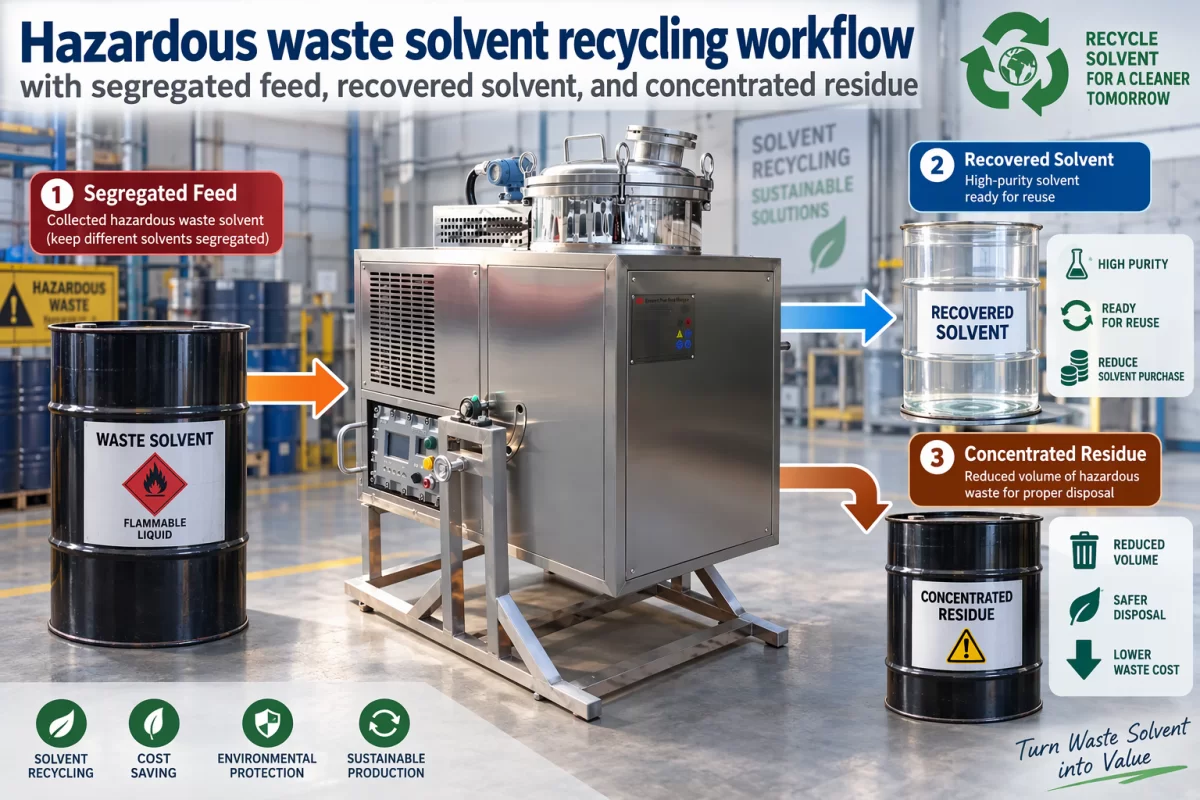
Recycling should fit into the facility’s wider solvent waste management procedures. Segregation, labeling, storage, and an appropriate residue disposal route remain important even when a portion of the solvent is recovered.
Selection priorities beyond feed capacity
- Characterize the feed. Identify the solvent components, approximate proportions, water content, solids, and potentially reactive contaminants. Include available safety data and the intended recovered-solvent use.
- Match the operating schedule. Establish normal batch size, waste generation frequency, and available processing hours. Include handling and maintenance time rather than relying only on the listed treatment time.
- Review installation requirements. Compare the selected model’s 380 V AC supply, heating power, dimensions, and weight with the facility’s electrical and space provisions. Allow access for operation and servicing.
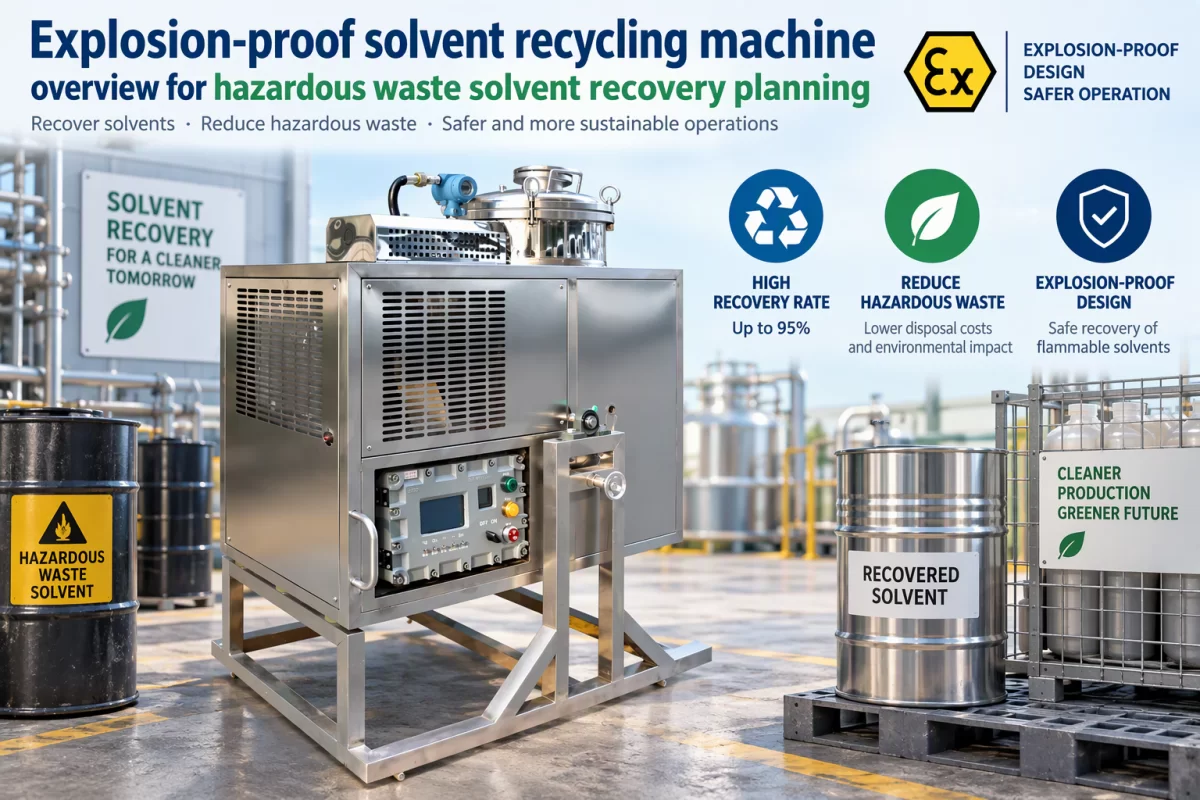
- Address solvent hazards. Equipment suitability must match the solvent hazards and installation environment. Required explosion-protection documentation, grounding, ventilation, and local compliance requirements should be part of procurement.
- Define acceptance criteria. Agree on recovered-liquid quality requirements and a practical evaluation method. Specify the desired automation, collection arrangement, and residue handling configuration in the inquiry.
To explore the equipment category before preparing a project inquiry, review the available solvent recycling equipment options.
Reference price and purchasing value
Our company’s reference price range
US$2,645–9,690
This is our company’s reference price range, not a model-specific quotation. The actual quotation depends on the configuration and the outcome of the inquiry.
The purchasing case depends on how much recovered solvent can genuinely replace fresh purchases and how much waste handling can be avoided. A realistic evaluation also includes electricity, labor, maintenance, quality testing, and disposal of the remaining residue. No fixed savings percentage or payback period applies to every installation.
What information helps produce a useful equipment quotation?
I recommend providing the solvent composition, contaminant description, normal working batch, daily waste volume, target operating conditions, and required configuration. Include the intended reuse quality and installation constraints so the proposed machine can be assessed against the actual process rather than price alone.
Choose solvent recovery around the process
An automatic solvent distillation unit for hazardous waste recycling is most valuable when the feed is suitable, the selected machine fits the working batch, and the recovered liquid meets a defined reuse requirement. The Solvent Recovery Machine range offers multiple capacity and heating-power options for this evaluation.
Prepare a clear feed description, processing schedule, installation requirements, and configuration request to obtain a corresponding equipment proposal and quotation. That process-focused approach supports a more informed purchase and a practical solvent recycling workflow.