Solvent recycling · Equipment selection · Cost planning
How can I recycle used solvents to cut disposal costs?
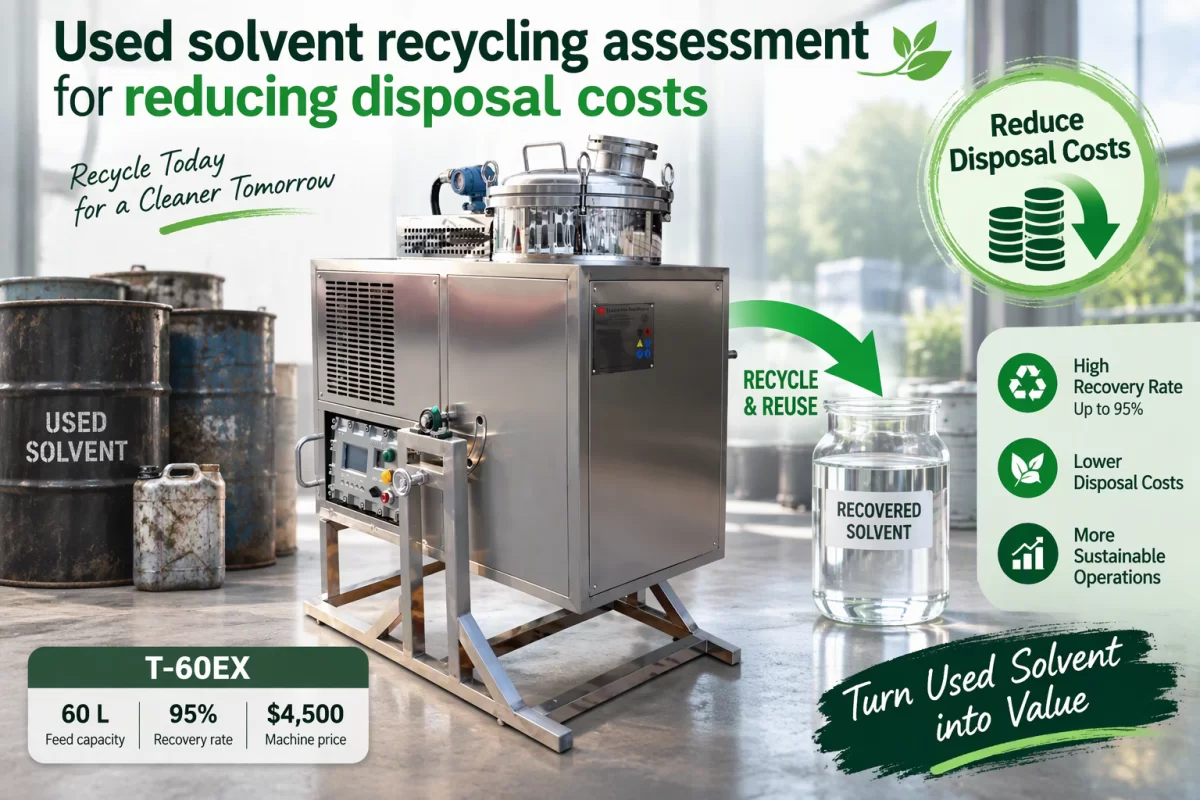
Start by separating suitable waste solvent streams, recovering usable solvent through distillation, and returning tested material to an approved process. A Solvent Recovery Machine can support this approach by turning part of a recurring waste stream into a reusable resource, while leaving a concentrated residue for appropriate disposal.
How used solvent recycling works
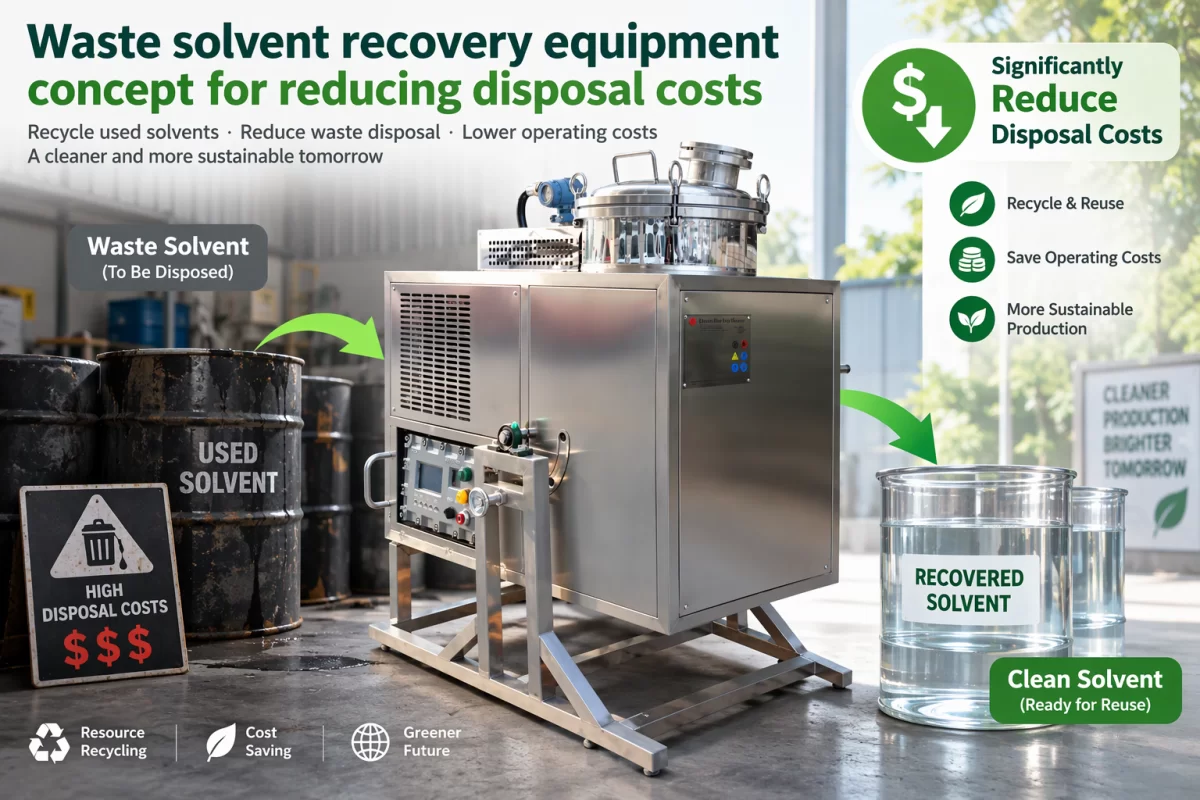
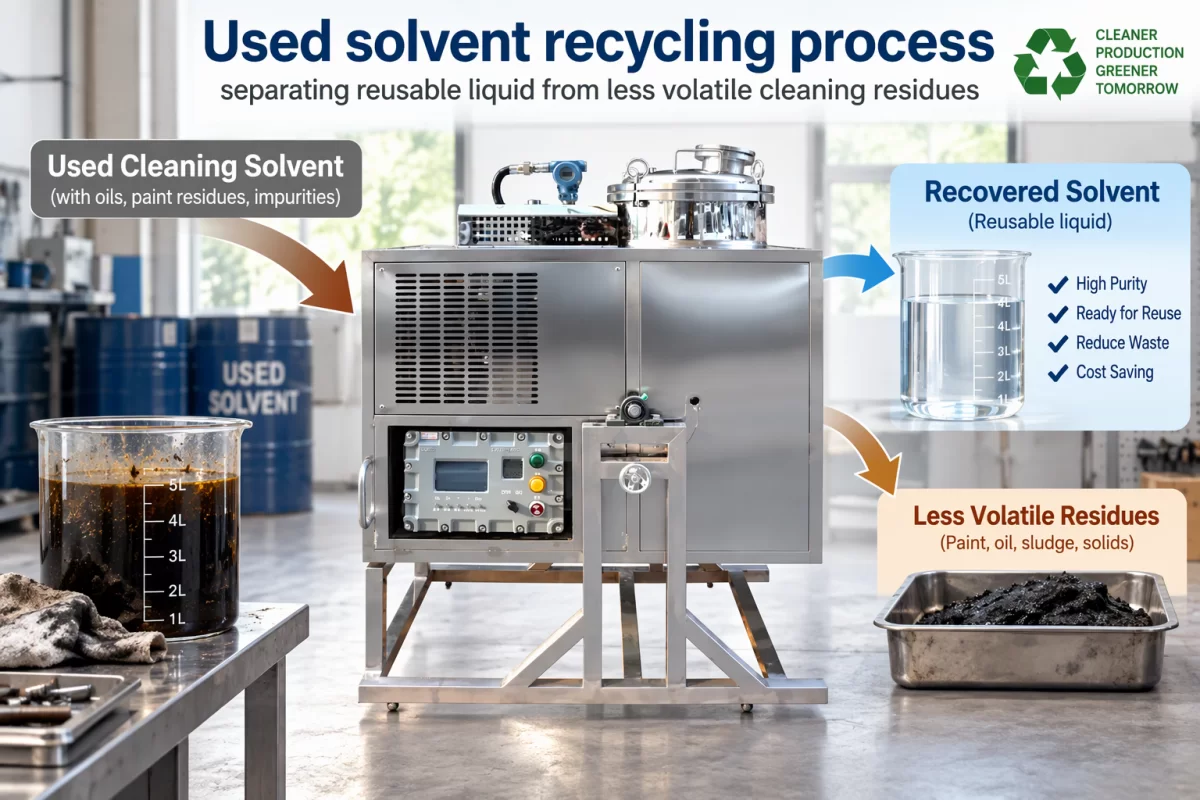
A Solvent Recovery Machine is intended to reclaim solvent from contaminated liquid generated during cleaning or production. Rather than disposing of the entire stream after use, a facility can evaluate whether the solvent portion can be separated from the contaminants and reused. The economic opportunity comes from reducing both fresh solvent purchases and the quantity of material sent for disposal.
Distillation relies on differences in volatility. The solvent-containing liquid is heated, volatile components enter the vapor phase, and the vapor is cooled back into liquid. Less volatile contaminants remain in the vessel. This principle can be useful when a solvent is contaminated with materials such as oils, resins, or other nonvolatile process residues.
However, distillation does not automatically separate every component in a mixed waste stream. Water, multiple solvents, and volatile contaminants can affect the recovered liquid’s composition. A recovered solvent must meet the requirements of its intended reuse application; visual clarity alone is not a sufficient acceptance test. For additional background, read our guide to how the solvent recovery process works.
Solvent Recovery Machine specifications for model selection
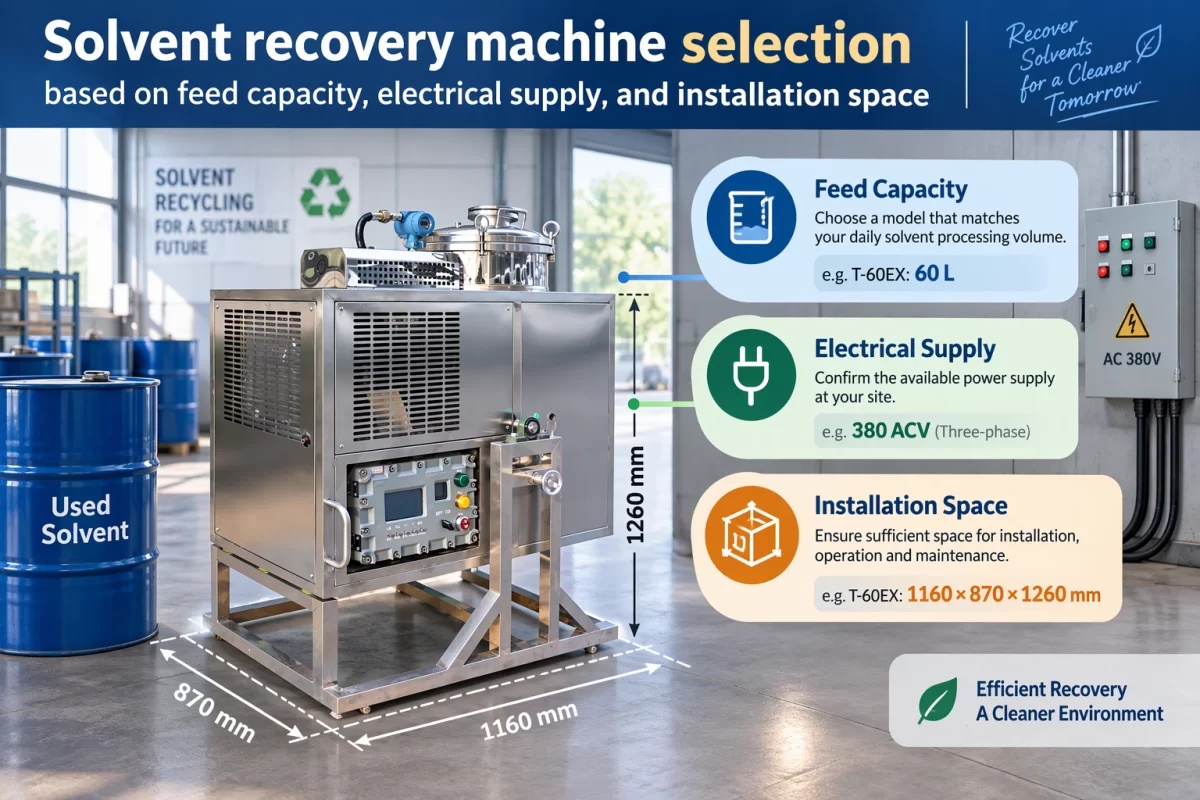
The T-series models below provide different feed capacities and heating power levels. Feed capacity is a loading specification, not an hourly production rate. Match the model to the amount of compatible waste generated, the time available for operation, and the practical space needed for loading, collection, and maintenance.
| Model | Feed capacity (L) | AC supply (V) | Heating power (kW) | Machine weight (kg) | Machine size (mm) |
|---|---|---|---|---|---|
| T-20Ex | 20 | 380 | 2 | 153 | 860 × 760 × 1190 |
| T-60Ex | 60 | 380 | 4 | 170 | 1160 × 870 × 1260 |
| T-80Ex | 80 | 380 | 5 | 200 | 1180 × 850 × 1290 |
| T-125Ex | 125 | 380 | 6 | 280 | 1250 × 920 × 1450 |
| T-250Ex | 250 | 380 | 16 | 520 | 2600 × 1200 × 1950 |
| T-400Ex | 400 | 380 | 32 | 1200 | 1990 × 1850 × 2090 |
Heating power describes the heater rating; it is not a measured electricity consumption figure per batch. Machine dimensions also do not include the additional working clearance required around an installation.
For example, the T-60Ex has a listed feed capacity of 60 L and heating power of 4 kW, whereas the T-250Ex has a listed feed capacity of 250 L and heating power of 16 kW. These are separate model specifications. A larger vessel may accommodate a larger loading requirement, but capacity alone does not establish recovery quality, daily output, or operating cost.
Identify waste streams with practical reuse potential
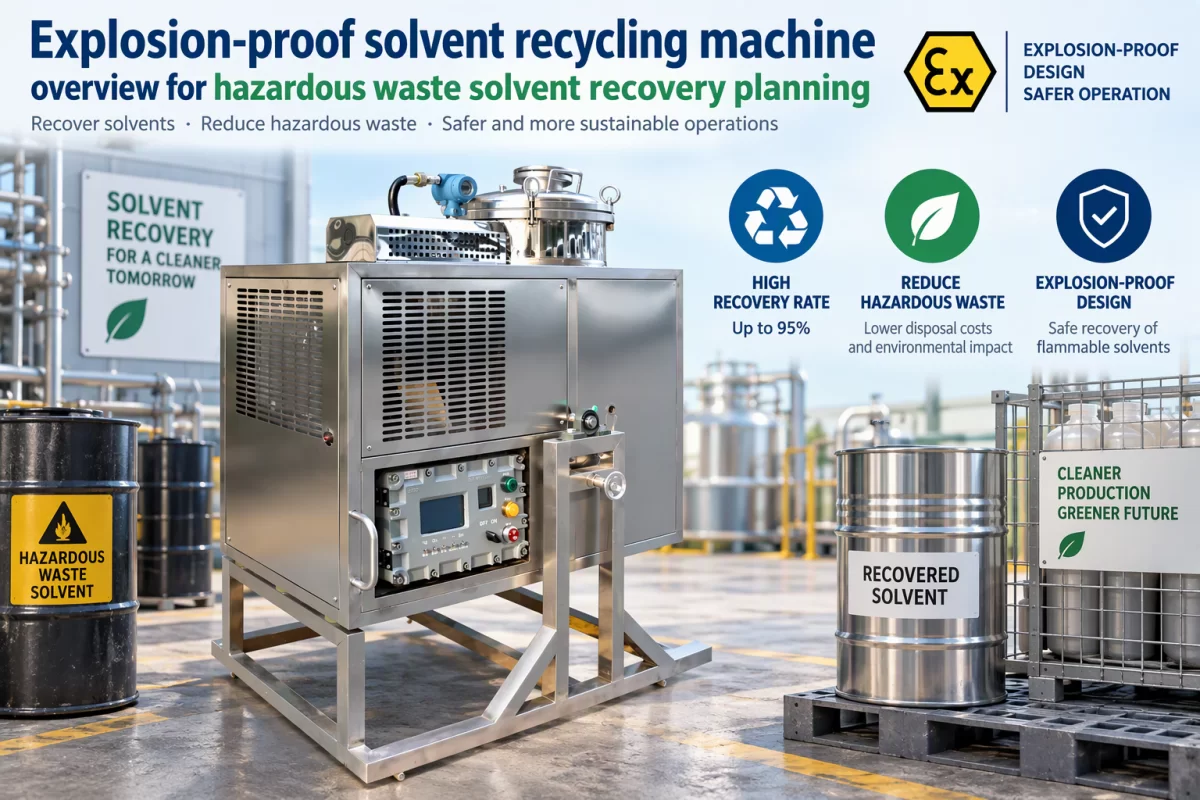
Relevant application areas include printing cleanup, industrial cleaning, electronics cleaning, and solvent-related cosmetics production. The product range also includes offerings described for ethyl acetate, xylene, toluene, alcohol, and hydrocarbon cleaning solvents. These application categories are starting points for evaluation, not a claim that every T-series model can process every formulation.
Laboratories and production facilities should first identify the solvent, its contaminants, water content, and any reactive or thermally unstable components. Keep incompatible waste streams separate and retain clear container labels and safety data. Unknown mixtures should not be treated as routine feed for heated recovery equipment.
The intended reuse matters just as much as the original solvent identity. A recovered liquid considered acceptable for an initial cleaning stage may not satisfy an analytical method, precision cleaning specification, or finished-product formulation. Define acceptance criteria before evaluating a representative sample.
Recovery should remain part of a documented waste program. Residue classification, storage, collection, and local treatment requirements still apply. Our guide to responsible solvent waste management provides a useful starting point for planning the remaining disposal route.
Select equipment around the process and the site
- Feed composition: Provide the solvent identity, mixture composition, contaminants, and available safety information.
- Working quantity: Record normal collection volumes and peak demand, then compare them with the relevant model’s feed capacity.
- Reuse requirements: Specify acceptable composition, water content, and contamination limits for the destination process.
- Utilities and access: Check the listed 380 V AC supply requirement, electrical installation needs, floor loading, and working clearance.
- Safety and compliance: Match the proposed configuration to the solvent hazards, area classification, ventilation arrangements, and local requirements. Review model-specific safety documentation rather than relying on a model suffix.
- Operating workflow: Include loading, cooling, residue removal, cleaning, testing, and operator availability when planning daily use.
A practical inquiry should include the material details, working batch quantity, target operating conditions, and required configuration. This allows the proposed machine to be assessed against a real process rather than a capacity figure alone.
Calculate disposal savings and purchase value
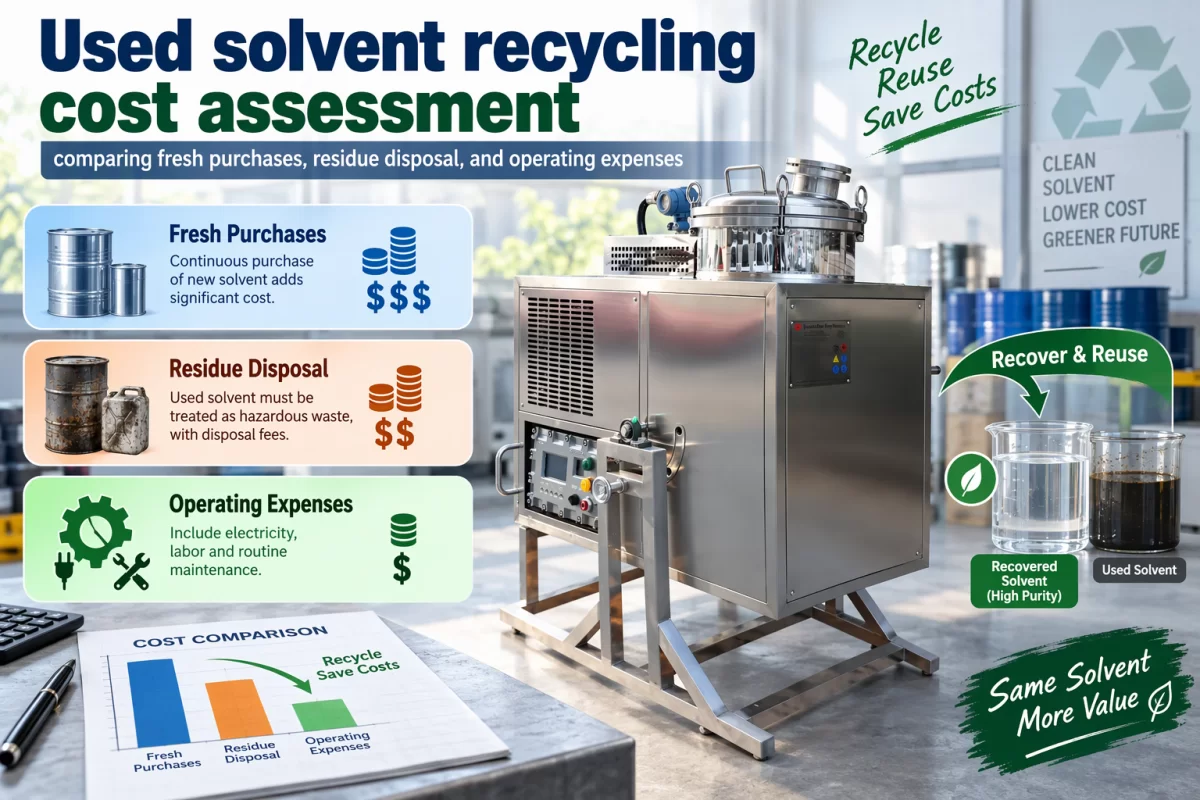
Build a baseline using actual invoices and waste records. Include fresh solvent purchases, disposal charges, containers, and collection costs. Then estimate the recycling route using measured reusable output, remaining residue disposal, electricity, labor, maintenance, consumables, and quality testing.
Net operating savings = avoided fresh solvent purchases + avoided disposal costs − recovery operating costs − remaining waste management costs.
Simple payback period = total installed investment ÷ net savings over the same time period.
Count only recovered solvent that passes the agreed acceptance criteria and genuinely replaces purchased solvent. Likewise, calculate avoided disposal charges from the actual billing arrangement: minimum collection fees and waste classification can affect savings even when the disposed quantity decreases.
Our company’s reference price
$2,645–$9,690
This is our company’s reference price range for budgeting, not a model-specific quotation. The actual quotation is subject to the selected configuration and the inquiry result.
Cut solvent disposal costs with a measured recovery plan
The practical answer to “How can I recycle used solvents to cut disposal costs?” is to identify a suitable stream, validate the recovered solvent’s reuse quality, and choose a Solvent Recovery Machine that fits the material and site requirements. Recycling can reduce recurring purchases and disposal demand, but the result depends on the feed, the reuse destination, and the complete operating workflow.
Explore our solvent recycling equipment options, then prepare the solvent details, working batch quantity, target conditions, and configuration needs for a tailored proposal and quotation. A process-based selection provides a sounder investment foundation than choosing on reference price alone.