Fully Automatic Solvent Recovery Equipment for Large Manufacturing Facilities
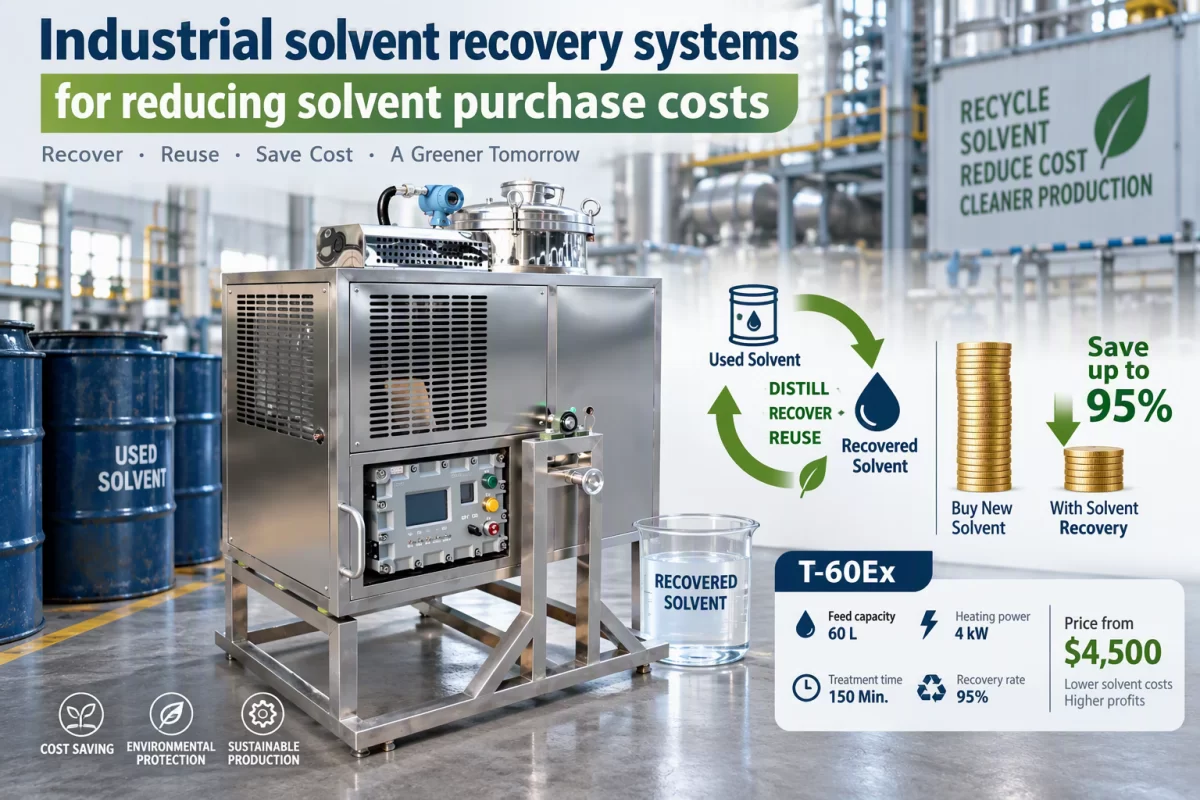
Large manufacturing facilities generate solvent waste every day through equipment cleaning, coating changes, printing operations, and component washing. Recovering suitable solvents on site can turn part of that waste stream into a reusable production resource while reducing fresh-solvent purchasing and off-site waste handling.
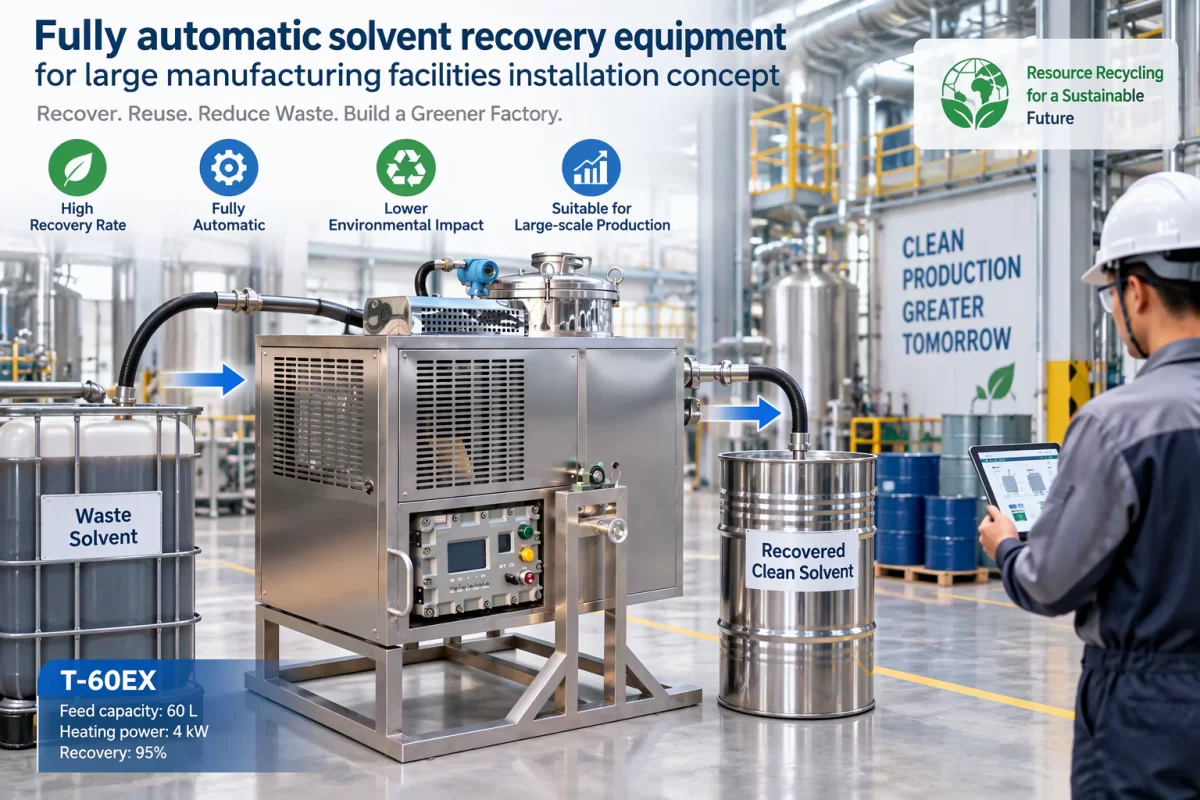
Fully automatic solvent recovery equipment for large manufacturing facilities should be evaluated as an integrated process investment, not simply a larger distillation tank. Effective selection combines realistic capacity planning, verified solvent compatibility, defined automation functions, and a clear acceptance standard for the recovered liquid. FANBOLUN offers solvent recovery equipment options that can be assessed against these practical requirements.
Make Solvent Recovery Part of the Production Strategy
In high-volume factories, repeated disposal of contaminated cleaning solvents creates a recurring expense. Much of the liquid may still contain useful solvent, alongside oils, pigments, resins, or other process residues. Distillation can separate recoverable volatile material from less volatile contamination when the waste composition is suitable.
The business opportunity extends beyond purchasing fewer drums of fresh solvent. A well-planned recovery installation can reduce the volume of liquid waste awaiting collection, improve solvent inventory visibility, and support a more consistent cleaning supply. Savings depend on actual recovery yield, reuse acceptance, operating costs, and local waste-management arrangements.
For background on evaporation, condensation, and collection, the solvent recovery process guide explains how a recovery system works. Understanding that process helps distinguish recoverable solvent from contamination that must remain in the residue stream.
Performance distinction: recovery percentage describes recovery yield; it does not establish solvent purity. Recovered liquid must meet the receiving process’s quality requirements before reuse.
Define What “Fully Automatic” Must Include
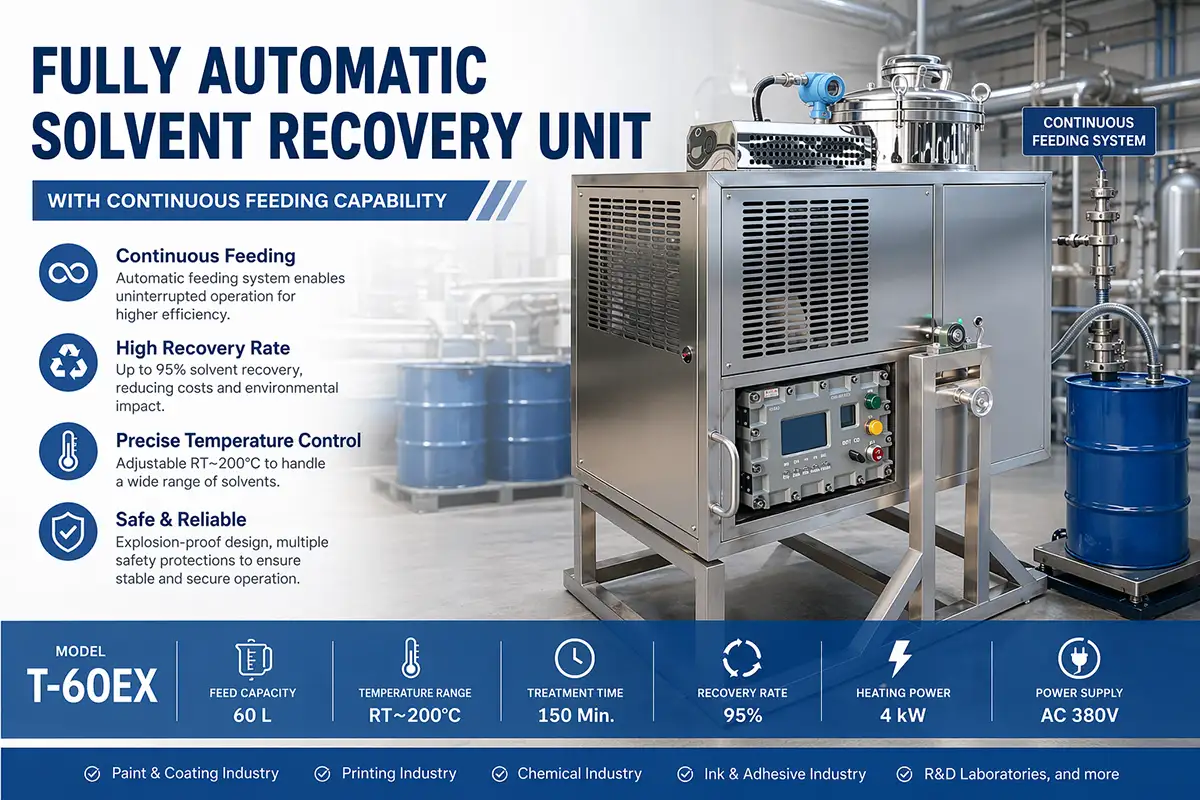
Automatic cycle control and fully integrated solvent handling are not necessarily the same configuration. The supplied model specification sheet lists capacity, heating power, temperature range, treatment time, recovery, weight, and dimensions. It does not identify every automation function. Therefore, automatic feeding, discharge, monitoring, and production-line integration should be confirmed in the equipment proposal.
Controlled feed transfer
Specify compatible pumps, level monitoring, overfill prevention, and an approved transfer arrangement between waste storage and the recovery vessel.
Recipe-based cycle management
Define temperature settings, operating limits, cycle-end detection, and alarm responses for each approved solvent stream. A common control recipe may not suit different waste mixtures.
Condensation and recovered-solvent collection
Confirm condenser capacity, cooling utility requirements, receiving-tank safeguards, and the conditions that permit transfer of recovered liquid.
Residue handling and operating records
Establish a safe residue-removal procedure and define required batch records. Automatic recovery does not eliminate maintenance, inspections, sampling, or responsible supervision.
Compare Batch Specifications Before Sizing the Installation
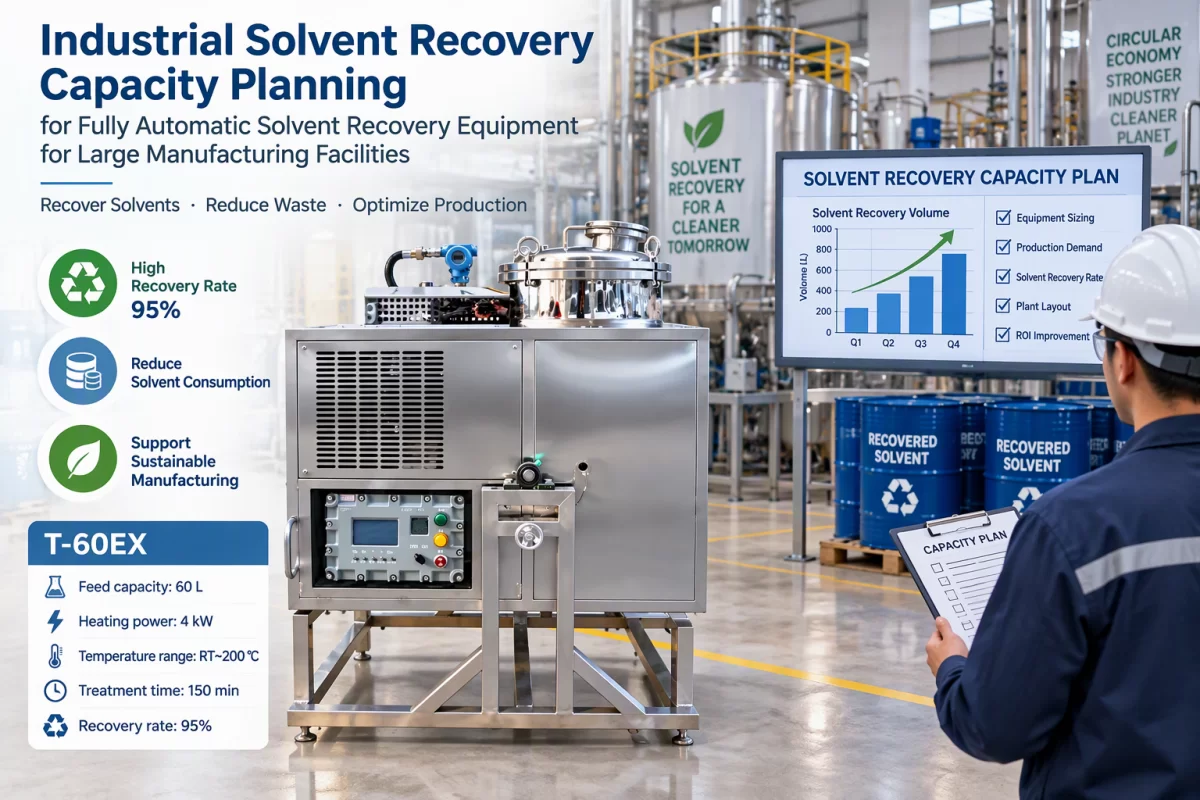
The FANBOLUN T-series specification sheet covers feed capacities from 20 to 400 liters. For larger manufacturing waste streams, the T-250Ex and T-400Ex provide useful starting points for a capacity discussion. Smaller models may suit segregated waste streams, pilot testing, or departments generating lower daily volumes.
On smaller screens, swipe horizontally to view all specifications.
| Model | Feed capacity (L) | Supply (AC V) | Heating power (kW) | Temperature range (°C) | Treatment time (min) | Recovery (%) | Weight (kg) | Dimensions (mm) |
|---|---|---|---|---|---|---|---|---|
| T-20Ex | 20 | 380 | 2 | RT–200 | 120 | 95 | 153 | 860 × 760 × 1190 |
| T-60Ex | 60 | 380 | 4 | RT–200 | 150 | 95 | 170 | 1160 × 870 × 1260 |
| T-80Ex | 80 | 380 | 5 | RT–200 | 180 | 95 | 200 | 1180 × 850 × 1290 |
| T-125Ex | 125 | 380 | 6 | RT–200 | 210 | 95 | 280 | 1250 × 920 × 1450 |
| T-250Ex | 250 | 380 | 16 | RT–200 | 240 | 95 | 520 | 2600 × 1200 × 1950 |
| T-400Ex | 400 | 380 | 32 | RT–200 | 270 | 95 | 1200 | 1990 × 1850 × 2090 |
RT means room temperature. The listed 95% recovery and treatment times are specification values, not guarantees for every waste composition. Heating power is not the total connected load or measured energy consumption per batch.
The T-400Ex lists a 400-liter feed capacity and a 270-minute treatment time. Dividing these values gives approximately 88.9 liters of feed per treatment hour, before any additional turnaround time. This calculation is not a certified continuous-flow rating. Feeding, cooling, residue removal, cleaning, and maintenance can reduce practical shift output and must be included in the capacity plan.
Match Solvent Chemistry to Safe, Reliable Reuse
Potential applications include paint and coating cleanup, printing-equipment washing, metal-component degreasing, and electronics cleaning. However, an application label alone cannot establish compatibility. Feed analysis should identify solvent composition, water, solids, corrosive contaminants, and substances that could react or decompose during heating.
Mixed solvents require particular attention. Distillation may change the recovered mixture’s composition, and water-containing alcohols may face separation limits such as azeotropes. Precision cleaning can also require additional quality checks or treatment. Pilot recovery tests provide a sound basis for confirming cleaning performance and acceptable reuse.
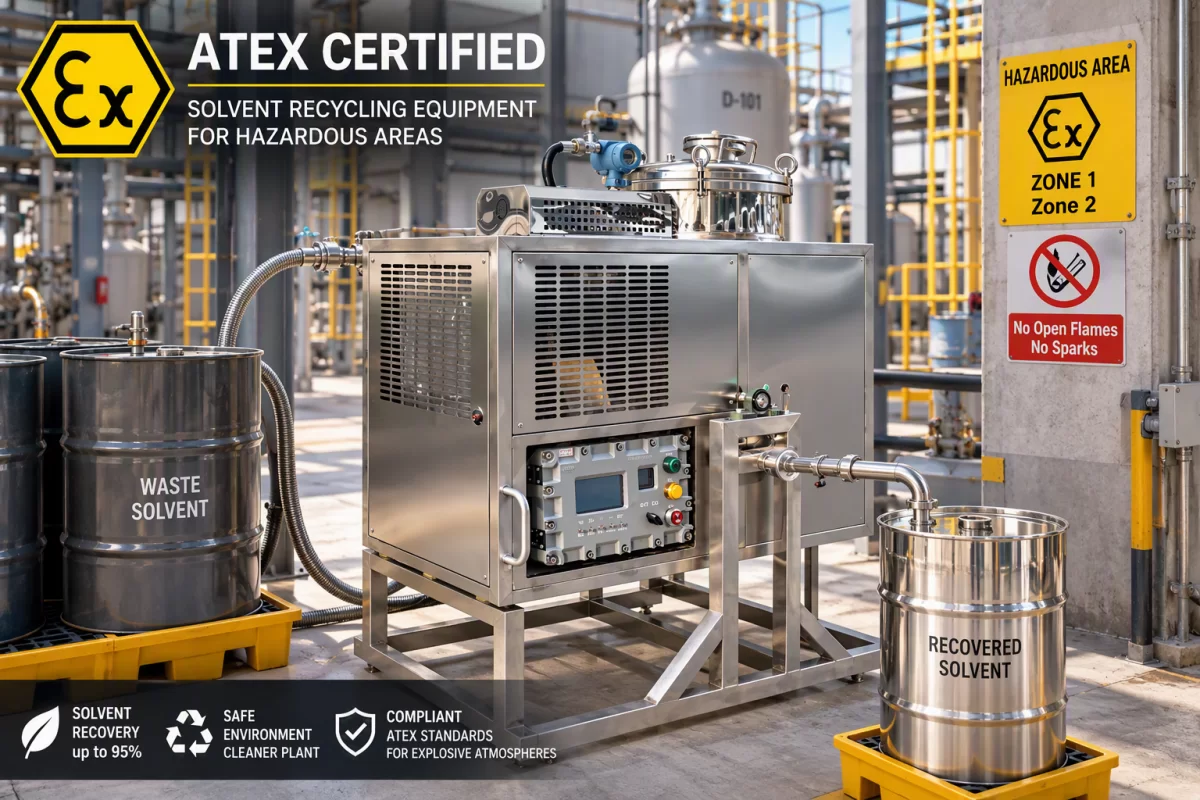
Verify hazardous-area suitability: confirm applicable approvals and documentation for the actual installation; an “Ex” model suffix alone is insufficient evidence.
Review vapor and ignition controls: evaluate ventilation, grounding, bonding, compatible electrical equipment, and safe transfer procedures.
Confirm protective functions: specify appropriate temperature, pressure, level, and cooling-failure safeguards with qualified engineering support.
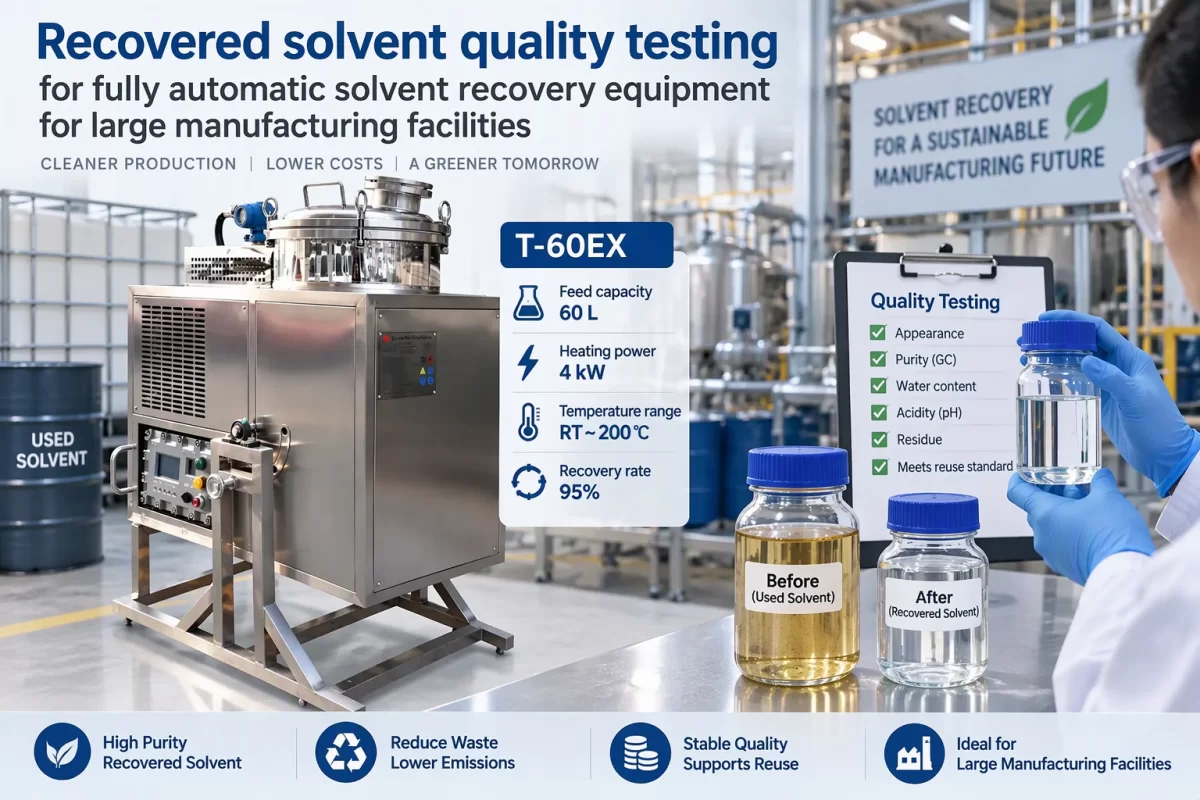
Protect solvent quality: define acceptance criteria such as water content, composition, nonvolatile residue, or process-specific cleaning results.
Plan residue management: characterize remaining contaminants and arrange lawful storage, transport, and disposal.
Recovery reduces recoverable liquid waste but does not make the remaining residue harmless. The solvent waste management guide offers related context for handling waste streams that remain after recycling.
FANBOLUN Equipment Price References
Equipment pricing should be considered alongside installation scope and operating savings. The following references are FANBOLUN company prices from the supplied product list. These two entries have single listed prices, providing clear reference points without implying that a product-range price applies to a particular configuration.
Swipe horizontally on mobile to compare product references and pricing.
| Product reference | Company price | Selection consideration |
|---|---|---|
| Stable Larger T-450Ex Solvent Recovery Unit for Waste Organic Solvent | $10,691 | Large-unit project evaluation |
| Solvent Recovery Machine and IPA Recovery Machine for Electronics Cleaning, Featuring Continuous Solvent Recovery | $4,271 | Electronics-cleaning application evaluation |
These are equipment price references, not complete installed-system quotations. Confirm configuration, automation scope, freight, taxes, commissioning, and auxiliary equipment in the final offer. The supplied technical sheet does not include T-450Ex specifications or the IPA listing’s throughput; neither should be inferred from the T-400Ex data.
A meaningful financial assessment uses measured operating data rather than purchase price alone. Annual benefits can include avoided fresh-solvent purchases and avoided waste handling costs. Annual expenses include electricity, cooling, labor, consumables, maintenance, quality testing, and remaining residue disposal.
Build a Recovery Installation Around Measurable Results
Start with a waste-stream audit covering daily volume, peak production periods, solvent composition, contamination levels, and current disposal arrangements. Next, test representative samples and establish the recovered-solvent acceptance standard. Those results help determine suitable capacity, treatment conditions, and the required automation package.
Site planning should then address power supply, cooling, ventilation, floor loading, maintenance access, and storage capacity. For example, the T-400Ex’s listed 1,200 kg machine weight is relevant to placement, but installation engineering must also consider operating contents and associated equipment.
During commissioning, record feed volume, recovered volume, quality results, utility use, turnaround time, and residue generation. These measurements establish whether the system meets the agreed production and economic targets. FANBOLUN’s solvent recycling equipment page provides a relevant starting point for reviewing equipment options before a project-specific consultation.
Turn a Recurring Waste Expense into a Controlled Resource
Fully automatic solvent recovery equipment for large manufacturing facilities offers a practical route toward lower solvent consumption and more structured waste handling. The strongest results come from matching the equipment to real waste chemistry, achievable shift capacity, and clearly defined automation responsibilities.
For a FANBOLUN equipment assessment, prepare representative waste samples, daily volume records, solvent safety data sheets, site utility details, and reuse requirements. A proposal built around this information can connect equipment specifications and company pricing to a realistic, verifiable manufacturing improvement.