Solvent Recovery Machine · Laboratory Selection Guide
How to Choose Laboratory Solvent Recovery Equipment for Safe Reuse
Choosing laboratory solvent recovery equipment starts with the waste stream, not the tank size. A useful selection must connect solvent composition, daily waste generation, available operating time, installation conditions, and the quality required for the next use. A machine that fits the room may still be unsuitable for the liquid or the laboratory workflow.
The smallest nominal feed capacity in the supplied equipment range is 20 L. That provides a starting point for evaluation—not a recommendation for every laboratory and not a substitute for representative sample testing.
Identify the Waste Before Selecting a Solvent Recovery Machine
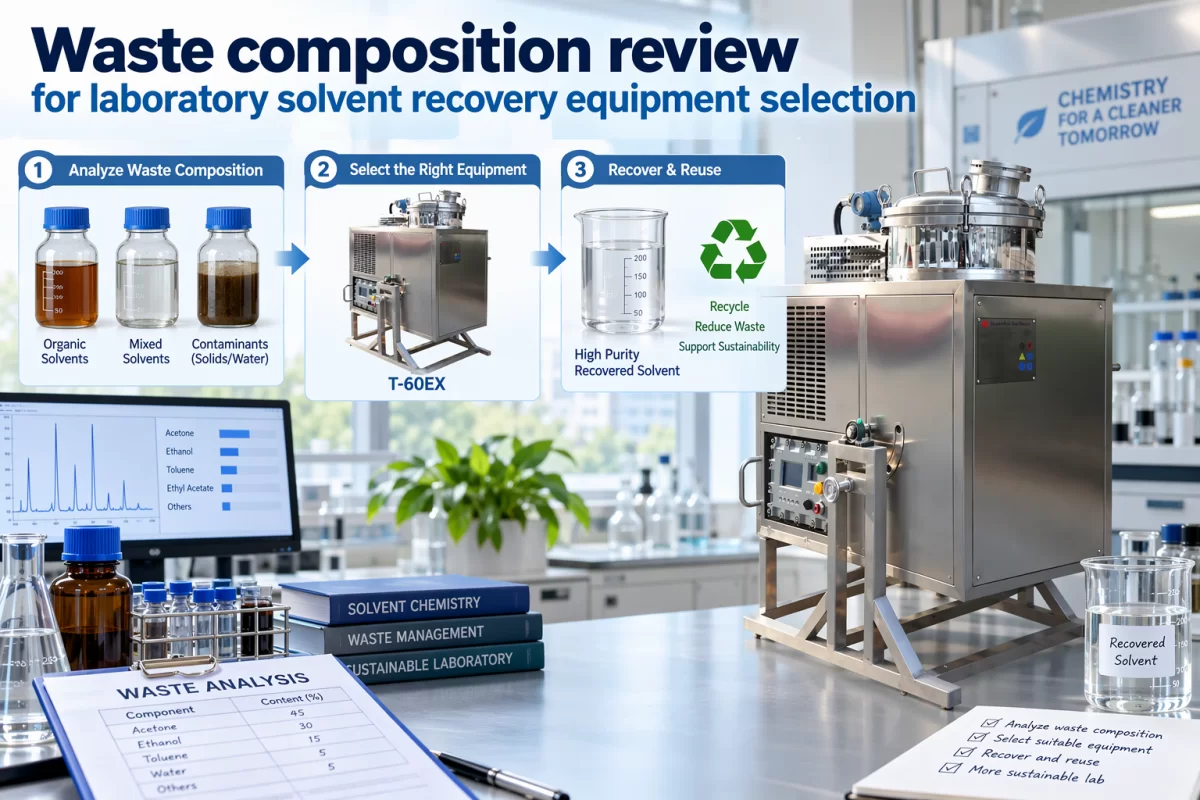
Document each waste stream separately. Record the original solvents, their likely proportions, the process that generated the waste, and any changes between batches. Review safety data sheets alongside process records; a label such as “used thinner” or “cleaning solvent” does not fully describe the liquid being treated.
- Solvent composition: identify individual solvents and mixtures, including possible carryover from previous laboratory operations.
- Water content: establish whether water is present and arrange measurement where it affects separation or reuse requirements.
- Solids and dissolved contaminants: assess suspended particles, salts, oils, pigments, resins, and other nonvolatile material.
- Hazardous constituents: flag reactive, corrosive, oxidizing, thermally unstable, or peroxide-forming components for specialist review before heating is considered.
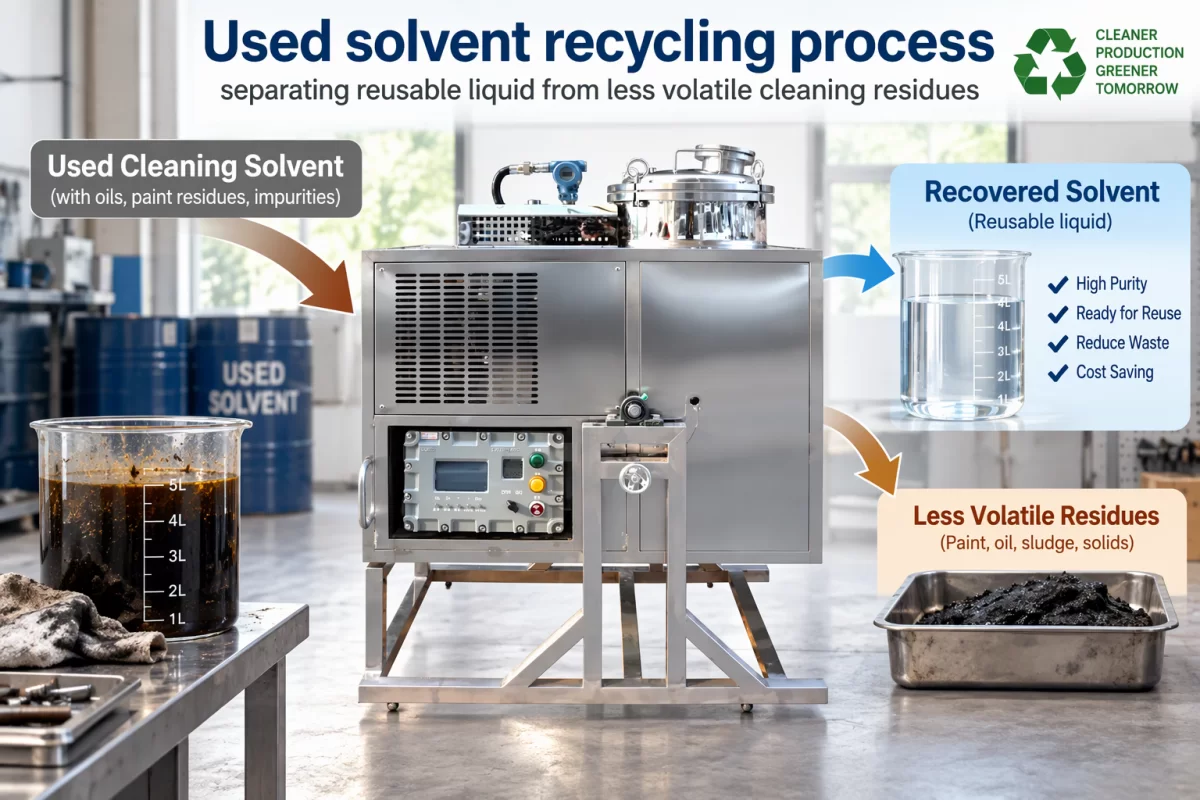
Distillation can separate volatile solvent from some less-volatile contaminants, but mixed solvents, water, foaming, and residue behavior can complicate the result. Compare relevant solvent recovery methods when defining the treatment route; general guidance is not proof that a particular model accepts a particular waste.
Size Laboratory Solvent Recovery Equipment Around the Complete Cycle
Measure daily waste generation by stream and record both routine and peak workloads. Then establish when trained staff can operate the equipment, how long waste may be stored safely, and whether different streams require separate campaigns. Averaging all waste together can hide a capacity problem or encourage inappropriate mixing.
The complete processing cycle includes feeding, heating, distillation, cooling, and residue removal. Cleaning and changeover may also reduce the time available for subsequent batches. Equipment capacity must therefore be assessed using the supplier-confirmed allowable charge and the complete cycle demonstrated with the actual sample and proposed configuration.
The T-20Ex parameter sheet lists a nominal feed capacity of 20 L and a treatment time of 120 minutes. It does not define whether that time includes every cycle stage or specify the test liquid and conditions. Dividing 20 L by the listed treatment time would not establish verified hourly throughput, and multiplying that result by a shift length would not establish daily production.
Before a capacity commitment, request confirmed feeding limits, minimum operating charge, stage-by-stage timing, cleaning requirements, and the number of complete batches achievable within the actual operating window. Those items remain pending until supported by model-specific information and testing.
Check Space, Ventilation, Power, and Condenser Conditions
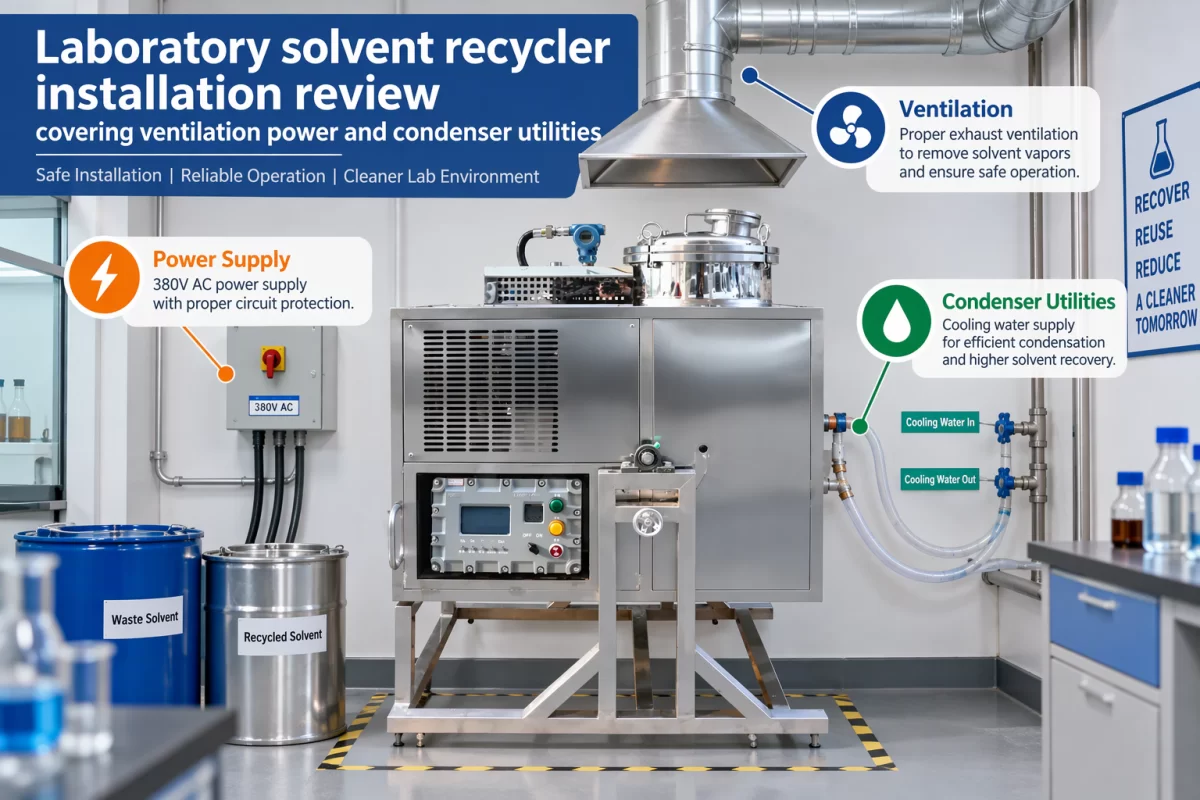
A laboratory installation needs more than enough floor area for the machine body. Verify delivery access, floor loading, operator access, maintenance clearance, feed-container handling, recovered-solvent storage, and a safe route for removing residues. Keep the installation review separate from the nominal capacity comparison.
For T-20Ex, the supplied sheet lists a machine size of 860 × 760 × 1190 mm, a weight of 153 kg, and an AC supply of 380 V. These are listed equipment values, not a complete installation specification. Required clearances, floor requirements, supply phase, frequency, circuit protection, and connection details still need confirmation.
- Ventilation and fire safety: have qualified site personnel assess vapor management, ignition sources, area classification, bonding and grounding, and local requirements.
- Electrical provision: confirm the complete electrical load and approved connection arrangement. Listed heating power is not automatically total system demand.
- Condenser support: confirm the cooling method, required cooling capacity, ambient operating limits, and any water-flow, water-temperature, or chiller requirements.
- Operating safeguards: request model-specific information on alarms, interlocks, loss-of-cooling response, and safe shutdown procedures.
Cooling performance affects vapor condensation and may constrain processing. No condenser utility specifications are provided in the supplied parameter sheet, so compatibility with the available laboratory services must remain an open selection item.
Match the Model to Verified Waste and Site Requirements
The Thinner Recycler Machine, listed as T-20Ex in the parameter sheet, is a candidate for evaluation when its nominal size and site requirements align with the project. Review the 20 L laboratory solvent recycler as a product starting point, then request a configuration proposal based on the identified waste stream.
The supplied range offers the following nominal feed capacities and listed heating powers. Larger capacity alone does not establish better suitability for laboratory work.
On smaller screens, scroll horizontally to view all specifications.
| Model | Nominal feed capacity (L) | Heating power (kW) | Machine weight (kg) | Listed machine size (mm) |
|---|---|---|---|---|
| T-20Ex | 20 | 2 | 153 | 860 × 760 × 1190 |
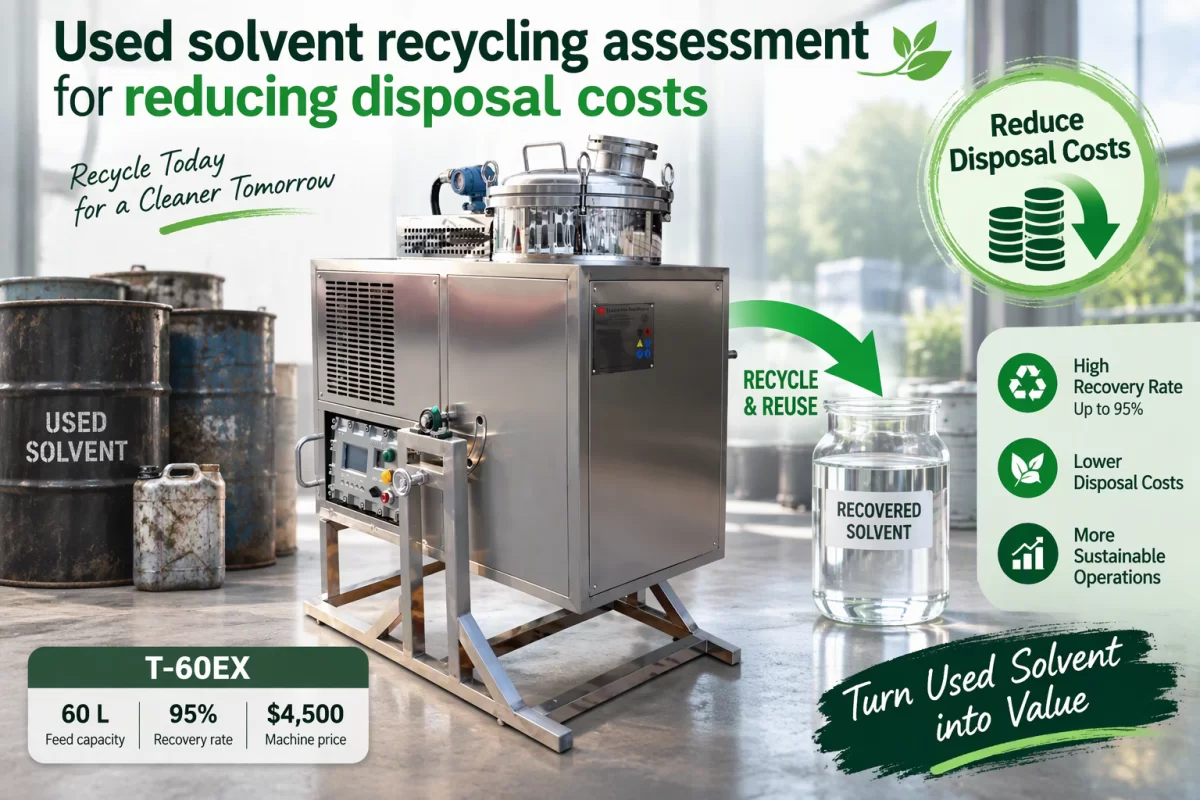
| T-60Ex | 60 | 4 | 170 | 1160 × 870 × 1260 |
| T-80Ex | 80 | 5 | 200 | 1180 × 850 × 1290 |
| T-125Ex | 125 | 6 | 280 | 1250 × 920 × 1450 |
| T-250Ex | 250 | 16 | 520 | 2600 × 1200 × 1950 |
| T-400Ex | 400 | 32 | 1200 | 1990 × 1850 × 2090 |
Read performance figures carefully. The T-20Ex sheet also lists a temperature range of RT–200 °C, treatment time of 120 minutes, and recovery of 95%. RT means room temperature. The temperature range is not a recommended setting for every waste. The recovery figure is a listed value without supplied sample conditions or a defined measurement basis; it is not a purity claim or a guaranteed result. Actual recovery, purity, and shift output require sample- and configuration-specific verification.
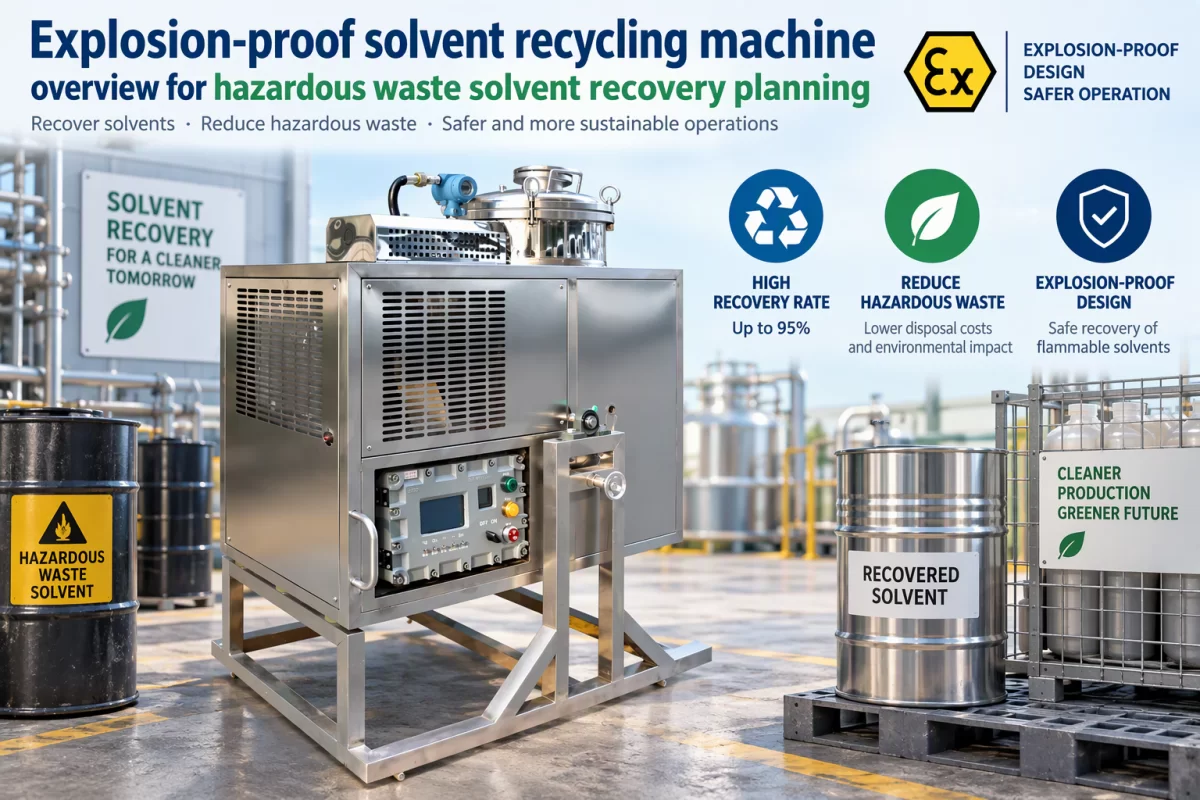
Request documentation for wetted-material compatibility, permitted operating conditions, residue handling, and any proposed accessories. The model suffix and certification wording in other product listings do not establish the certification or explosion-protection status of this particular configuration. Obtain the corresponding model documents before making a compliance decision.
Company Reference Price for Initial Budgeting
US$2,645–9,690
This is our company’s reference price range selected from the middle-priced entry in the supplied company price list. Because the list includes price ranges, entries are ordered by their lower quoted amount; the middle entry retains its stated range. This is a general budgeting reference, not a confirmed T-20Ex price. The actual quotation is subject to configuration and the inquiry result. Confirm the scope of cooling equipment, installation support, transport, and other quoted items before comparing project costs.
Test Recovered Solvent Against Its Intended Use
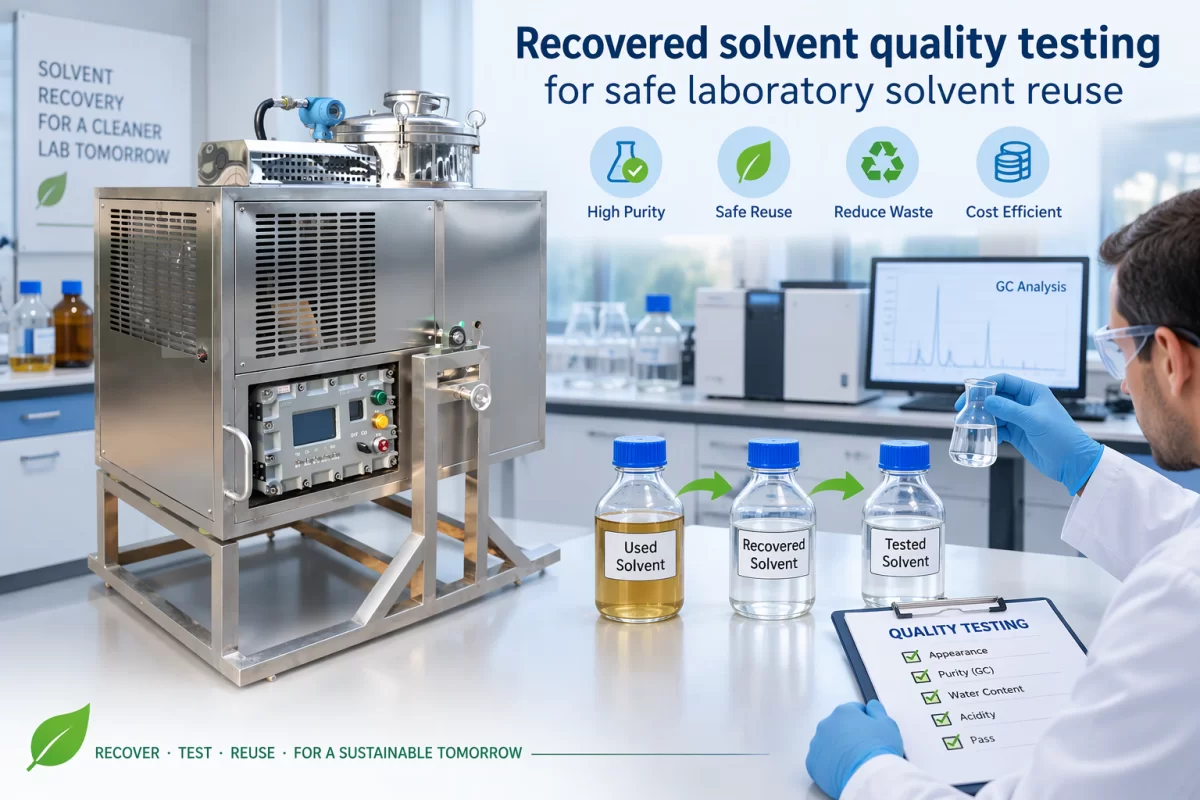
Define acceptance criteria before the trial, not after the recovered liquid looks clean. Solvent suitable for a validated cleaning task may still be unsuitable for analytical preparation or a sensitive chemical process. Recovery quantity and recovered-liquid purity are different measurements and should be reported separately.
Depending on the intended application, the acceptance plan may include solvent identity and composition, water content, nonvolatile residue, and relevant carryover contaminants. Appropriate tests might include chromatographic analysis, a validated water-content method, and residue testing. The laboratory’s quality team should select methods and limits; no universal purity threshold is established by the supplied equipment data.
Use the guidance on safe solvent reuse to support procedure development, rather than treating it as a model-specific quality guarantee. Record feed identification, operating conditions, recovered quantity, test results, and final disposition. Keep unapproved recovered liquid segregated, and manage distillation residues through the laboratory’s approved waste route.
Choose Laboratory Solvent Recovery Equipment with Evidence
The right laboratory solvent recovery equipment is the model that matches a characterized waste stream, a demonstrated full-cycle workload, suitable site services, and documented reuse requirements. The nominal 20 L T-20Ex offers a clear starting reference, but its suitability must be established through sample testing and configuration review.
For a focused equipment inquiry, prepare the solvent composition, water and contaminant information, measured daily waste volume, available operating hours, site utilities, and intended reuse specification. Request a sample-based recommendation and a configuration-specific quotation before committing to a Solvent Recovery Machine.