Xylene Recovery: From Hazardous Waste Reduction to Closed-Loop Solvent Use
Xylene (also called dimethylbenzene) is a workhorse solvent in coatings, printing, electronics cleaning, and many industrial wash steps. The problem is what happens after it gets dirty: disposal costs rise, solvent purchases rise, and compliance pressure rises. This article explains—without jargon—how xylene recovery works and how a solvent recycling machine can turn “waste solvent” into reusable solvent again.
1) Why xylene “waste” grows so fast in real production
In most facilities, xylene is not used once—it circulates through cleaning tanks, spray guns, printing rolls, or parts washers. Each cycle adds contaminants: resins, inks, oils, pigments, polymers, or moisture. Eventually the solvent stops performing and gets labeled as hazardous waste (depending on local regulations and the contaminant profile).
The “waste” is usually not 100% unusable liquid. In many cases, a large portion is still xylene—just mixed with higher-boiling contaminants. Recovery separates the usable fraction, so less material is shipped out as waste and less new solvent is purchased.
2) What “closed-loop solvent” actually means
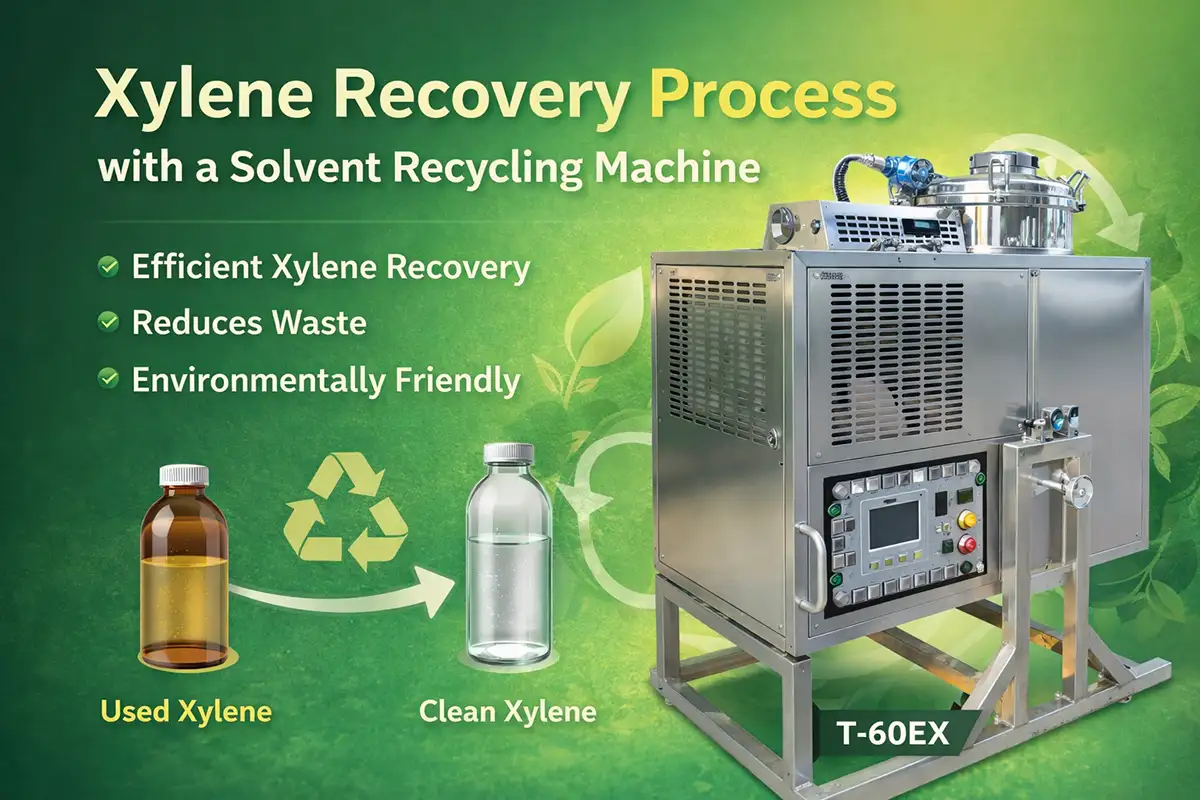
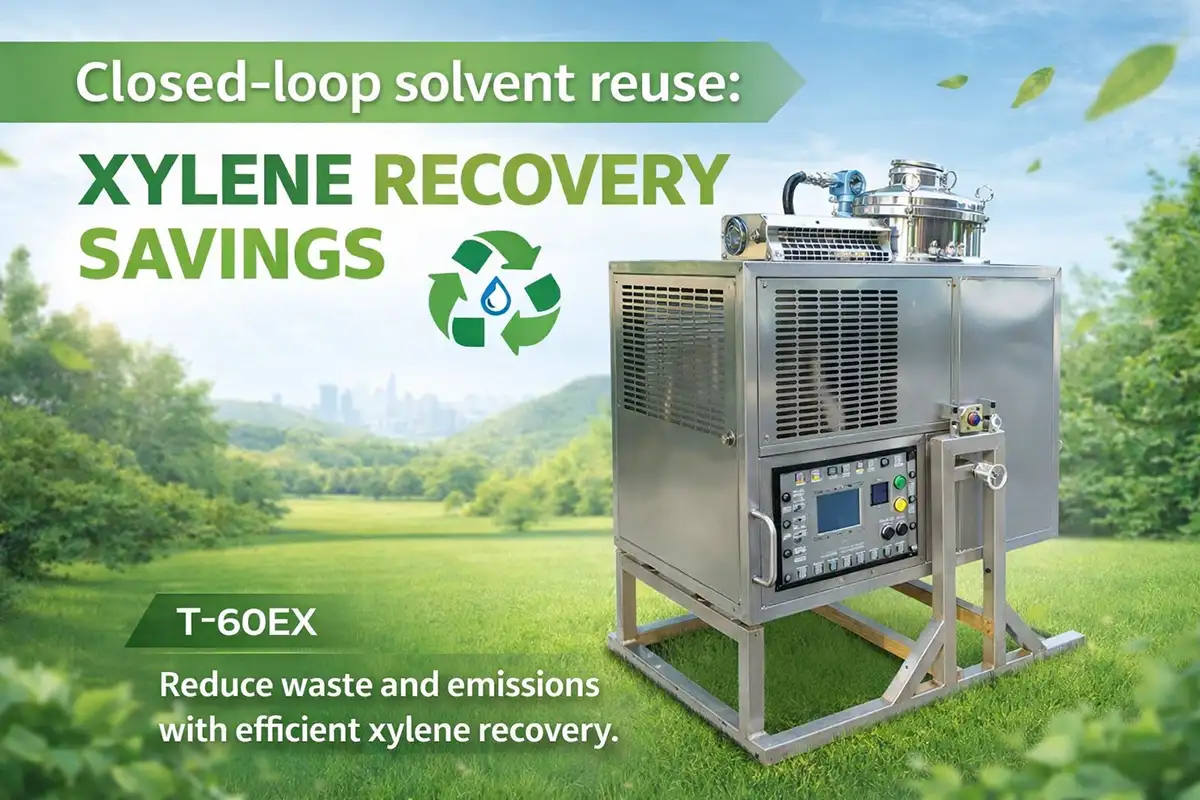
A closed-loop solvent approach is simple: instead of “buy → use → dispose,” the loop becomes “buy → use → recover → reuse.” The loop is never perfectly closed—there will still be residues and losses—but it can dramatically reduce the amount of solvent leaving the site as waste.
The U.S. Environmental Protection Agency promotes waste minimization concepts for hazardous materials management (source: EPA Hazardous Waste Minimization guidance). In practice, solvent recovery is one of the most direct ways to reduce the volume that must be transported and treated off-site.
Because contamination keeps accumulating. Even if the solvent still “looks fine,” performance can drift—cleaning slows down, residues remain, and defect rates increase. Recovery resets solvent quality by separating the xylene fraction from heavier contaminants, then the still bottoms are removed as a smaller, more concentrated waste stream.
3) How xylene recovery works (plain-English distillation)
Most industrial solvent recyclers use controlled heating and condensation—similar to how distilled water is made, but designed for flammable solvents. Xylene vaporizes at a lower temperature than many contaminants (resins, oils, pigments), so the machine can:
Heat the dirty xylene under controlled conditions
Evaporate the xylene fraction
Condense vapor back into liquid xylene
Leave behind concentrated residues (“still bottoms”) for compliant disposal
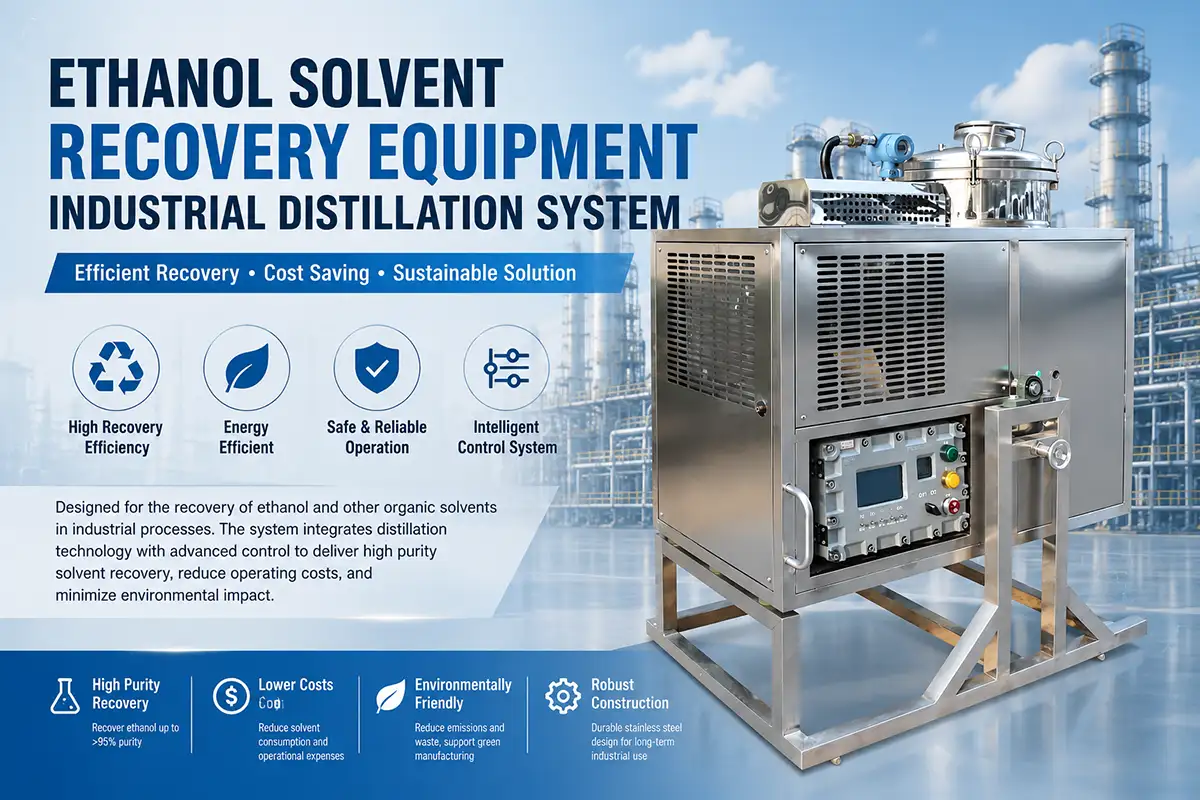
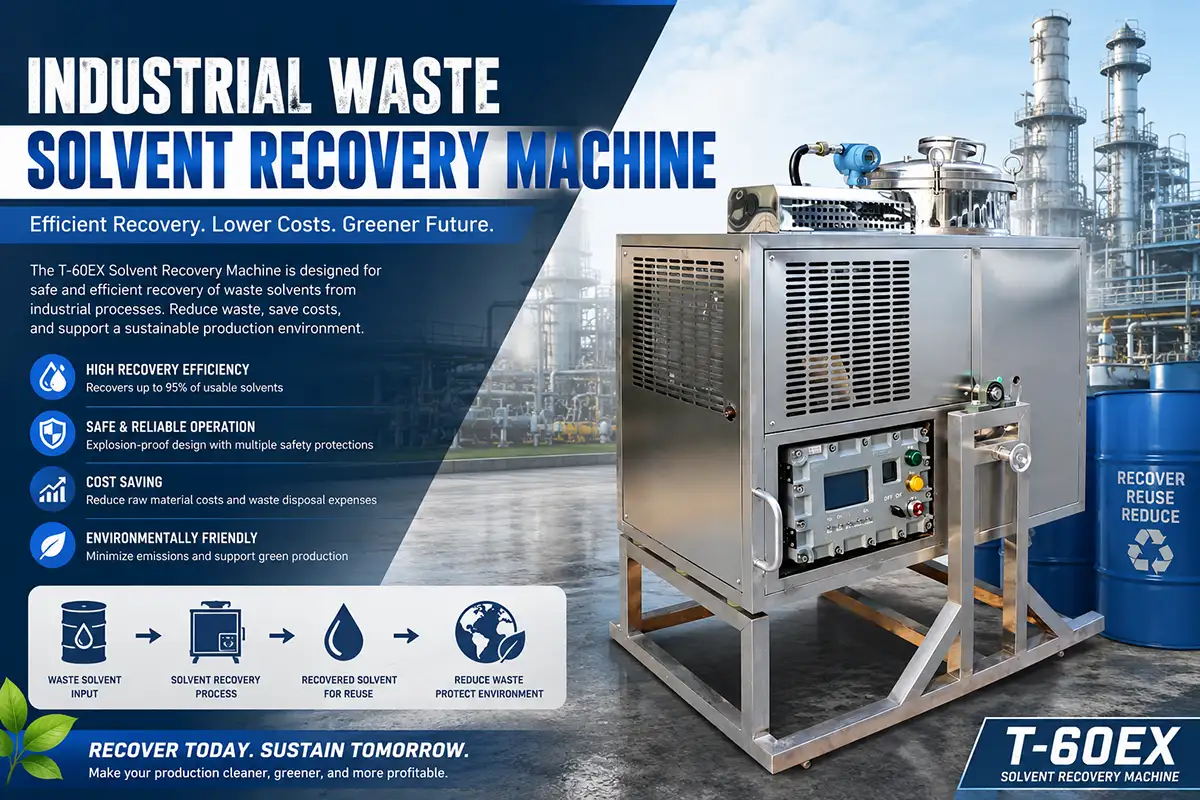
Many users ask about expected results. According to the equipment parameters provided, these explosion-proof models are designed for a recovery rate up to 95% and a temperature range of RT–200°C (actual performance depends on solvent mixture and contamination).
Not always. In real facilities, recovery depends on what else is in the solvent—heavy oils, water, high-boiling binders, and certain additives can reduce the usable fraction. But 95% is a strong design target for many typical solvent contamination scenarios, and it’s a useful benchmark when estimating savings.
4) Choosing a solvent recycling machine: capacity, cycle time, and power
When evaluating a solvent recovery unit, the most practical questions are not “Is it high-tech?” but:How much dirty solvent is generated per day? and how quickly must it be turned back into usable solvent?That points directly to batch size (feed capacity) and cycle time.
| Model | Feed Capacity (L) | Heating Power (kW) | Treatment Time (min) | Recovery (%) | Size (mm) |
|---|---|---|---|---|---|
| T-20Ex | 20 | 2 | 120 | 95 | 860×760×1190 |
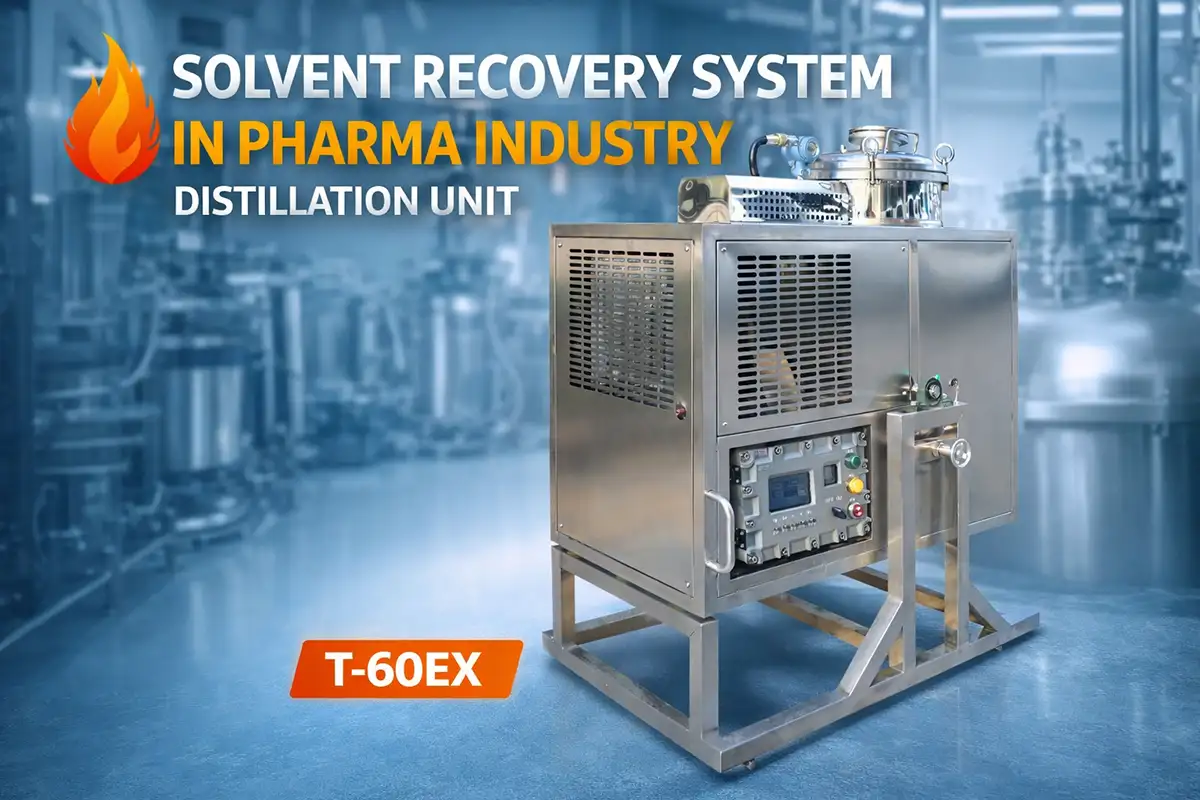
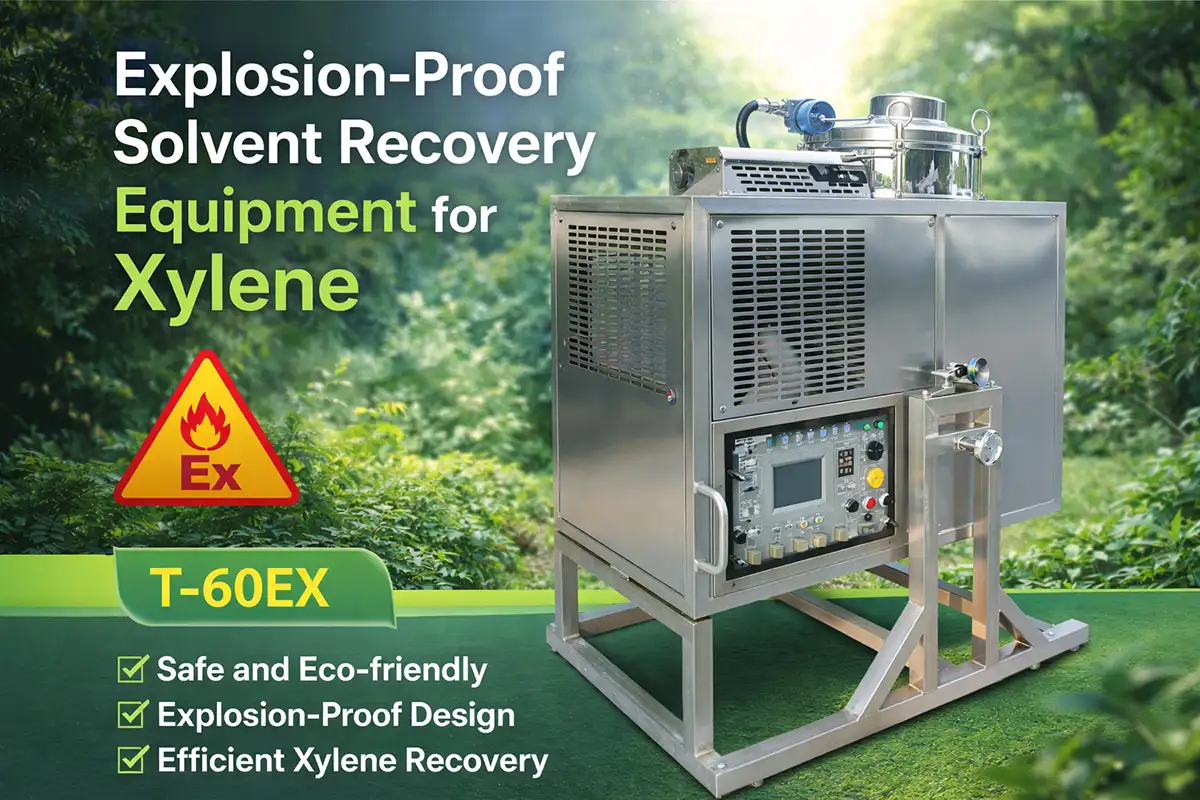
| T-60Ex | 60 | 4 | 150 | 95 | 1160×870×1260 |
| T-80Ex | 80 | 5 | 180 | 95 | 1180×850×1290 |
| T-125Ex | 125 | 6 | 210 | 95 | 1250×920×1450 |
| T-250Ex | 250 | 16 | 240 | 95 | 2600×1200×1950 |
| T-400Ex | 400 | 32 | 270 | 95 | 1990×1850×2090 |
The table above makes selection easier:smaller generators may prefer a 20–80 L batch unit, while facilities with continuous solvent turnover often look at 125–400 L per batch. If a deeper “how it works” walkthrough is needed, seehow a solvent recovery system works.
5) Safety and compliance: what matters most with xylene
Xylene is flammable, and solvent vapors require careful engineering controls. In practice, users typically look for:
Explosion-proof design appropriate for solvent environments
Stable temperature control to avoid overheating
Proper ventilation and suitable installation area
Compatible materials for seals and hoses
Residue handling plan for still bottoms
Yes. Even when disposal is unavoidable for residues, recovery can reduce the quantity requiring shipment and treatment. Instead of paying to dispose an entire drum of mixed solvent, the recovered xylene is reused and only the concentrated bottoms are disposed. For disposal guidance, reference xylene disposal requirements and local rules.
6) The business case: why recovery can outperform “buy and dump”
Two cost drivers usually dominate: fresh solvent purchasing and hazardous waste disposal. Xylene recovery attacks both at the same time: fewer purchases and fewer waste shipments.
According to the U.S. Energy Information Administration (EIA), industrial electricity prices commonly fall in thesingle-digit to low double-digit cents per kWh range in many U.S. states (varies by location and year). That matters because a solvent recycler’s heating power (e.g., 2–32 kW depending on model) converts directly into operating cost. In many real scenarios, solvent purchase + disposal costs outweigh electricity—making recovery economically attractive.
Of course, real ROI depends on the specific solvent mixture, the number of batches per week, and how the recovered solvent is reused. But when a site regularly generates xylene waste, the closed-loop approach typically becomes the simplest path to both compliance and cost control.
7) Quick answers to the questions users actually search for
Can recovered xylene be used again for cleaning or dilution?
In many operations, yes—especially where xylene is used as a cleaning solvent or as part of a thinning blend. The best practice is to verify reuse with a simple quality check (appearance, drying behavior, and—if required—lab testing).
Does recovery eliminate hazardous waste entirely?
No. Recovery typically reduces hazardous waste volume by separating reusable solvent from concentrated residues. The residues still require proper handling and disposal.
Is a larger machine always better?
Not necessarily. Oversizing can mean under-filled batches and inefficient scheduling. A better approach is matching feed capacity and cycle time to weekly solvent generation.