Industrial Solvent Recovery Solutions: A Simple Guide for Real-World Plants
Industrial solvent recovery solutions turn “hazardous waste” into usable product. This guide explains, in plain language, how solvent recycler machines work, what savings they can bring, and how to choose the right capacity for a factory.
Why Industrial Solvent Recovery Solutions Are Becoming Essential
Many factories still treat used solvent as a disposable cost: pay to buy it, use it once, then pay again to ship it out as hazardous waste. Yet in most cases, 80–95% of that solvent can actually be recovered and reused with modern solvent recycler machines.
According to data from the European Environment Agency, hazardous waste volumes in the EU increased by roughly 20% between 2010 and 2020, while treatment and disposal costs also rose significantly. As regulations continue to tighten worldwide, industrial solvent recovery solutions are no longer a “nice to have” — they are often the most economical way to stay compliant.
In simple terms: solvent recovery means distilling dirty solvent (for example, used acetone, xylene, or paint thinner) to remove paints, resins, oils, and other contaminants, and then sending the clean solvent back into production instead of buying new.
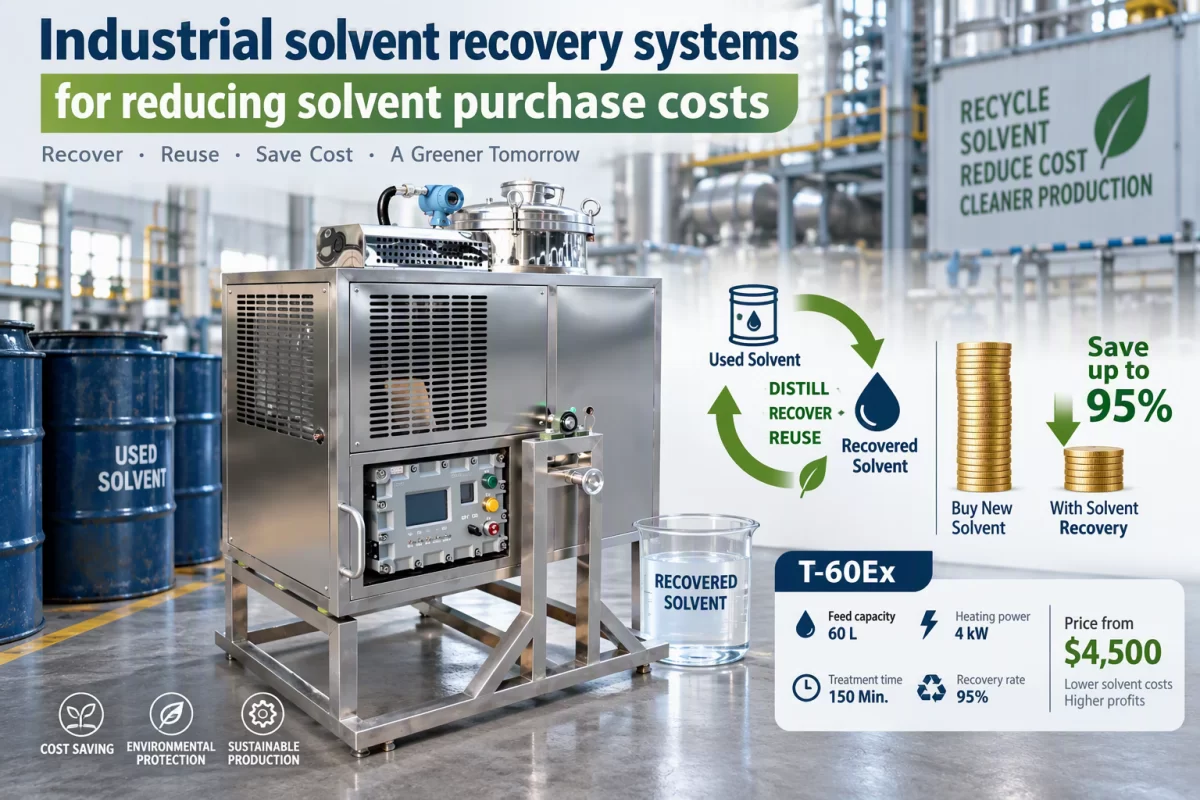
Yes. For a plant using 200–500 L of solvent per week, on-site recovery often reduces virgin solvent purchasing by 60–90% and waste hauling volumes by a similar amount. In many real projects, the payback time for a properly sized solvent recycler machine is between 6 and 18 months, depending on local solvent and disposal prices.
How a Solvent Recycler Machine Works (Explained Simply)
Most industrial solvent recovery solutions are based on distillation. The core idea is straightforward:
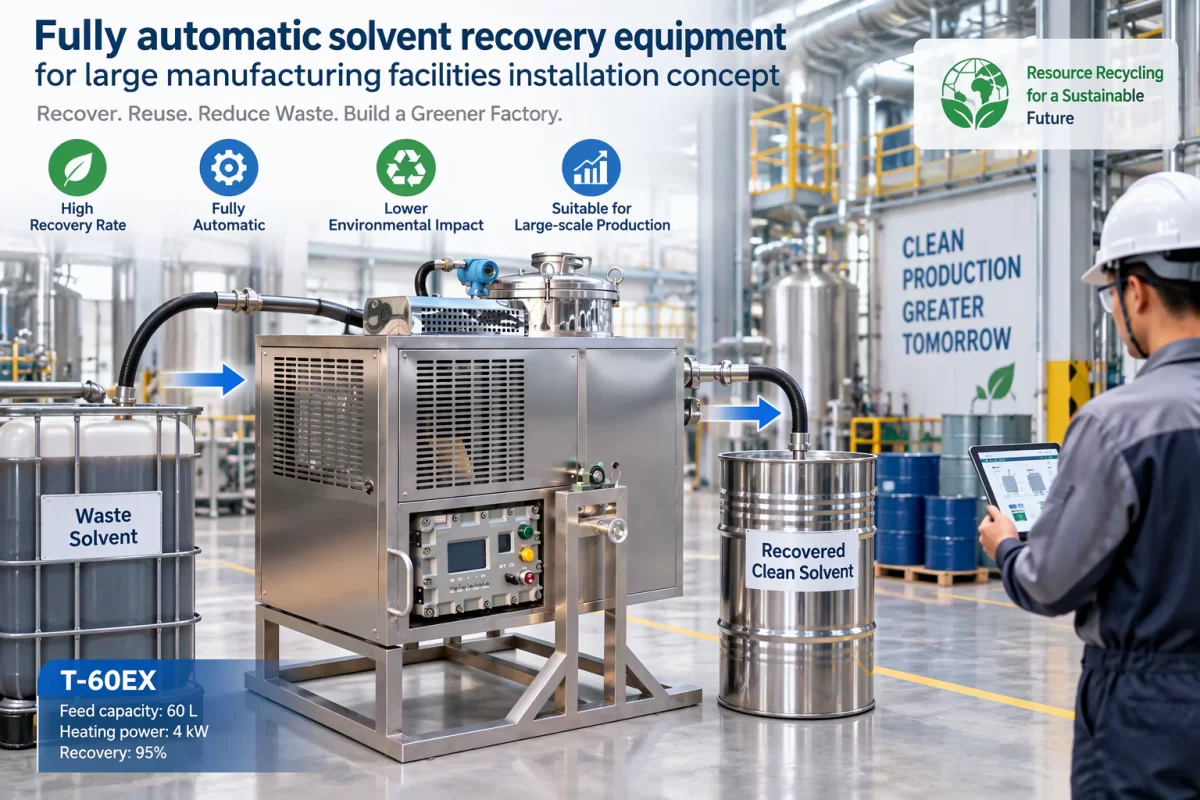
Dirty solvent is loaded into a stainless-steel boiler tank.
The tank is heated until the solvent evaporates, while heavy contaminants such as paints, inks, oils, or resins stay in the tank.
Vapors are cooled in a condenser and become liquid again.
Clean solvent is collected in a separate container, ready for reuse.
The process is fully enclosed, with temperature controls and explosion-proof design for flammable solvents. For a deeper dive into the process principles, see the article onwhat solvent recovery is and how it works.
How long does it usually take to process one batch of solvent?
Typical batch times range from about 2 to 4.5 hours, depending on the model and the boiling point of the solvent. For example, small and medium units often need 120–240 minutes to recover about 95% of the usable solvent from a batch.
Key design features found in many modern industrial solvent recovery units include:
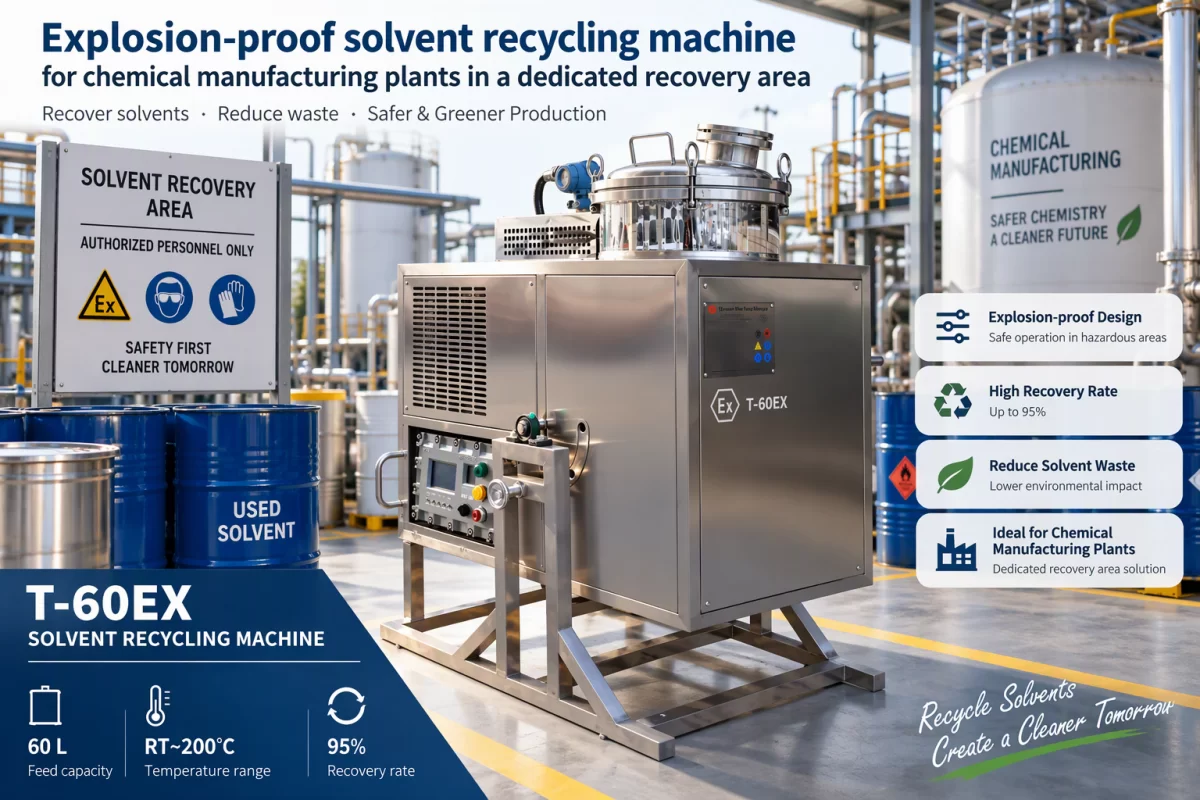
Explosion-proof (Ex) design for flammable solvents such as acetone, xylene, and many thinners.
Digital temperature and time control to match different solvent types and mixture characteristics.
High recovery rate — in our example models below, recovery efficiency is around 95% by volume under typical operating conditions.
Compact footprint so the equipment can be placed near the process lines, reducing solvent handling and internal transport.
Typical Industrial Solvent Recovery Units & Capacities
Choosing the right capacity is often the first practical question when evaluating industrial solvent recovery solutions. The table below shows a typical range of explosion-proof solvent recycling machines from a compact 20 L unit to a 400 L industrial system.
| Model | Feed capacity (L) | Power supply (ACV) | Heating power (kW) | Temperature range (℃) | Treatment time (min) | Recovery (%) | Machine weight (kg) | Machine size (mm) |
|---|---|---|---|---|---|---|---|---|
| T-20Ex | 20 | 380 | 2 | RT~200 | 120 | 95 | 153 | 860 × 760 × 1190 |
| T-60Ex | 60 | 380 | 4 | RT~200 | 150 | 95 | 170 | 1160 × 870 × 1260 |
| T-80Ex | 80 | 380 | 5 | RT~200 | 180 | 95 | 200 | 1180 × 850 × 1290 |
| T-125Ex | 125 | 380 | 6 | RT~200 | 210 | 95 | 280 | 1250 × 920 × 1450 |
| T-250Ex | 250 | 380 | 16 | RT~200 | 240 | 95 | 520 | 2600 × 1200 × 1950 |
| T-400Ex | 400 | 380 | 32 | RT~200 | 270 | 95 | 1200 | 1990 × 1850 × 2090 |
Note: Treatment times and recovery rates are typical values for common solvents such as acetone or standard thinners. Actual performance may vary with solvent mixtures and contamination levels.
Which capacity range is generally suitable for a factory using 300–800 L of solvent per week?
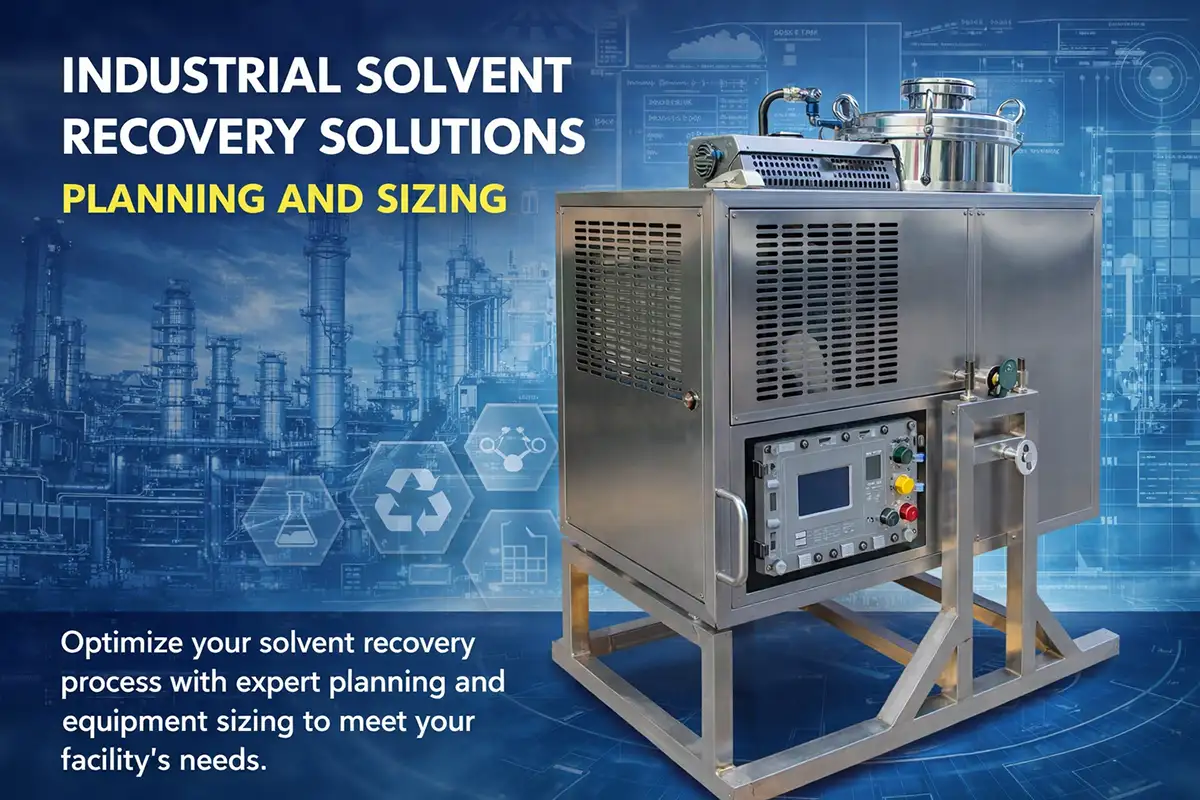
For weekly solvent use in the 300–800 L range, mid-sized models (such as the T‑80Ex or T‑125Ex) are often a good starting point. They allow daily or every‑other‑day batches without overloading operators. Larger plants or multi-shift operations may consider 250 L or 400 L units to minimize handling and improve throughput.
Cost, ROI & Waste Reduction: What to Expect
The business case for industrial solvent recovery solutions usually rests on three pillars:
Reduced solvent purchasing (less new solvent required).
Lower hazardous waste disposal costs (fewer drums shipped out).
Lower environmental and regulatory risk (less solvent leaving the site).
A study from the U.S. Environmental Protection Agency has shown that implementing on‑site solvent recycling can reduce the volume of hazardous solvent waste by up to 90% in suitable applications, while cutting overall solvent management costs by 20–50%.
A simple way to estimate payback is:
Annual solvent cost savings = (volume recovered per year) × (price of new solvent).
Annual disposal savings = (volume of waste avoided per year) × (disposal cost per liter or per drum).
Payback period = equipment investment ÷ (annual solvent savings + annual disposal savings).
For factories that generate a wide range of solvent wastes, it is also useful to understandhow solvent waste disposal works in detail. This can reveal which waste streams are best suited for on‑site recycling and which should still go to external treatment.
Safety, Compliance & Common Applications
Safety is central to any industrial solvent recovery solution. Modern units are designed with features such as:
Explosion-proof electrical design (Ex) for flammable atmospheres.
Over-temperature and over-pressure protection to prevent overheating.
Sealed systems to minimize solvent vapor emissions and worker exposure.
These systems are widely used in:
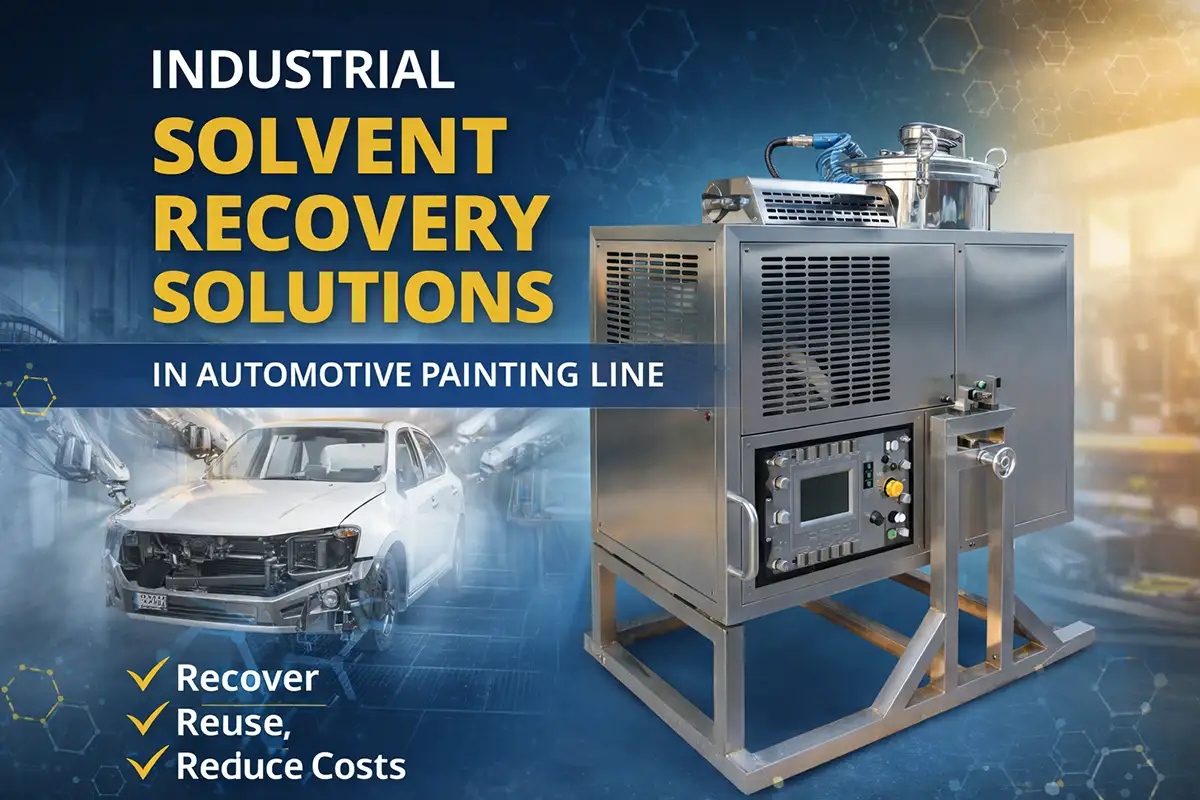
Automotive and industrial painting lines (recovery of paint thinner, xylene, solvent blends).
Printing and packaging (recovery of alcohols and mixed solvents from cleaning processes).
Electronics and precision parts cleaning (recovery of acetone, isopropyl alcohol, and similar solvents).
Pharmaceutical and laboratory operations (recovery of ethanol and other high‑purity solvents).
For example, plants that frequently handle isopropyl alcohol (IPA) and other flammable cleaners not only benefit from recovery, but also reduce the need for complex disposal procedures, which are described in resources likethis practical guide to IPA disposal.
How to Choose the Right Industrial Solvent Recovery Solution
Selecting a solvent recycling system is simpler when a few key questions are answered clearly:
What solvent(s) need to be recovered?
Boiling point, flammability, and contamination type determine the right temperature range and safety design. The models above cover a typical range of RT–200 ℃, suitable for most common industrial solvents.How much dirty solvent is generated per day or per week?
This drives the required feed capacity (L) of the machine. Many plants size a unit so that 1–2 batches per day are enough to keep up with production.What utility power is available?
The examples here use 380 V AC with heating power from 2 kW up to 32 kW. Adequate electrical supply and ventilation are essential for safe operation.What floor space is available?
Machine sizes range from 860 × 760 mm footprints for compact units to almost 2.0 × 1.85 m for large systems.Who will operate the unit?
Look for simple controls, clear status indicators, and easy cleaning to minimize training and handling time.
Key insight: in many plants, the limiting factor is operator time, not equipment capacity.
Turning Solvent Waste into Value with Industrial Solvent Recovery Solutions
Industrial solvent recovery solutions offer a practical way to reduce costs, cut hazardous waste, and support sustainability goals — without major changes to existing production lines. By matching solvent type, weekly volume, and safety requirements to the right recycler model, most factories can:
Recover up to 95% of usable solvent from waste streams.
Reduce hazardous waste volumes by as much as 80–90%.
Achieve investment payback in under two years in many cases.
For organizations evaluating specific equipment options, it can be helpful to compare differentsolvent recycling systemsand understand how they integrate into existing waste management workflows.
Back to top↑