
Solvent Recovery Unit for Sale: A Practical Guide to Cutting Solvent Costs and Improving Safety
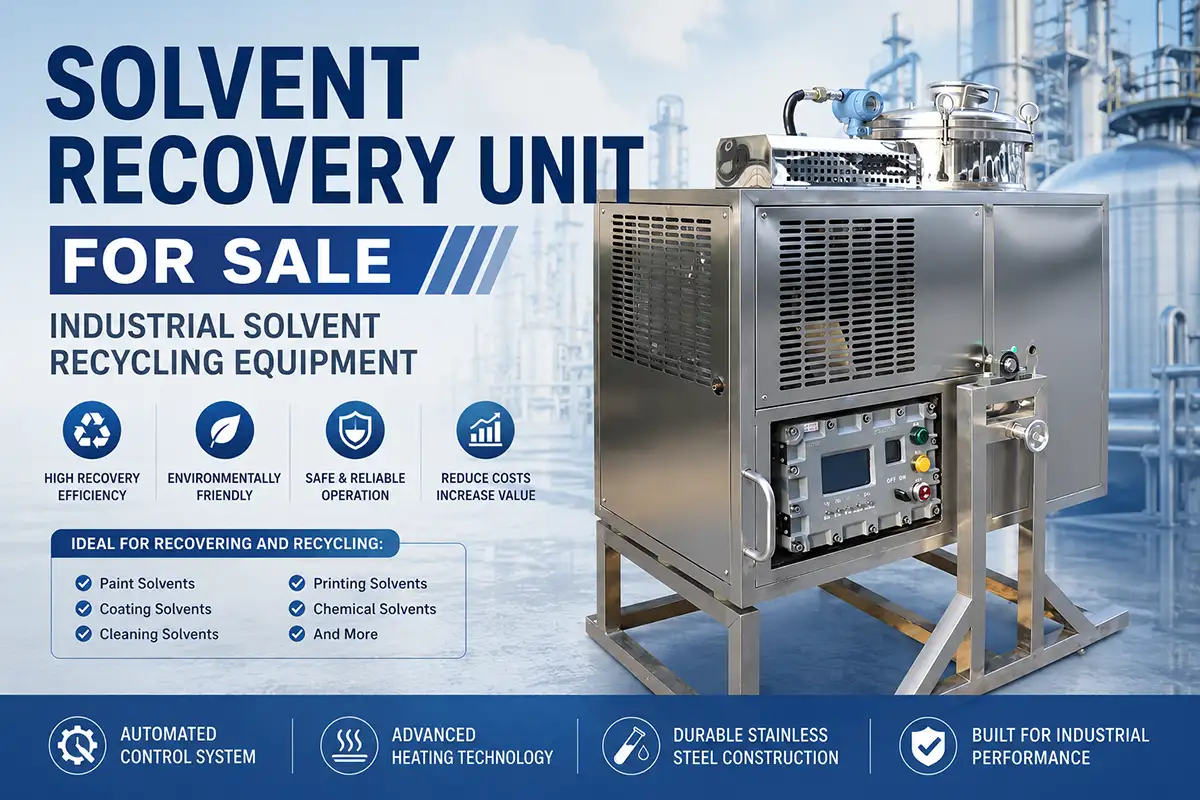
A reliable solvent recovery unit for sale can do much more than recycle used solvent. It can reduce raw solvent purchasing, lower hazardous waste volume, improve shop-floor cleanliness, and support safer, more consistent production. For companies handling acetone, IPA, ethanol, xylene, cleaning solvents, or mixed organic solvents, the right recovery system quickly becomes an operational asset rather than a simple piece of equipment.
Why solvent recovery matters in modern production
In printing, painting, coating, electronics cleaning, extraction, and chemical processing, solvent consumption is often a hidden cost center. Fresh solvent must be purchased repeatedly, contaminated solvent must be stored and handled correctly, and waste disposal adds another layer of expense. A solvent recovery unit separates reusable solvent from residues through controlled heating and condensation, helping factories reclaim solvent that would otherwise be discarded.
From an author’s perspective, the strongest reason to invest in a recovery system is not marketing language or trend-driven sustainability claims. It is the simple financial logic: less waste, less new solvent buying, and better process control. When recovery rates reach about 95%, the economics become attractive for many solvent-intensive operations.
Could a solvent recovery unit really reduce both purchasing and disposal pressure at the same time?
Yes. In many applications, the same machine reduces virgin solvent demand while also shrinking the volume of hazardous waste that needs external treatment. That dual effect is exactly why solvent recovery is often one of the fastest-return equipment upgrades in solvent-heavy facilities.
How to choose the right solvent recovery unit for sale
Not every system fits every process. Selection should depend on solvent type, daily volume, treatment time, heating power, utility availability, and site safety requirements. A buyer comparing solvent recovery units should focus on the following points:
Feed capacity: Does the batch size match actual waste solvent generation?
Power supply: Is the site configured for 380V industrial use?
Heating power and treatment time: Do these values align with expected throughput?
Recovery rate: High recovery is essential for good ROI.
Machine size and weight: Can the installation area support the equipment safely?
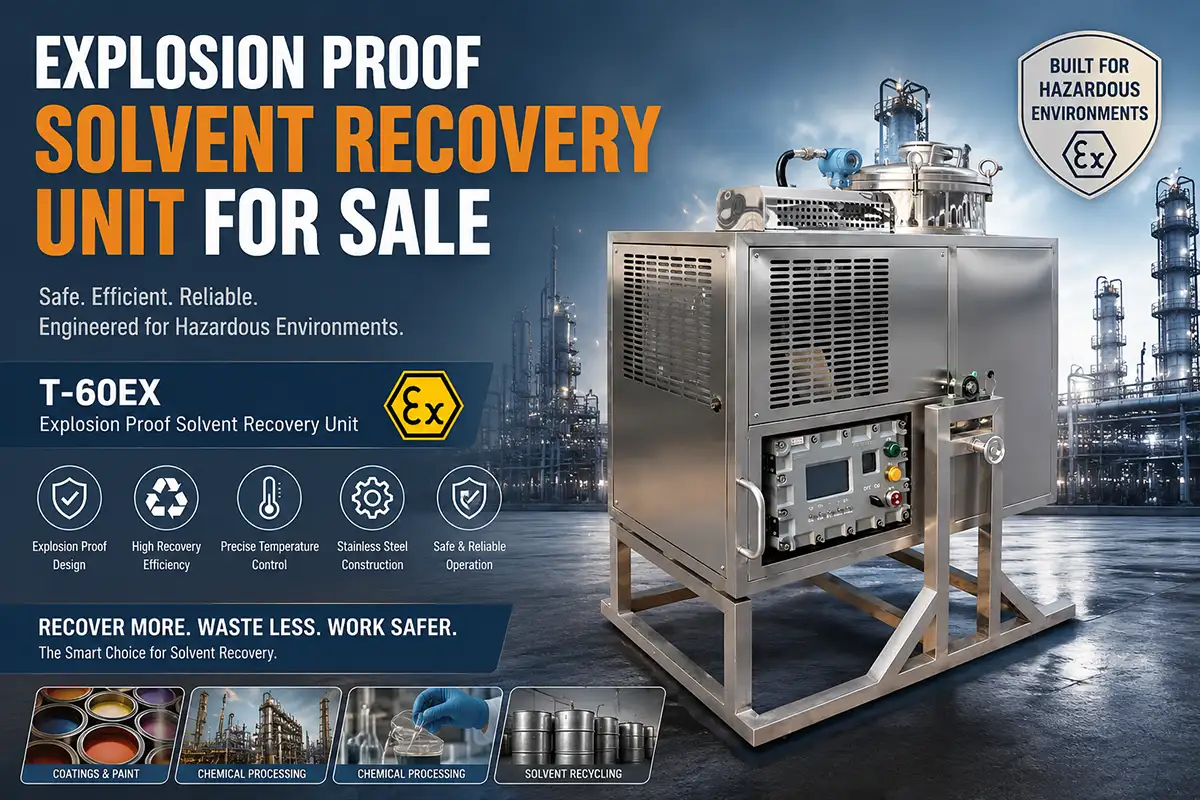
Explosion-proof design: This is especially important for flammable organic solvents.
Facilities also benefit from reviewing broader process guidance before buying. For readers comparing system design and workflow, this page on how a solvent recovery system works gives helpful background on the operating principle and process sequence.
Practical recommendation: capacity should be matched to real production rhythm rather than peak optimism. Overbuying increases capital cost and floor-space usage, while underbuying causes bottlenecks and repeated solvent storage issues.
Available models and technical data
The following explosion-proof models are suitable for different plant scales. All listed models operate with a temperature range of RT~200℃ and a solvent recovery rate of 95%.
| Model | Feed Capacity (L) | Power Supply (ACV) | Heating Power (kW) | Temperature Range (℃) | Treatment Time (Min.) | Recovery (%) | Weight (kg) | Machine Size (mm) |
|---|---|---|---|---|---|---|---|---|
| T-20Ex | 20 | 380 | 2 | RT~200 | 120 | 95 | 153 | 860*760*1190 |
| T-60Ex | 60 | 380 | 4 | RT~200 | 150 | 95 | 170 | 1160*870*1260 |
| T-80Ex | 80 | 380 | 5 | RT~200 | 180 | 95 | 200 | 1180*850*1290 |
| T-125Ex | 125 | 380 | 6 | RT~200 | 210 | 95 | 280 | 1250*920*1450 |
| T-250Ex | 250 | 380 | 16 | RT~200 | 240 | 95 | 520 | 2600*1200*1950 |
| T-400Ex | 400 | 380 | 32 | RT~200 | 270 | 95 | 1200 | 1990*1850*2090 |
Pricing reference for buyers
Price is often one of the first filters when searching for a solvent recovery unit for sale. Based on the provided company pricing data, the following products offer useful reference points for budget planning:
When a listed product had multiple prices, the lower middle practical value was used as requested. These are company prices. In many cases, comparable systems elsewhere in the market may be priced higher, especially when configuration, compliance options, or larger throughput requirements are included.
Is the lowest price always the best value in solvent recycling equipment?
No. The best value usually comes from the unit that matches solvent type, throughput, safety configuration, and maintenance expectations. A cheaper machine that is undersized or poorly matched to the solvent stream often costs more over time through downtime, low recovery efficiency, or premature replacement.
For buyers evaluating the cost drivers behind equipment configuration, this related article on solvent recovery system price explains why design details matter so much.
Typical applications for solvent recovery systems
A properly selected solvent recovery unit can be used in many sectors:
Paint, coating, and ink operations: recovery of thinner, xylene, and mixed wash solvents.
Electronics cleaning: IPA and precision cleaning solvent reuse.
Extraction processes: ethanol recovery for repeated production cycles.
Chemical manufacturing: purification of organic solvent streams before reuse or downstream disposal.
Automotive and metal cleaning: reclamation of contaminated cleaning solvents.
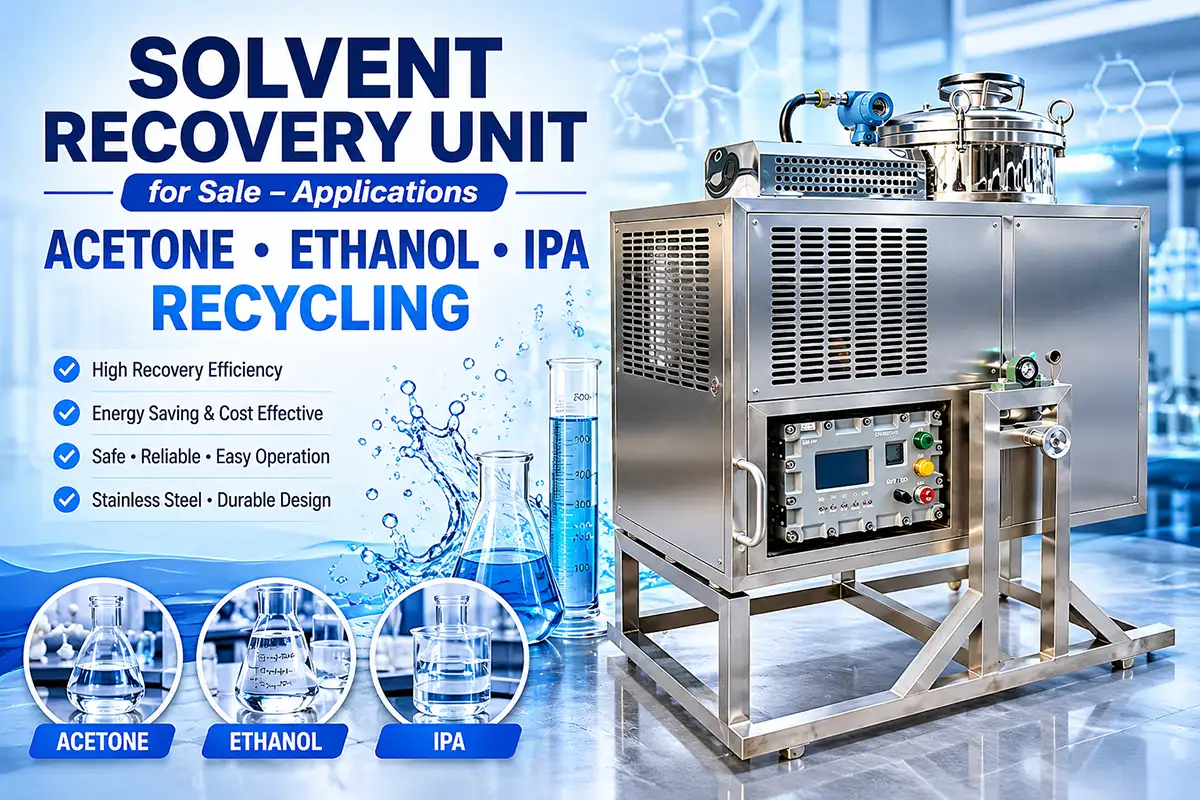
Where acetone is part of the workflow, this page about acetone solvent recycling is particularly relevant for understanding process benefits and operating considerations.
Some businesses first approach solvent recovery from the waste-handling side rather than the production side. That is completely reasonable. Once disposal costs and environmental handling burdens are reviewed, recovery often becomes the more strategic long-term option.
What makes a good supplier stand out
In the current market, buyers do not only compare machine size and price. They also look for suppliers that present clear technical data, transparent application guidance, and visible support. A professional solvent recovery equipment supplier should provide:
Clear model-to-application matching
Visible throughput and recovery specifications
Detailed dimensions and utility requirements
Explosion-proof options where relevant
Documentation for operation and maintenance
Reasonable lead times and replacement parts support
Why do technical details influence buying decisions so strongly?
Because solvent recovery is not a generic product category. Solvent type, contamination level, and daily processing volume directly affect the right configuration. Good documentation reduces uncertainty and helps buyers compare systems on practical performance, not guesswork.
Final thoughts on choosing a solvent recovery unit for sale
If the goal is to cut solvent spending, reduce waste output, and improve environmental control, a well-matched solvent recovery unit for sale deserves serious consideration. Small-capacity units support labs and lower-volume applications, while larger explosion-proof systems serve factories with continuous solvent demand and more aggressive cost-reduction targets.
From the author’s view, the most successful projects start with four simple filters: solvent type, batch volume, safety requirement, and recovery expectation. Once those are clear, selecting the right model becomes much easier.
Whether the need is for acetone recovery, IPA reclamation, ethanol reuse, or general industrial solvent recycling, choosing a system with documented technical parameters and practical pricing creates a much stronger purchasing decision.