Acetone Recovery: How to Cut the Cost of Cleaning Waste Liquid
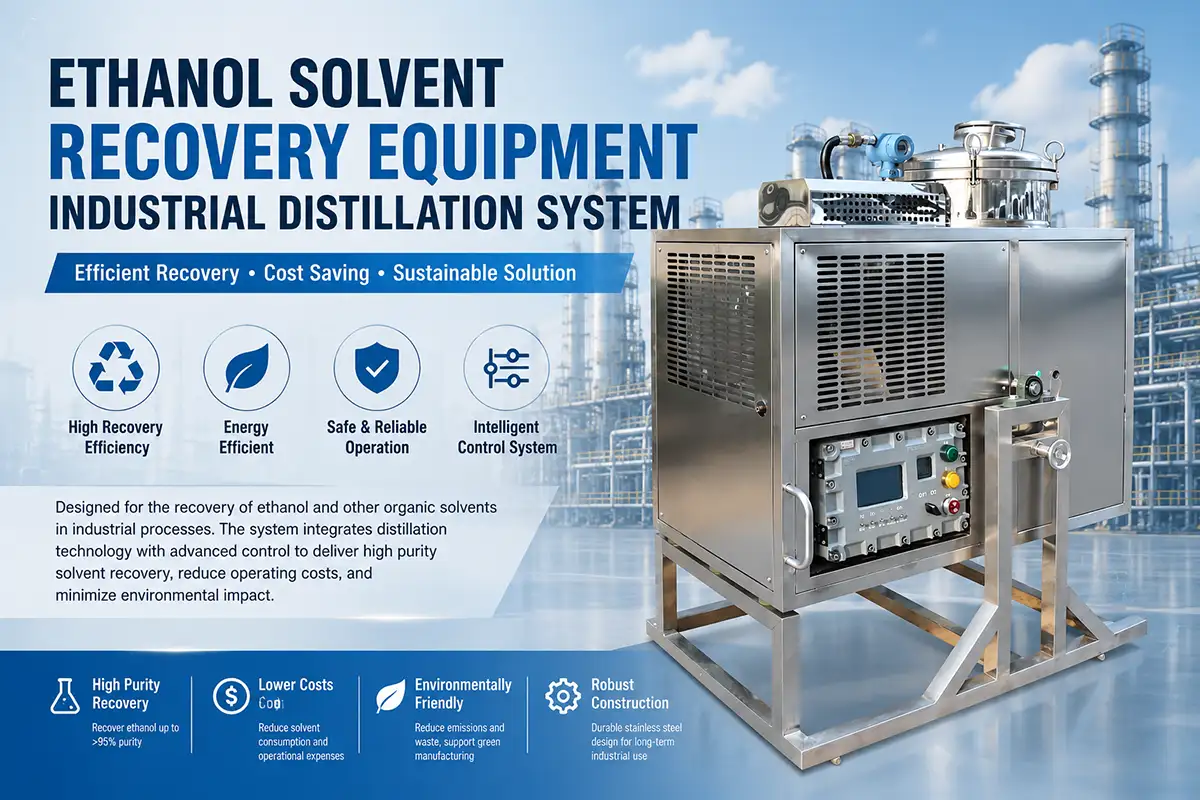
Acetone is one of the most common cleaning solvents in manufacturing—fast, effective, and unfortunately expensive to keep buying and disposing of. The good news is that “waste acetone” is often not truly waste. In many cases, it is reusable solvent mixed with oils, inks, resins, or paint solids. This article explains, in plain language, how acetone recovery works and how a solvent recycling machine can lower total cleaning cost.
Why acetone cleaning “waste” becomes a cost problem
In real-world production, acetone is used to clean spray guns, printing parts, mixing tanks, adhesive tools, and metal fixtures. Over time the solvent becomes dirty, and many sites handle it the same way: store it as hazardous waste, pay for disposal, and purchase fresh solvent again. The cost problem is not only the price per drum. It’s the total cost loop: buying, handling, storing, paperwork, safety controls, and off-site treatment.
What acetone recovery actually means (simple explanation)
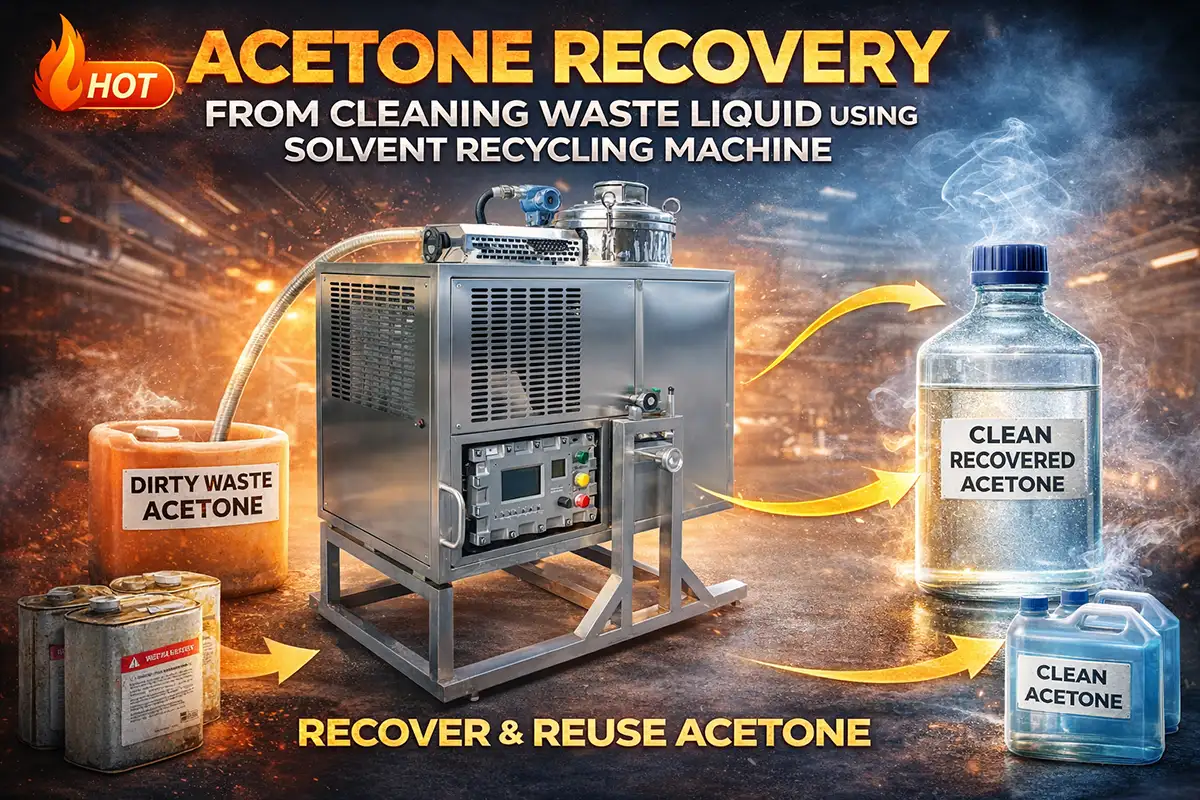
Most acetone waste streams are a mixture of:acetone + dissolved contaminants (oils, inks, resin, paint, adhesive) and sometimes water. Acetone recovery is the process of separating the acetone from those contaminants so it can be reused.
The most common method used in an acetone recycling machine isdistillation: the machine heats the mixture, acetone evaporates first (because it is more volatile), the vapor is condensed back into liquid, and the residue stays behind as sludge.
Where the savings come from: three cost buckets
Acetone recovery lowers cost in three direct, easy-to-measure areas:
Lower solvent purchase volume: recovering a large portion of acetone means fewer new drums. Many industrial recycler designs target around 95% recovery for suitable streams (as reflected in the machine parameters provided).
Lower hazardous waste disposal volume: instead of shipping full drums of liquid waste, the site ships a smaller amount of concentrated residue.
Lower labor and downtime friction: fewer drum changes, less frequent waste pickups, and cleaner solvent availability when needed.
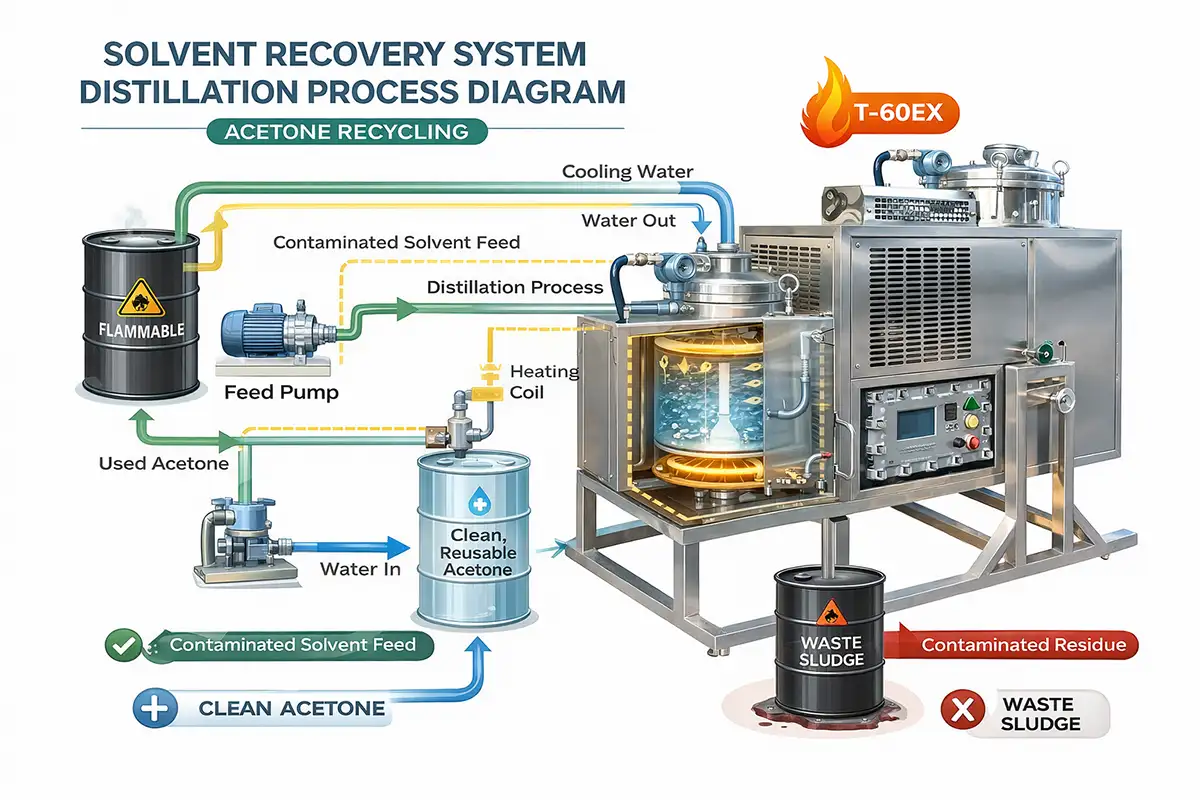
Choosing a solvent recycling machine: capacity, time, and power (without the confusion)
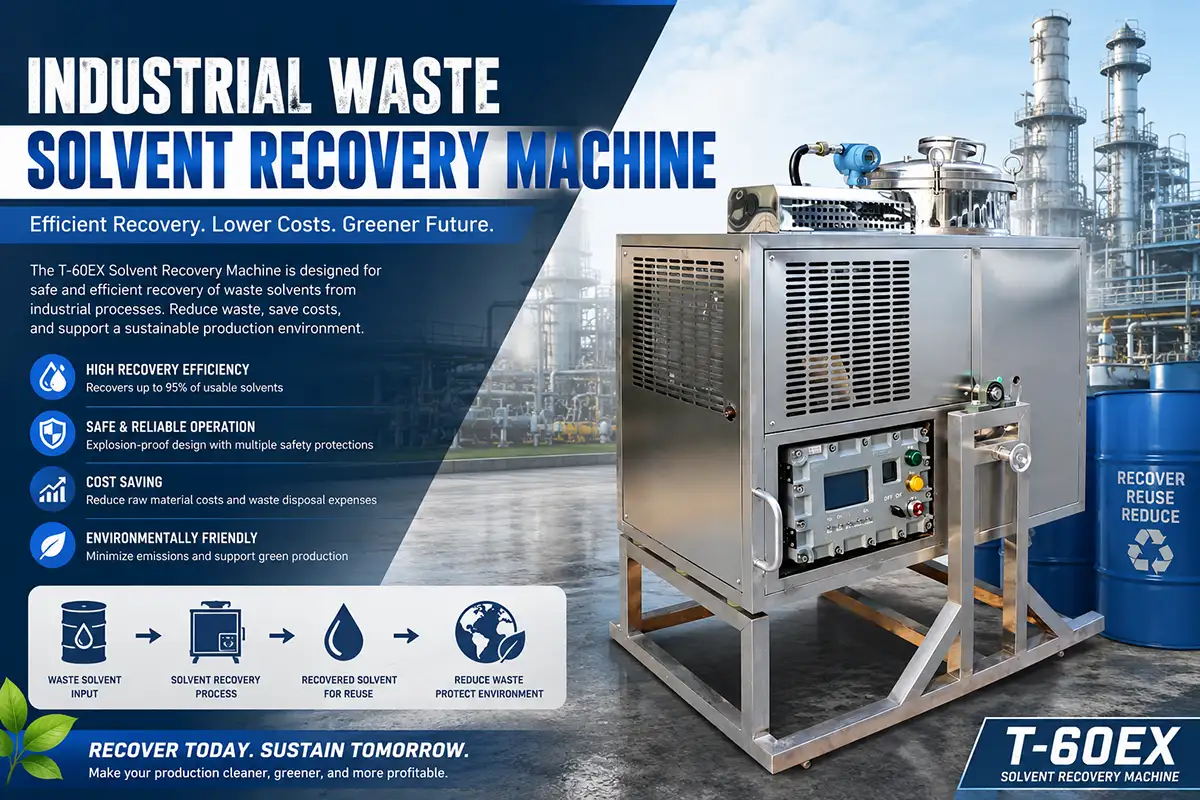
When selecting a solvent recycler machine, the decision is usually less about “maximum liters” and more about matching the recycler to daily waste generation and shift rhythm. Below is a practical snapshot of common explosion-proof models used for solvent recovery.
| Model | Feed Capacity (L) | Power Supply (ACV) | Heating Power (kW) | Temp Range (°C) | Treatment Time (min) | Recovery (%) | Machine Size (mm) |
|---|---|---|---|---|---|---|---|
| T-20Ex | 20 | 380 | 2 | RT–200 | 120 | 95 | 860×760×1190 |
| T-60Ex | 60 | 380 | 4 | RT–200 | 150 | 95 | 1160×870×1260 |
| T-80Ex | 80 | 380 | 5 | RT–200 | 180 | 95 | 1180×850×1290 |
| T-125Ex | 125 | 380 | 6 | RT–200 | 210 | 95 | 1250×920×1450 |
| T-250Ex | 250 | 380 | 16 | RT–200 | 240 | 95 | 2600×1200×1950 |
| T-400Ex | 400 | 380 | 32 | RT–200 | 270 | 95 | 1990×1850×2090 |
What about safety and compliance? (the part that cannot be ignored)
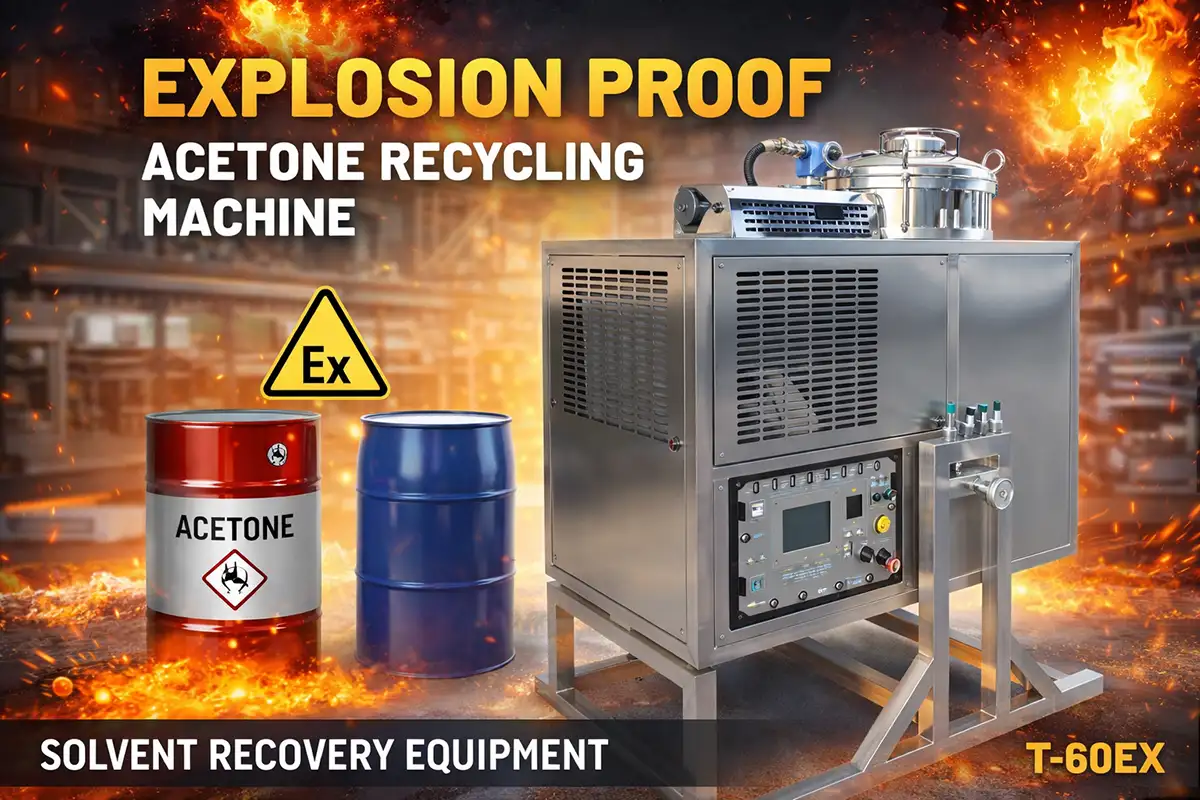
Acetone is a flammable solvent, so recovery equipment selection must consider ventilation, explosion-proof design, grounding, and operational discipline. Also, even if solvent is recovered on-site, residue still needs proper handling and disposal. For teams that also handle other alcohol-based cleaners, it helps to understand compliant waste practices—this guide is useful:how to dispose of isopropyl alcohol.
A simple decision checklist (what most buyers actually want to know)
When evaluating acetone recovery, the key questions are usually practical:
How much waste acetone is generated per day/week? (This determines batch size and frequency.)
What contaminants are in it? (Paint/ink/resin/oil are usually workable; mixed solvents may require testing.)
What recovery rate is realistic? (Many streams target ~95% recovery; residue volume still exists.)
Where will the machine be installed? (Ventilation, electrical supply, and safe operating area.)
What is the desired operator workload? (Batch loading/unloading schedule matters.)
Bottom line
Acetone recovery is not complicated: it is mainly a smart way to reuse solvent that is already being paid for. If cleaning operations generate steady volumes of acetone waste, an on-site solvent recycling machine can reduce purchasing, cut disposal volume, and make the entire cleaning process more predictable.
For readers comparing equipment types, start with the fundamentals of a solvent recovery system, then match batch size and cycle time to the production schedule.